

New York Urban Farms Sustainable Pest Management Fact Sheet Series
Cornell Cooperative Extension has partnered with dozens of urban farms across New York State to demonstrate and evaluate sustainable pest management strategies. Together with farmers, we found success using control methods that prevent or reduce crop losses through exclusion strategies, crop timing, host resistance, the introduction of beneficial organisms, and more. Regardless of management strategy used, common requirements for success include a knowledge of the pest and disease complex, preventative deployment and commitment to the process. We've developed a set of fact sheets with case studies highlighting pest management techniques that New York urban farms have found valuable.
The fact sheets are also available in Arabic, Chinese, and Spanish. Contact us for the translated PDFs.
Disease Prevention
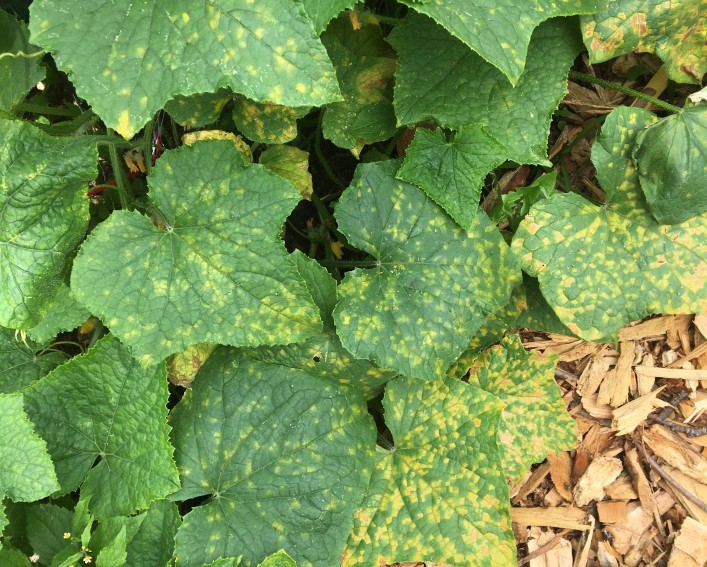
Disease Resistant Crop Varieties
There's an opportunity to prevent disease from the crop in the first place. For some crop and disease combinations, perhaps the most straightforward method is to select a variety of the crop that has been bred for resistance to the disease. This technique begins before we ever sow a seed! Catalogs will list information about each variety's disease resistance. When purchasing seeds, choose the varieties with listed resistance to the diseases you're most concerned about. We like to note that disease resistant vegetable varieties are nearly always non-GMO, and often available as untreated or certified organic seed. Selecting resistant varieties is an easy, cheap, and effective strategy to get ahead of plant diseases.
Pest Exclusion
Row Covers
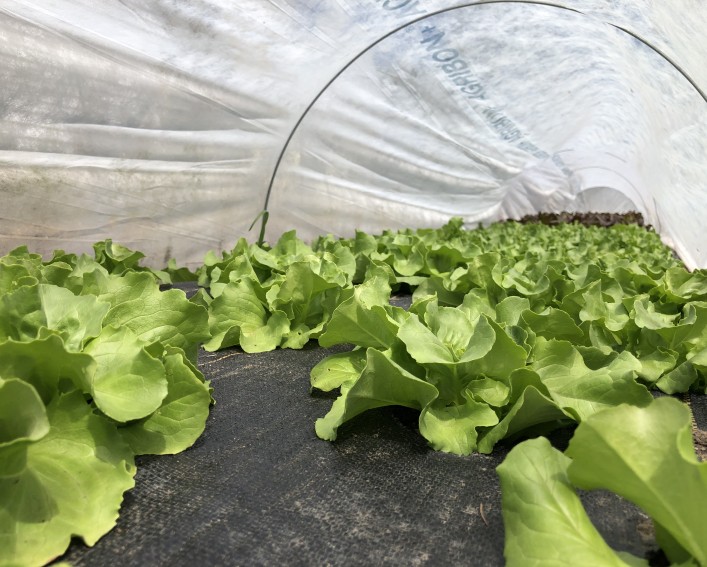
Keeping pests (particularly insects and mites) away from a young planting gets crops off on the right foot. Urban farmers use row covers and insect nets as barriers, physically preventing pests from reaching their host plant. These covers and nets are typically a temporary tool designed to be put on and taken off during the growing season, often early in crop cycles. It is helpful to do some research on the pest's biology and life cycle to be sure we are keeping the pest out and not in! Remember: Row cover is a protective measure; install it before the pest arrives on the crop. This tool must match crop needs too, such as temperature tolerance and pollination requirements.
Biocontrol
Releasing Natural Enemies
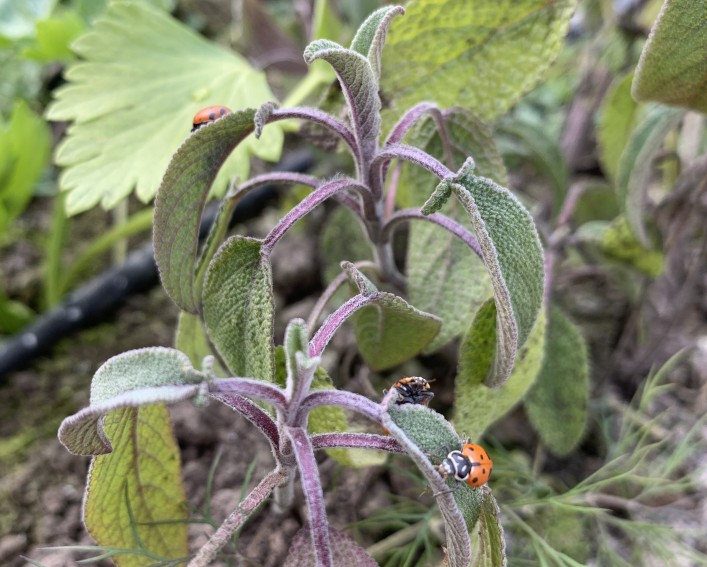
Many urban farms use biocontrol strategies such as the introduction of natural enemies to their growing spaces for pest management. Mimicking the natural world, we use good bugs to manage the bad bugs! Many pest species have their own natural enemies that can be purchased and released on the farm. These beneficials, or biological controls, prey upon or parasitize the pests. To be successful growers, we must have knowledge on the right natural enemy to release at the right time and in the right place. In our experience, this approach works best in enclosed systems, such as greenhouses, high tunnels, and under row cover. Biological controls should be applied early in the pest/crop cycle. This is a biological system that requires attention to detail and commitment from the grower. Local cooperative extension and biocontrol suppliers are great places to gather knowledge on biocontrol techniques.
Crop Timing
Brassica Break
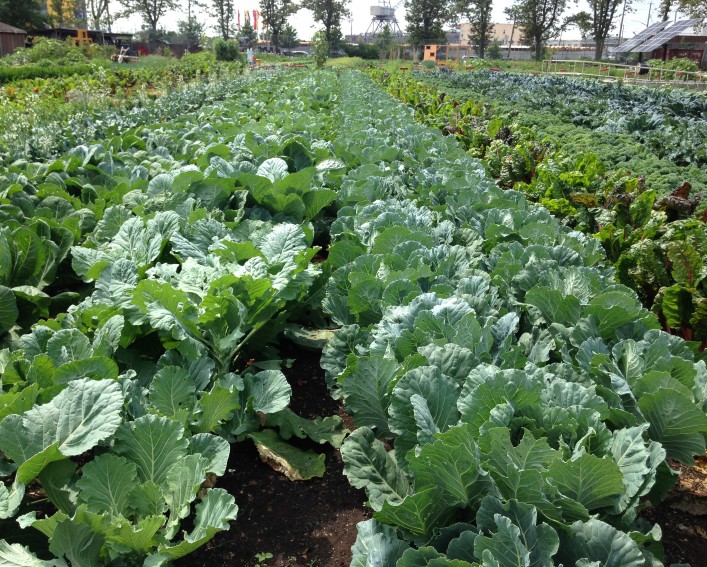
Urban growers use of time as a pest management tool. Brassicas (also known as crucifers and cole crops) are the most common crop family on urban farms in New York. They are also host to a range of insect pests, including cabbageworms, flea beetles, cabbage aphid, Swede midge, harlequin bug, and cabbage whitefly. A cultural control we're calling "Brassica Break" creates a calendar window at some point during the year when there are no brassicas available to insect pests anywhere on the farm. When you remove the plants, you remove the pests!
NYC Urban Growers Update
An occasional email publication, the NYC Urban Growers Update targets commercial urban growers with production-focused content: pest and disease alerts, crop planning resources, research updates, and program announcements.
"We build our whole IPM plan around those updates." -- a Staten Island Farm Manager
Urban Pest Management Needs Assessment
As part of a multi-year project exploring non-spray pest management options that are economically and environmentally sustainable for urban farms, we conducted a needs assessment with urban growers across New York State. The New York State Urban Growers Pest Management Needs Assessment presents findings on current pest management practices, challenges, and topics of future interest.