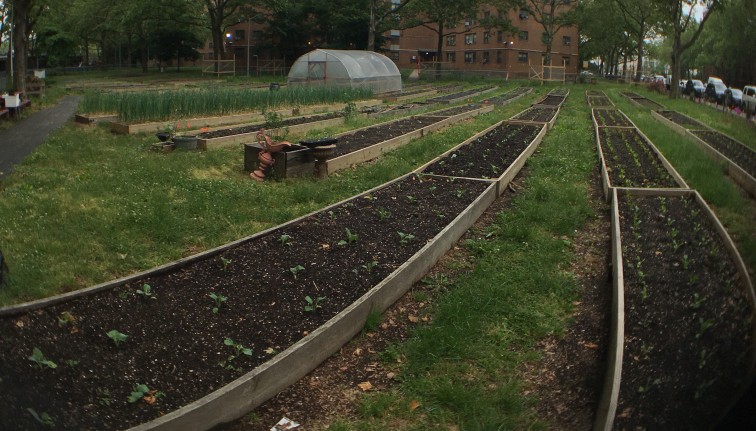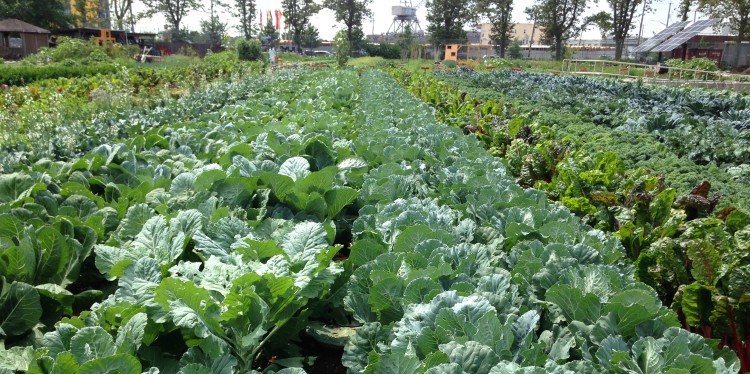

From kale and collards to mustards and radishes, brassicas (aka crucifers) are perhaps the most common crop family on urban farms. In New York, they are also host to a range of insect pests, including cabbageworms, flea beetles, cabbage aphid, swede midge, harlequin bug, and cabbage whitefly. Many urban farms seek to reduce or avoid spraying pesticides, using cultural controls when possible.
In New York City, at least 10 urban farms have implemented a cultural control we’re calling a “Brassica Break.” In short: At some point during the year, there are no brassicas available to insect pests anywhere on the farm.
The concept isn’t new. For example, greenhouses use a “crop-free period” to foil insect pests such as whiteflies, which cannot survive very long without feeding on a host plant. Because most of the important insect pests of brassicas on urban farms are specialists—surviving mostly or entirely on plants in the brassica family—a farm can break up these insects’ life cycles by depriving them of any brassica crops for a period of time.
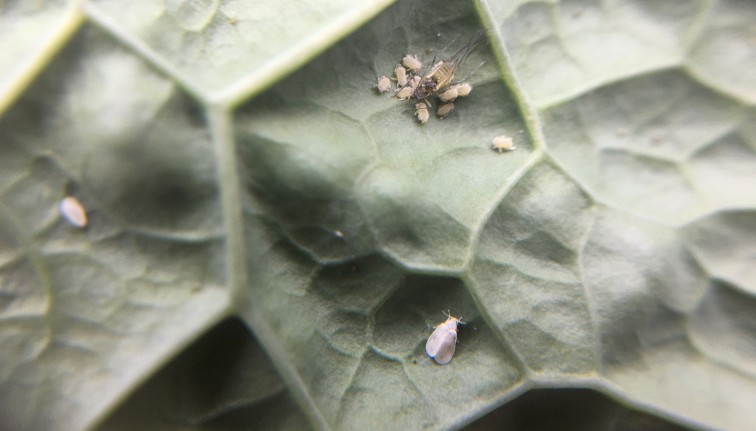
Cabbage aphids and cabbage whitefly, two pests that readily overwinter on standing brassica crops.
An urban farm’s first brassica planting after a 3-month winter brassica break.