Quarterly Highlights
Connections & Collaborations
‘Muck Donut Hour’ Outreach Activity Still Going Strong
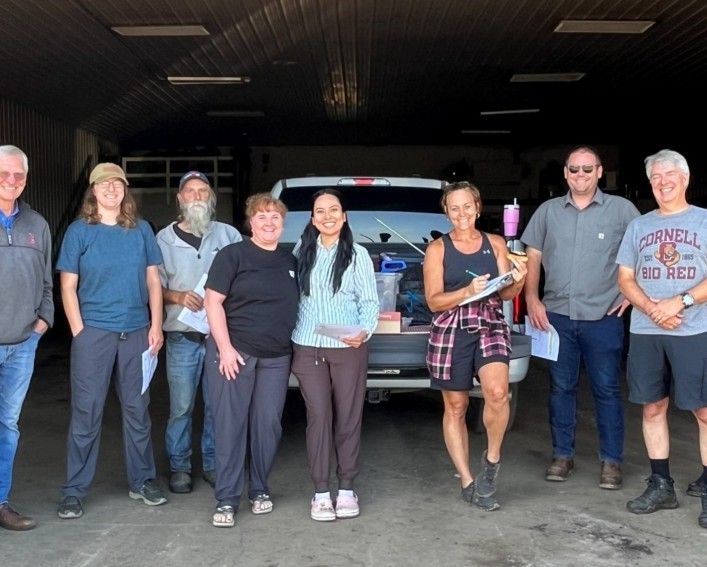
Muck Donut Hour is for muck onion growers, crop scouts/consultants, Cornell researchers, and Extension to come together in-person during the growing season to work together to grow the best onions. This weekly gathering occurs on Tuesday mornings from the first week of June until the last week in August (13 weeks). Yes, donuts are served along with coffee and juice off the tailgate of Christy’s pick-up truck. But she also serves up research-based pesticide recommendations to each of the farms. This outreach activity is still going strong after nearly three decades!
Grower Testimonial
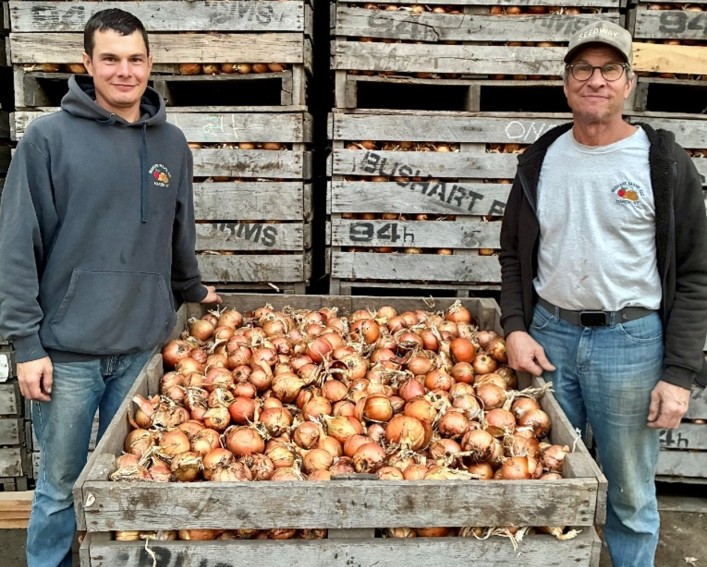
CVP Onion Scouting Program Skyrockets Onion Profits
Every week during the onion growing season, the Cornell Vegetable Program (CVP) vigorously scouts 1-2 onion fields per farm for each of the 15 muck onion farms in the CVP region in the Elba muck and in Wayne and Oswego counties. Growers graciously share their spray records and the scouting team diligently summarizes and compiles the data and spray records into three regional reports complete with individual research-based recommendations for pest management for each field.
From Bryan Bushart, Bushart Farms in Wayne County: "...Since we have participated in the CVP Onion Scouting Program, our onion yields have almost doubled, and growing onions is profitable again. This has led us to gradually increase our acreage each year, which is now triple what we grew before the CVP Onion Scouting Program. I can state with certainty that it is thanks to Christy and her team that we have increased our onion profitability by 12-fold [~ $66,600 per year]. They have changed the outcome of growing onions for us.”
Pest Management
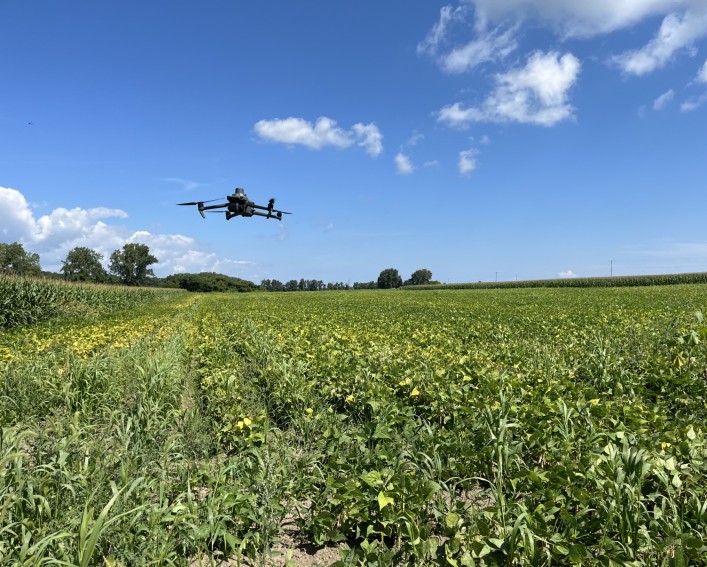
Drone Imaging as a Tool for Pest Management in Dry Beans
This year, the Cornell Vegetable Program along with NYS IPM started work on a NYS IPM Special Projects Grant looking at the possibility of using drone imaging to track Mexican bean beetle (MBB) damage to dry beans, and use images as a tool in pest management decision making. Project members paired weekly drone imaging of dry bean fields with in-field scouting to determine pest numbers and defoliation and work towards a goal of creating maps of high and low damage spots in fields. We worked with farmers to determine appropriate times for insecticide applications based on MBB numbers and defoliation seen during scouting.
Research
Vegetables Included in Statewide Neonicotinoid Risk Assessment Trials
Cornell Integrated Pest Management (IPM), Cornell University’s Department of Entomology, and Cornell Cooperative Extension (CCE), with support from the New York State Department of Agriculture and Markets, have launched the largest on-farm field research and extension project in program history. The project is designed to better understand, identify, and support the transition away from neonicotinoid insecticide seed treatments in conjunction with the New York State Birds and Bees Protection Act.
CCE Cornell Vegetable Program Processing Vegetable Specialist, Julie Kikkert teamed up with Marion Zuefle, Cornell IPM to conduct on-farm field trials in processing sweet corn and snap beans for a second season in 2026.
Urban Pest Management
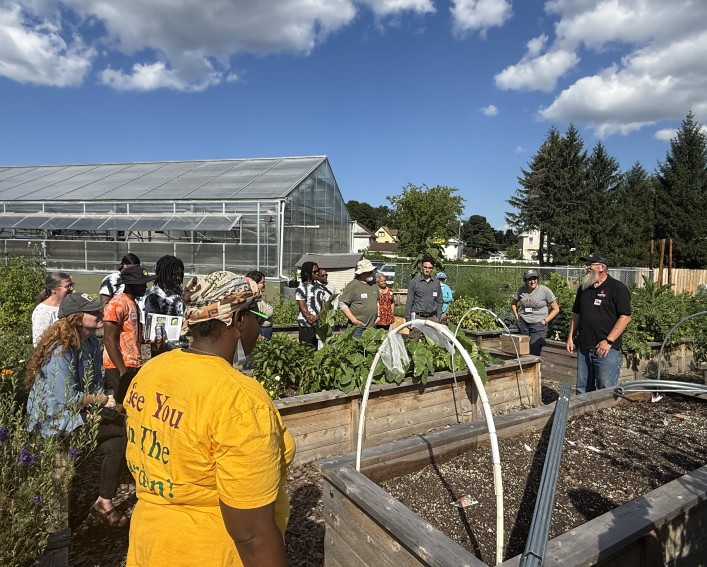
Field Days Showcase Swede Midge Demos and Pest Management for Urban Growers
Urban growers face unique production challenges, including limited space, proximity to neighbors, and heightened vulnerability to invasive pests. One such pest, swede midge, is a tiny fly that can cause severe damage to brassica crops. To help growers identify and manage this emerging threat, Cornell Cooperative Extension (CCE) and partners organized two hands-on field days focused on pest management strategies for small-scale growing spaces. At both events, Koenick and host farm managers presented swede midge demonstration trials evaluating management strategies for urban farms. Photo by Frank Keophetlasy
Grower Support
Fresh Market Update
The 2026 growing season was marked by indecisive weather. On any given day across WNY it could be gray, damp, and cool while other areas hot and parched while still others were getting heavy rain. This repeated week after week, making the summer a troubled time for vegetable growers after dealing with a cold, wet spring that also included bouts of high intensity heat. Growers worried about plant diseases, weed incursions, or insect invasions that would make matters worse. Site visits, calls, and texts from the Cornell Vegetable Program helped see growers through these difficult conditions.
Current Projects
Vegetables Included in Statewide Neonicotinoid Risk Assessment Trials
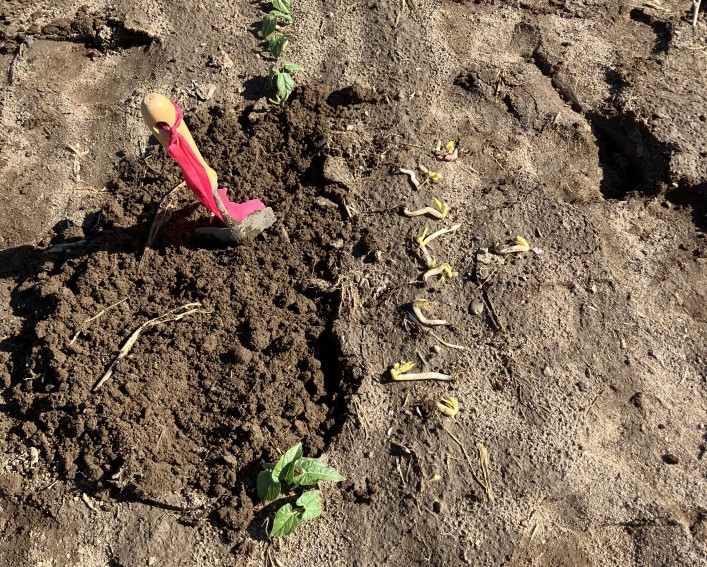
Cornell Integrated Pest Management (IPM), Cornell University’s Department of Entomology, and Cornell Cooperative Extension (CCE), with support from the New York State Department of Agriculture and Markets, launched the largest on-farm field research and extension project in program history in 2025. The project is designed to better understand, identify, and support the transition away from neonicotinoid insecticide seed treatments in conjunction with the New York State Birds and Bees Protection Act. Growers from more than 80 farms across New York State are participating in the trials, which aim to determine where and when there is a significant risk of pest damage; aid in the development and deployment of a seed pest risk assessment tool; and test and demonstrate IPM alternatives, including the viability of not using insecticide seed treatments.
Cornell Vegetable Program Processing Vegetable Specialist Julie Kikkert teamed up with Marion Zuefle, Cornell IPM to conduct on-farm field trials in processing sweet corn and snap beans in the summer of 2025. In coordination with processing field representatives from Farm Fresh First, LLC and five WNY growers, plots were established in two snap bean and four sweet corn fields. Each plot consisted of one acre of seed treated with the standard program of neonicotinoid insecticide plus fungicide, planted next to a one-acre block with seeds treated with fungicide only (no insecticide). Following the statewide protocol, 9 sections per treatment in each field were evaluated at set times for seed emergence, early season pests such as seedcorn maggot, wireworms and cutworms, and biomass. The plots were scouted for other insects for the remainder of the season until yield data was collected. Detailed field history and in-season crop management information was recorded and will be used in the risk assessment protocol along with the other fields statewide (field corn and soybeans).
This project is continuing in 2026 and 2027 to collect more robust data.