
Mimicking the natural world can be an effective approach in sustainable pest management. We can use the good bugs to manage the bad bugs! Many insect and mite pests have natural enemies that can be purchased and released on the farm to help reduce pest populations. The trick is knowing what the right natural enemy is to release at the right time and in the right place. In our experience, this approach works best in enclosed systems, such as greenhouses, high tunnels, and under row cover, to help prevent the natural enemy from dispersing. This fact sheet is based on our experiences releasing natural enemies for pest management on urban farms in New York.
There are a few different categories of natural enemies (adapted from Cornell IPM biocontrol resources):
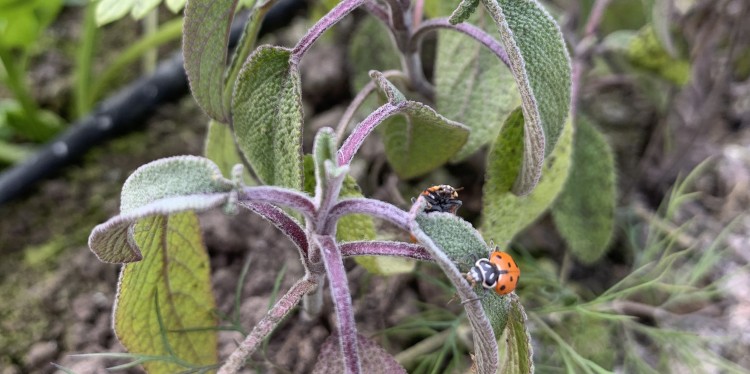
- Predators – These types of enemies directly kill and eat the pest. (ex. lady beetles, minute pirate bugs).
- Parasitoids (parasites) – These have an immature life stage (eggs or larvae) that develops on or within an insect host, ultimately killing the host. Adult parasitoids are free-living and may be predaceous. Often the host/parasite relationship is very specific (e.g. parasitoid wasp Aphidius colemani specializes in parasitizing aphids).
- Pathogens – These are disease-causing microbes (bacteria, fungi, virus, nematode) that infect their host. Commercially available formulations of pathogens are referred to as biopesticides. These materials are regulated as pesticides.
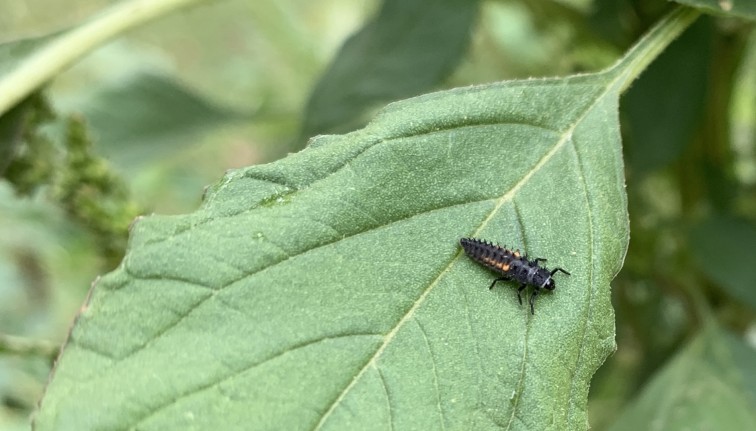
Lady beetle larva on the prowl for aphids in a collaborating urban farm greenhouse. Correct pest identification is critical! Know your target pest and the natural enemy’s life cycles. For example, sometimes larva is the only predatory stage (ex. aphid predatory midge) and sometimes both larvae and adults are predatory (ex. lady beetles).
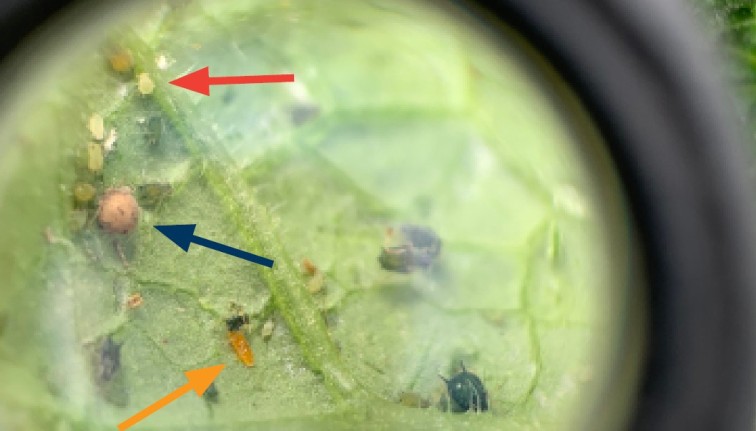
An Aphidoletes aphidimyza larva (orange arrow), aphids (red arrow) and aphid mummies (blue arrow) seen under a 10x hand lens on a leaf.
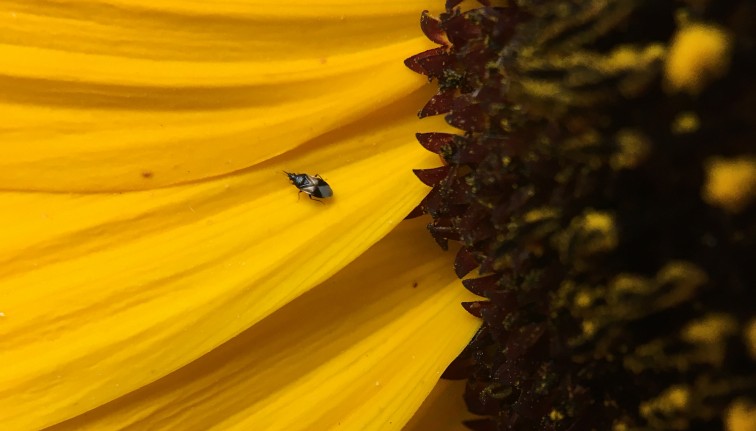
Minute pirate bug adult on a flower.
A collaborating urban farmer reported healthier plants, less money having to be spent on pest control products, and saving up to 3 hours a week during the growing season on pest management in the greenhouse due to releasing natural enemies.
Photo by Amara Dunn-Silver, Cornell IPM