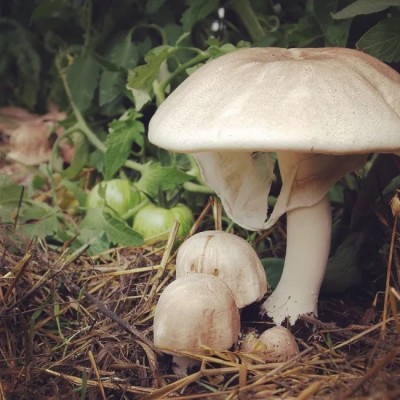

Most of us have heard of and practiced the Indigenous Peoples Three Sisters planting, also referred to as companion planting or intercropping of corn, beans and squash together. The same principle can be applied to mushrooms and intercropping with fruit and vegetable crops, with each crop supporting the other. This method of intercropping maximizes production in small spaces.
This guide describes three of the best mushroom species and their cultivation methods for urban gardens. Each method offers a different set of materials, context, and requirements. Depending on your personal interests and goals, there are many possibilities for incorporating mushrooms into your growing operation.
As a note of caution, it is important to properly identify any mushrooms that you are growing to ensure that you don’t consume a toxic species by mistake. As we say, “when in doubt, throw it out.”
Benefits of Intercropping with Mushrooms
Intercropping with mushrooms is a way of mimicking the way plants and fungi interact in nature. Edible mushrooms not only boost your yield and diversify your harvest, they also add bonus nutrition on your plate! Mushrooms are full of proteins, fiber, vitamins, minerals, antioxidants, and most importantly beta-glucans which support immune system health. By adding mushrooms to your crop plan, you’re also contributing to a more balanced soil ecosystem with the added fungal network. Mushrooms assist with the breaking down of organic matter, and in doing so, they’re releasing essential nutrients for your crops. Their mycelial network is also binding soil particles which in turn helps retain water and nutrients and improve soil structure.
Wine Cap
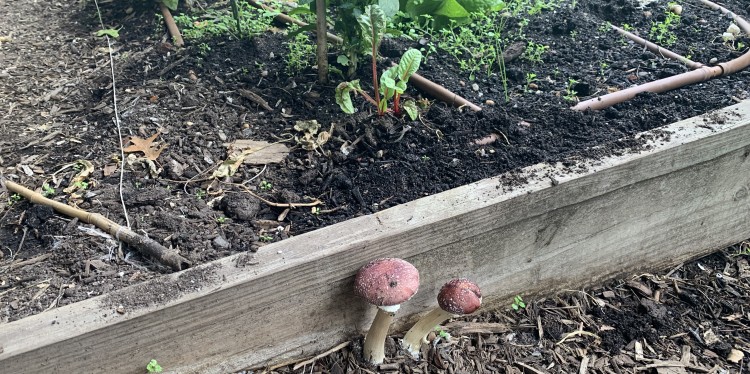
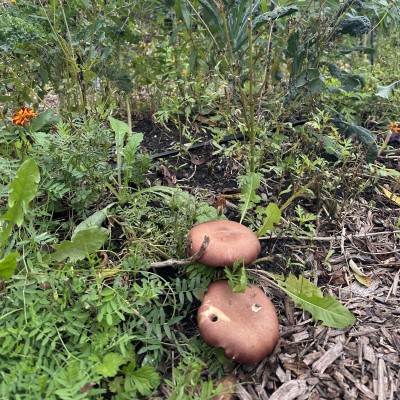
Wine cap (Stropharia rugoso-annulata) mushrooms thrive and adapt on most organic substrate including wood chips, straw, and a mix of kitchen scraps and compost and are a great spring/summer mushroom crop.
Intercropping with Wine Cap Mushrooms – Wine caps are a great beginner mushroom for gardeners. They spread along mulched pathways or under shade structures. The dense mycelial network may also help suppress weeds, reduce competition for your vegetables, extend the root system, and help retain moisture. For a successful dual harvest, maintain consistent moisture in the wood chip mulch, especially during dry periods, and anticipate the wine cap mushrooms fruiting directly from the mulch throughout the growing season.
Oysters
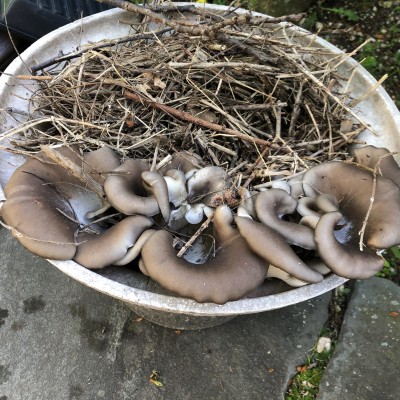
Oysters (Plueterous spp.) are the most adaptable mushroom, able to be grown on almost any organic material including logs, paper, sawdust, straw, and more.
Intercropping with Oyster Mushrooms – Mulching tomato plants with straw provides benefit to both crops. The mushroom benefit from the shade the tomatoes provide, and as the mushroom colonize the straw, they break down organic matter, making nutrients more readily available.
Almond Agaricus
Almond Agaricus (Agaricus subrufescens) is a summer mushroom that can be grown in high-quality compost.
Intercropping with Almond Agaricus – These mushrooms can be cultivated in high tunnel or greenhouse beds as they tolerate warmer temperatures. Interplanting underneath your high tunnel cucumbers or tomatoes would provide needed moderate shade. It’s important not to refrigerate the spawn when it gets delivered to your home or garden.
Photo from Field and Forest Mushrooms