• Agriculture
  • Fruit

If you are considering planting blueberries but have neutral or basic soil, you may hear the suggestion to plant haskaps (also known as honeyberries) as an alternative crop. Haskaps are different from blueberries in substantial ways. This article is a review of the ways that haskaps compare to blueberries.

Crop Characteristics

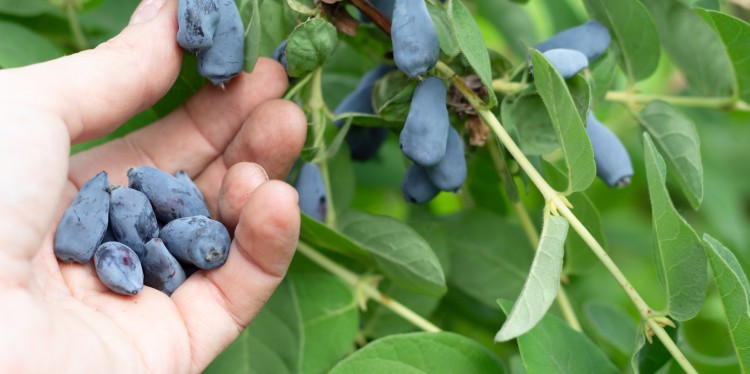
Haskaps are short-to-medium sized (3 – 6’ tall) perennial woody shrubs in the honeysuckle family. This makes them unique from the other berry crops we grow: they are the only edible fruit in this family. Unlike invasive ornamental crops in the honeysuckle family, haskaps are not very competitive with native flora and have no invasive potential. All varieties of haskap will produce deep blue berries that are tart and sweet, with a flavor that’s been described as “spicy blueberry”.

Most varieties are ripe in June, making this crop a great companion to market alongside strawberries and early raspberries. As an added benefit, the early ripening of the fruit can avoid losses due spotted wing drosophila infestation, most years. Later-fruiting varieties have been developed recently—these allow for harvest in July and August in the Northeast: Boreal Blizzard’, ‘Boreal Beast’, and ‘Boreal Beauty’ produce fruit in mid-July, late July, and August, respectively. These late-ripening varieties need protection from spotted wing drosophila, just like blueberries do. Note that recent breeding advances at the University of Saskatchewan have resulted in varieties that make bigger, sweeter berries on bushes well-adapted for Northeastern conditions. This article is concerned with haskap varieties released in 1990 and later—“heirloom” varieties released prior to this date are not well-suited for commercial production.
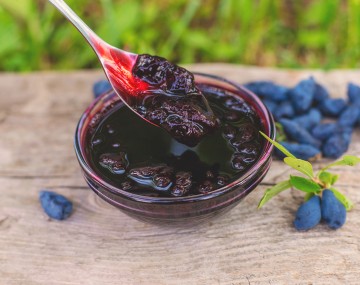
A bowl of honeysuckle jam on a wooden plank. There are several haskaps around the bowl. A spoon is being raised from the bowl with jam on it.

Advantages and Disadvantages of Choosing Haskaps Over Blueberries

Advantages

  • excellent tolerance of soils ranging from pH 5.0– 8.0
  • quick establishment that takes 2-4 years in most conditions
  • easy to mechanically harvest with a simple, DIY set-up
  • deep purple color that processes well in jellies, jams, and juices

Disadvantages

  • lack of consumer familiarity with the fruit
  • smaller number of nurseries offering plants for sale
  • tarter flavor that makes fresh eating less popular
  • more labor-intensive hand-picking process, and a thinner skin that makes losses during harvest more likely

The lack of customer familiarity with haskaps is easiest to overcome if farm sales involve face-to-face interactions with the customer base. Haskaps are valued in Slavic cultures, as well as in Japan and parts of China. The lack of nursery offerings can be mitigated with good planning; Hartmann’s is a major berry nursery that offers haskaps, and I encounter them on occasion in smaller-scale operations in Upstate New York, and one time, at Lowe’s Garden Center. The tart flavor of haskaps does make this crop as divisive as “Sour Patch Kids” candy, although the low-acid variety ‘Aurora’ tastes so sweet that almost all consumers enjoy it out of hand. The berries grow deep in the bush, which makes hand-harvesting a cumbersome task. 

In most soils, all that haskaps need to establish well is good weed control and a steady supply of moisture, as provided by a dripline. Fertility needs are not as high as blueberries, but commercial producers in Japan use composted cow manure with good success. To easily mechanically harvest the crop, growers have cut a plastic kiddie swimming pool in half, placed it around the base of the plant, and shaken the bush with tongs, such as a pitchfork. Skin breakage up to 50% can occur in the fallen berries, which is the reason why processing the mechanically-harvested berries into a value-added product is so advantageous.  

Pest Management

In terms of diseases and pests, haskaps don’t have it too bad. 

  • They can struggle with mildew infestations in the leaves, which can be managed by organic or conventional foliar fungicides. 
  • They can lose branches to honeysuckle borers, boring insects that lay eggs in the wood and tend to move down to the branch base. These are best handled by pruning out injured wood and burning it. 
  • Weed pressure is an issue, and tarping, mulching, and otherwise suppressing weeds is the best approach. In this last regard, haskaps are similar to blueberries. 
  • Birds love haskaps just like they love blueberries. Netting is the most effective means of protecting the crop.

Conclusion

Haskaps aren’t a great fit for all farms, nor is it a perfect substitute for a blueberry planting. Yet, for some operations, a few rows of this little-known berry may be a powerful tool for improving fresh produce and value-added offerings.