
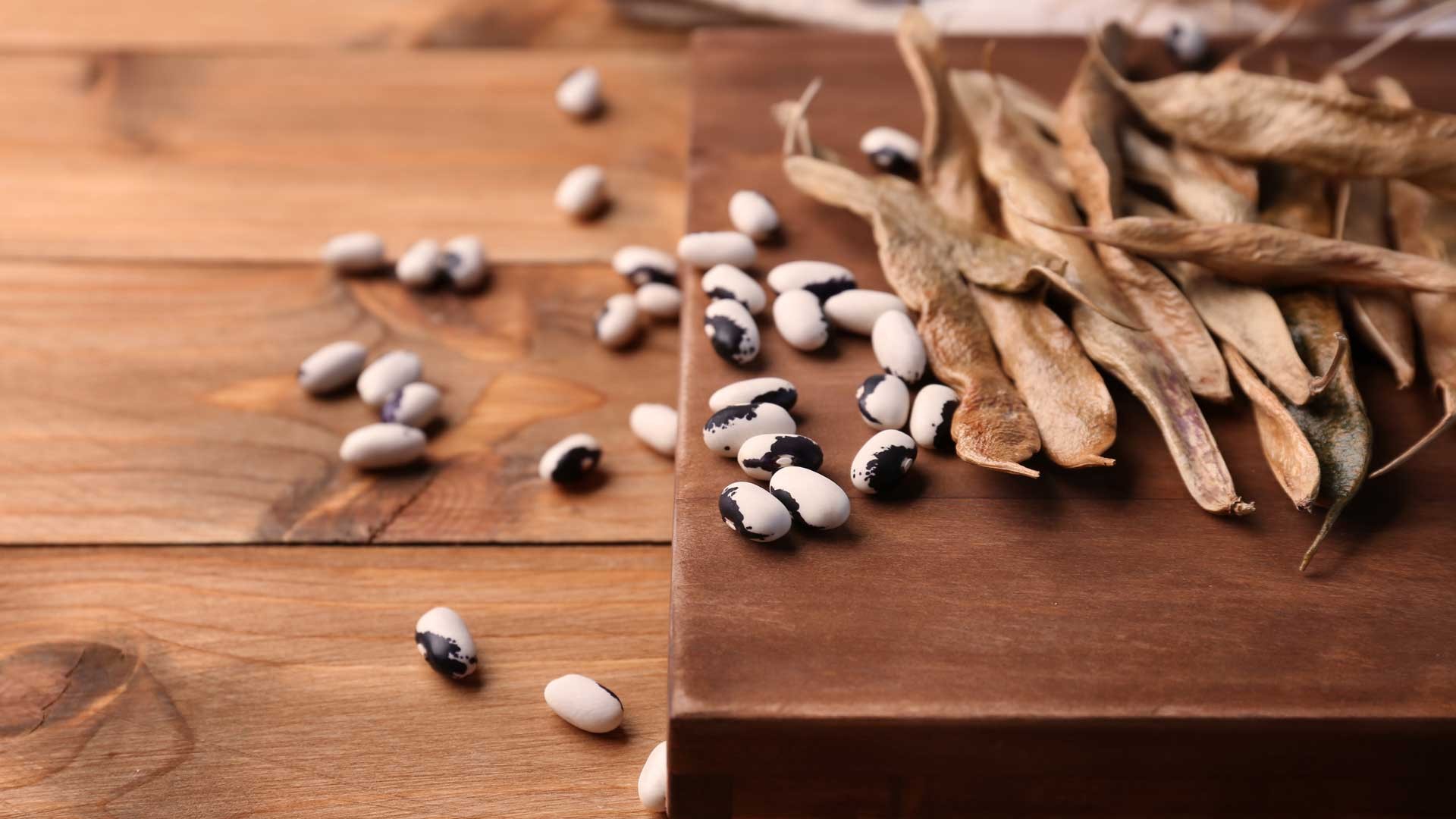
Planting Your Garden with Seed Saving in Mind

Saving your own seed pays off in several concrete ways. It lowers your gardening costs year over year. It builds a personal stock of varieties that, after a few seasons, become adapted to your soil, your microclimate, and the length of your growing season — making them more resilient than anything you can buy off the rack. It preserves heirloom varieties that commercial seed catalogs have stopped carrying. And when you return a portion of your seed to the Orleans Community Seed Share, you help build a regional library that does the same for your neighbors.
This article walks through what Cornell and other land-grant sources recommend for home gardeners who want to save seed worth sharing.
Start with the Right Varieties: Open-Pollinated and Heirloom
The first decision happens before the seed ever goes in the ground. Only open-pollinated varieties produce seed that will grow true to the parent plant. These are varieties pollinated by natural means — wind, insects, or self-pollination — whose offspring reliably carry the same traits season after season. Heirloom varieties are a subset of open-pollinated seed: they are simply the open-pollinated varieties that have been grown and passed down over generations, often for fifty years or more.
Hybrid (F1) seed is a different matter. Hybrids are the deliberate cross of two parent lines, and while they often perform beautifully in their first year, their seed will not come true. Plant the seeds you saved from an F1 plant and you will get a genetic grab bag — sometimes interesting, rarely what you started with, and not something to pass along to another gardener with any confidence.
A few places to start when choosing varieties:
- Cornell's Vegetable Varieties for Gardeners database lets you search varieties and read gardener-submitted reviews from across New York State.
- Cornell's Selected List of Vegetable Varieties for NYS Gardeners flags open-pollinated entries with an asterisk, making it easy to identify candidates suitable for seed saving. The Master Gardeners of CCE Orleans also maintain a vegetable variety trial garden at the Orleans County 4-H Fairgrounds. If you are curious about what we are growing this year, come down and take a look. If you have questions, join us on Wednesdays from 4–6 pm, June through August, for Growing Community Hours, where Melissa Greean and Julia Bender will be available to show you around the gardens and answer your questions.
- 'Marketmore 76' cucumber, developed at Cornell by Dr. Henry Munger in 1976, is a fine example of a well-adapted open-pollinated variety with strong disease resistance — and it has been faithfully saved by home gardeners for nearly fifty years.
Understanding Pollination Before You Plant
A garden is a busy place. Bees, wind, and the occasional gust from a passing truck all move pollen around in ways we rarely see. Whether that movement matters for your seed saving depends on how the plant in question reproduces.
Self-pollinating plants complete pollination inside the flower, often before it even opens. Tomatoes, peppers, eggplants, beans, peas, and lettuce all fall into this group. They are the easiest place to begin seed saving. A modest separation between varieties — sometimes only ten to twenty feet — is generally enough.
Cross-pollinating plants rely on wind or insects to move pollen from one flower to another. Squash, cucumbers, melons, corn, and the brassicas (broccoli, kale, cabbage, cauliflower, kohlrabi, collards) are in this group. Two important notes here:
- Many vegetables that look completely different to us are the same species. All of the brassicas listed above are Brassica oleracea and will cross with one another readily. Likewise, summer squash, pumpkins, and acorn squash are often the same species (Cucurbita pepo) and will cross — sometimes producing the inedible offspring that have given seed saving its reputation for surprises.
- Different species do not cross. Cucurbita maxima (Hubbard, buttercup) will not cross with Cucurbita moschata (butternut) or Cucurbita pepo (zucchini, most pumpkins). Knowing the Latin name of what you are growing is genuinely useful.
Methods for Preventing Cross-Pollination
You have four practical tools, and most home gardeners use some combination of them.
1. Plant Only One Variety of a Species
The simplest method, and the one most overlooked. If you grow only one variety of cucumber, or only one variety of Cucurbita pepo squash, you do not have to worry about crossing within your own garden. You may still need to consider what neighbors are growing — insect pollinators can travel a quarter mile or more — but in most cases, this is the easiest path to clean seed.
2. Isolation by Distance
The most reliable method when feasible, and the standard against which other techniques are measured. Required distances vary widely by species: peas need only about forty feet, while squash, pollinated by insects that travel long distances, require up to half a mile for commercial seed purity. For home gardeners, complete isolation distance is rarely possible. The good news is that physical features — buildings, hedgerows, garages, tall plantings of flowers — slow pollen movement and reduce the effective distance required. Two squash varieties on opposite sides of the house, with the garage between them, are meaningfully more isolated than two squash varieties twenty feet apart in the same bed.
3. Isolation by Time
Plant two varieties of the same species several weeks apart so that their flowering periods do not overlap. This works particularly well for corn, where the pollination window is short, and for varieties with markedly different maturity dates. Choose an early variety and a late variety, stagger your planting dates, and the two will simply never have pollen in the air at the same time.
4. Mechanical Isolation: Bagging and Caging
When distance and time are not options, physical barriers do the work.
Bagging involves covering individual flowers or flower clusters with a breathable bag — organza, fine muslin, or spun polyester such as Reemay — before the flower opens. For self-pollinating crops like tomatoes, peppers, and beans, this is straightforward: bag the bud, wait until fruit sets, then remove the bag and mark the fruit for seed saving. For crops that require pollinators, bagging is combined with hand-pollination, particularly for squash, where the male and female flowers are separate and easy to identify. Avoid plastic bags, which trap heat and ruin the flowers.
Caging scales the same idea up to a whole plant or planting. A frame covered in window screen or fine insect netting keeps pollinators out. For crops that self-pollinate, a cage placed before flowering is enough. For insect-pollinated crops, you must either hand-pollinate inside the cage or use alternate-day caging — covering Variety A in the morning while Variety B is open to pollinators, then switching the following day. Both cages should be closed at the end of each day so bees can clean off any residual pollen before morning.
A Practical Place to Begin
If this is your first season saving seed, start with a self-pollinator. Tomatoes, beans, peas, and lettuce are forgiving teachers. They need minimal isolation, the seeds are easy to clean and store, and the results in your second-year garden will be all the encouragement you need to take on something more ambitious.
When you are ready, try a cross-pollinator using one of the methods above. Many Orleans County gardeners have had good results growing just one variety of cucumber or squash per season and rotating which variety they feature each year — a low-effort approach that produces clean seed and keeps several varieties in circulation through the Seed Share over time.
What to Bring Back to the Seed Share
When you return seed, please:
- Use only fully mature, dry seed from your healthiest plants. Select for the traits you want to see again — vigor, flavor, disease resistance, early ripening.
- Label clearly: variety name, type of plant, year collected, whether it is open-pollinated, and any notes on growing conditions, appearance, or flavor that might help the next gardener.
A Final Note
Cornell Cooperative Extension of Putnam County puts it well in their seed library materials: the home gardener is the greatest source of promise for the future of open-pollinated and heirloom seed. Every seed returned to the Seed Share is a small contribution to a regional library of plants adapted to our climate, our soils, and our season length. None of us has to do it all. We just each do a little, and the library keeps growing.
Your CCE Orleans Master Gardeners are available to help you plan your seed-saving garden and to answer questions as the season unfolds. Stop by the Orleans Community Seed Share Monday through Fridays 8:30am – 4pm or come see us at the trial garden during Growing Community Hours on Wednesdays 4-6pm, June through August. Let's see what comes up.
Resources
- Vegetable Varieties for Gardeners — Cornell University's searchable database of vegetable varieties with reviews from New York State gardeners.
- Orleans Community Seed Share — CCE Orleans.
- Cornell Garden-Based Learning: Home Gardening — Vegetable growing guides for more than 50 crops, seed starting handouts, and recommended varieties for NYS.
- Sowing the Seeds of Success: Tips for Smart Seed Selection — Cornell CALS, on choosing among hybrid, organic, and open-pollinated seed.
- Seed Savers Exchange: Isolation Methods — Detailed reference on distance, containment, and time isolation for home seed savers.
- Michigan State University Extension: Distance Matters When Saving Seed — Background on pollination biology and isolation distances by crop.
Resource/Report
News
As Fall sets in across the North Country, the growing season is coming to an end. Gardens are being cleared, farmers are bringing in the last crops of the season, and local markets are filled with the colors and flavors of fall. For many people...

We openly share valuable knowledge.
Sign up for more insights, discoveries and solutions.