
Minimizing Vegetable Production Risk Using Targeted Crop Protection Education
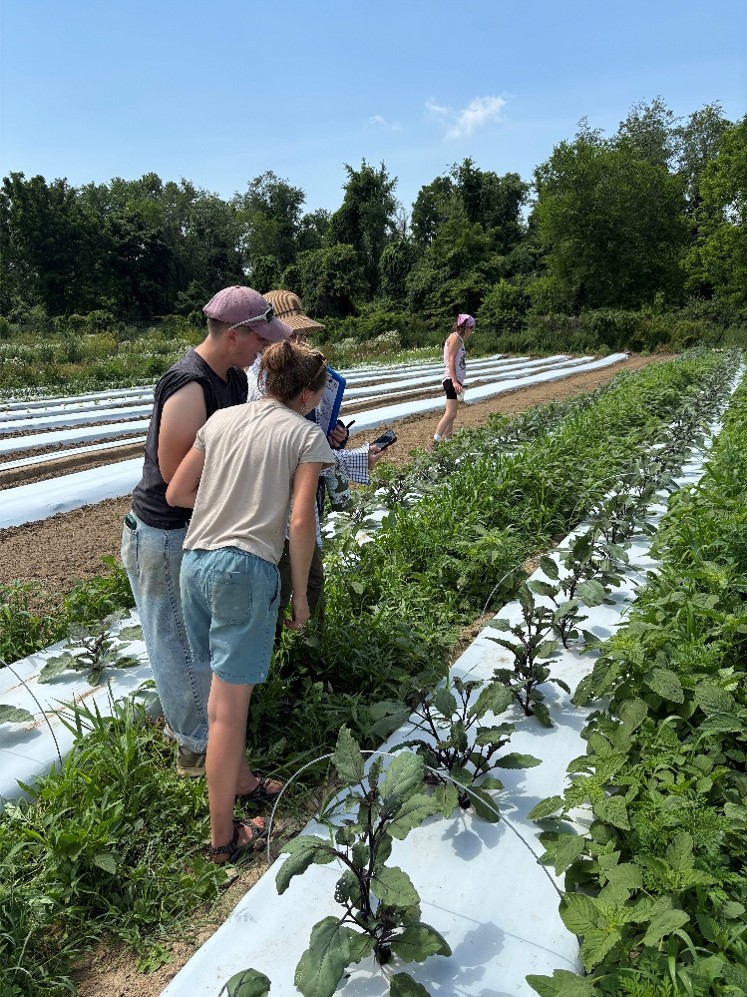
The challenges of diversified vegetable farming are complex and ever-changing. Farmers face constant pressure to protect crops from unpredictable environmental conditions, new and reoccurring pests, and nutrient imbalances. By adopting best crop management strategies and catching production issues early, farmers can prevent small problems from becoming catastrophic crop failures. However, it is challenging for individual farms to keep up with the latest advancements in crop protection.
Technical site training for farm staff conducted over the 2026 growing season on 28 farm operations in Eastern New York by Extension vegetable specialists directly addressed this issue. Site training observations were summarized into a weekly report providing targeted, expert advice for regional vegetable farmers that was easily accessed through a text link to the ENYCHP blog.
Funding was obtained through the USDA Northeast Extension Risk Management Education program to cover components such as diagnostic fees, supplies and Extension staff travel. The program will continue through part of 2027 and will include facilitated “farmer to farmer” programs.
The International Fruit Tree Association (IFTA) Tours Hudson Valley Apple Orchards
The IFTA is a decades-old membership association of tree fruit producers and support industry professions with the goals of providing educational opportunities for growers and supporting applied research. The membership and scope of the organization is international, with tours and conferences held in fruit growing regions around the world.
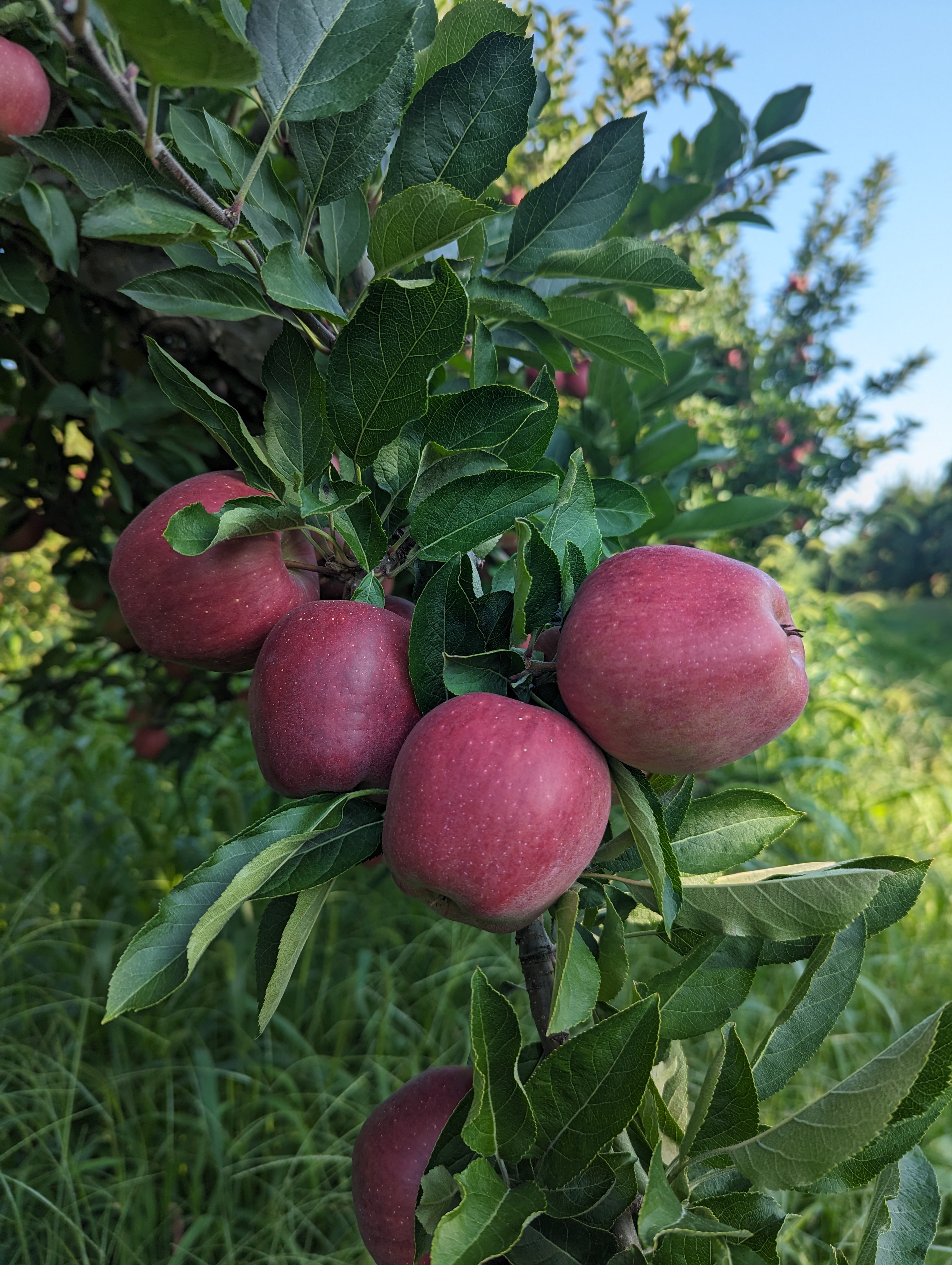
From July 20 -23, 2026, a group of 80 IFTA members toured orchard, agrotourism, and cider sites throughout the Hudson Valley. ENYCHP specialist Dan Donahue hosted a tour stop at Yonder Farms in Valatie, NY, presenting on the topics of Honeycrisp biennial bearing, the use of concrete trellis posts, and apple decline. At the educational conference held on July 23td, Mike Basedow presented on his work in orchard weed management and Dan Donahue presented on the topic of the Honeycrisp Playbook.
ENYCH Berry Team Keeps Grape Program Moving Forward this Summer
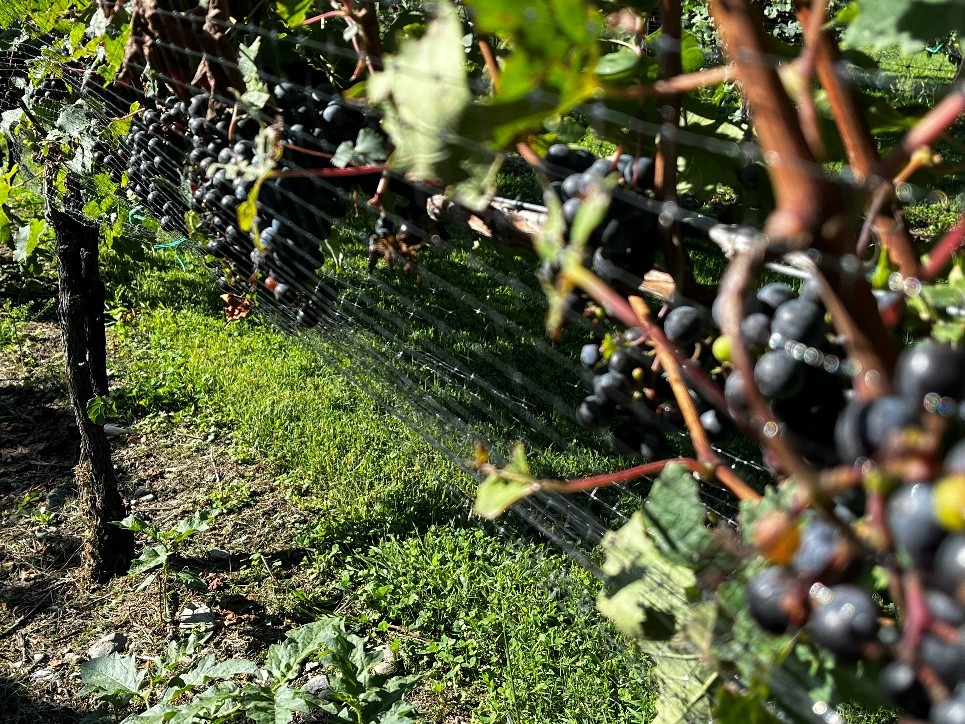
As our viticulture specialist relocated to Minnesota this summer, the ENYCH Berry Specialist, Heather helped keep the grape monitoring programs going with support from the team, especially our new technician Lydia. They conducted the CAPS pest monitoring for grapes. CAPS is a NYS Ag and Markets program to monitor for new invasive pests, and then Veraison to Harvest.
Veraison to Harvest is a program run by Cornell viticulture and enology extension associates across New York State. This year, weekly grape collection started on August 31st and ended October 5th. The Eastern NY Commercial Horticulture program covered four vineyards, two in the Hudson Valley and two in the Capital Region. However, according to American viticultural areas, both the Hudson Valley and Capital Region are considered Hudson River Region and Upper Hudson, respectively.
The varieties we collected in Eastern NY this year were Marquette, Marechal Foch, Frontenac, Cab Franc, Blaufrankisch/Lemberger, Chardonnay, Pinot Noir, Albarino, Gamay Noir, and Reisling. Each week, 100 grapes per variety were collected from each vineyard. The grapes were sent overnight to Geneva, where the weight, brix, pH, total acidity (TA), and yeast assimilable nitrogen (YAN) were measured. These values are all part of a maturity index, which inform viticulturists and enologist when to harvest their grapes. The following measurements are defined as: Weight: weight of 100 berries, Brix: measurement of sugar content (ripeness) of grapes, mainly glucose and fructose. Measured in degrees, pH: white grapes are ideally harvested from 3.1 – 3.3, while red grapes are ideally harvested from 3.3 – 3.5, TA: actual amount of acid reserve in the wine, YAN: affects the rate and completion of fermentation. Measurement provides nitrogen status of grapes. The maturity values are sent back to each region after analysis. In return, a write up is sent from each region detailing observations, growing degree days, and grower reports.
When all is said and done, Eastern NY data was compiled into a final New York report in Geneva who then analyzed the samples and sent the final report back and we distributed it out to our Grape List (and one time our Berry List by accident).
Summer Northern New York Orchard Field Tours Catered to Regional Differences
This summer, three summer orchard meetings were held in the northern half of the ENYCHP region. The content of these meetings were developed to best meet the unique needs of the growers within each production region.
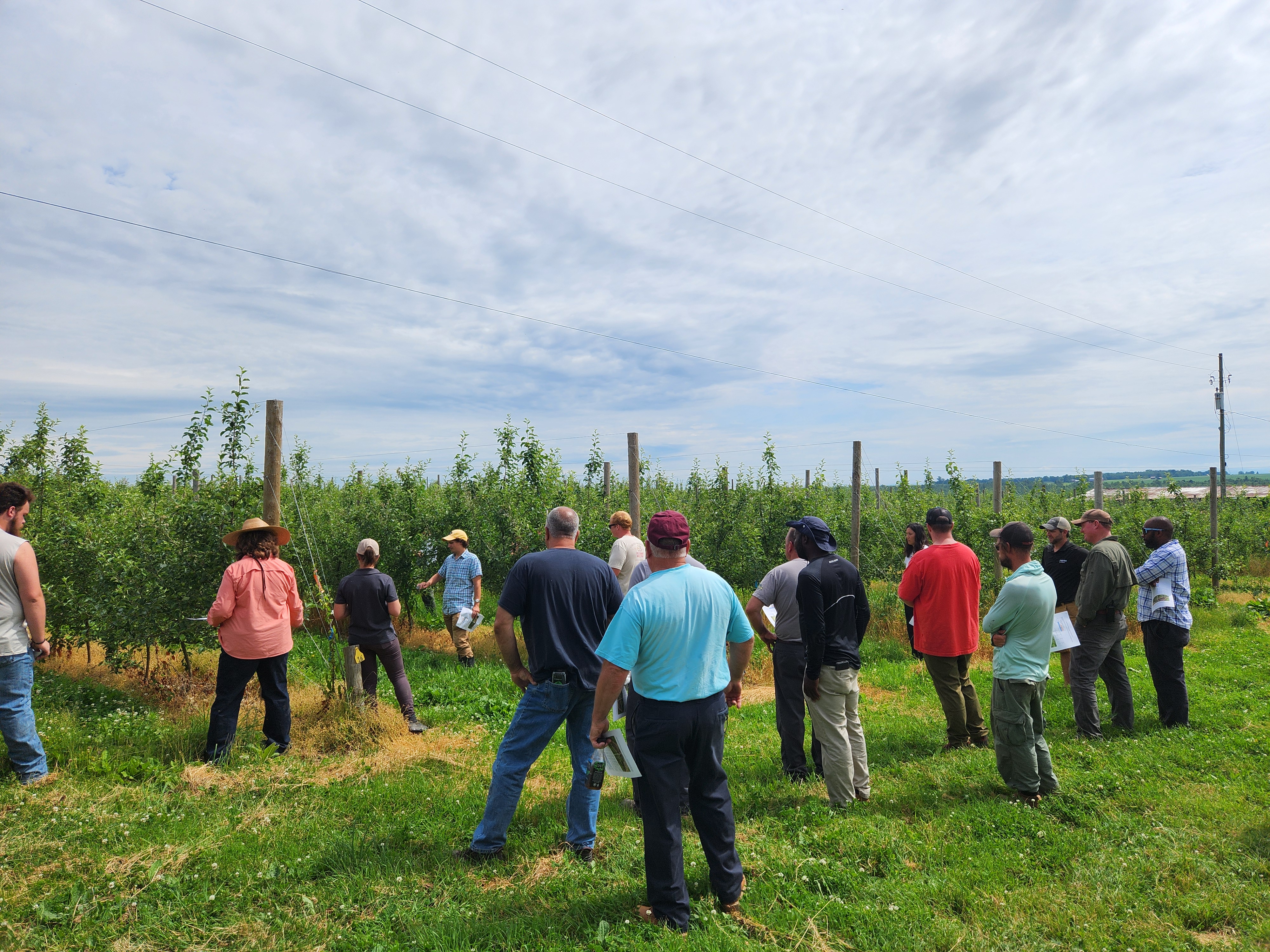
The Champlain Valley Summer Orchard Field Afternoon was held at Hart Apple Farm in Peru on July 15. This meeting is generally attended by the large wholesale apple operations located in the Champlain Valley. After an initial farm overview from owner/manager Randy Hart, Mike Basedow walked growers through and discussed data from his on-farm thinning trials at Harts, and discussed recent results from his Champlain Valley mechanical weeding trials. Growers also learned pest management research updates from Kerik Cox and Monique Rivera, how to improve fruit color from Lailiang Cheng, updates to blossom thinning applications with Emily Kawano, crop insurance with Liz Higgins, and managing biennial bearing in Honeycrisp with Dan Donahue. The meeting was attended by about 30 people, including most of the orchards located in Clinton County.
The Capital Region Orchard Twilight Meeting was held at Bowman Orchards on August 11. Most of the farms in the northern Capital Region are heavily diversified retail fruit farms. After an introductory talk from Kevin Bowman about what sells well on his farm, growers learned about late season apple pest management from Scott Cosseboom and Andres Antolinez Delgado. Liz Higgins discussed crop insurance, and Heather Kase gave an overview of the 2026 berry season. Mike ended the meeting with a talk on plum pest management, as a few orchards around the region have small plantings of this lesser discussed tree fruit. This meeting was attended by about 20 orchardists around the Capital Region.
The Champlain Valley storage meeting was held in Chazy on August 26th. This event included an afternoon program with talks on best storage practices for northern NY’s main apple varieties by Yosef Al Shoffe, along with a post-harvest rot talk from Ujjwal Kamboj, a member of Scott Cosseboom’s lab. This meeting was attended by about 20 attendees, representing many Clinton and Essex County orchards. As a follow up from this meeting, Yosef and Mike also developed storage best practice factsheets. These are printable factsheets that growers could have in a binder near the storage facility. These were distributed to the growers that attended the meeting, and a few commented how valuable this resource was going to be for the 2026 storage season.
Given the diversity in orchards across Eastern NY, ENYCHP plans to continue to offer targeted workshops throughout the summer to continue to best meet the needs of the growers.
Fulton County Field Day Highlights Organic Seed Production
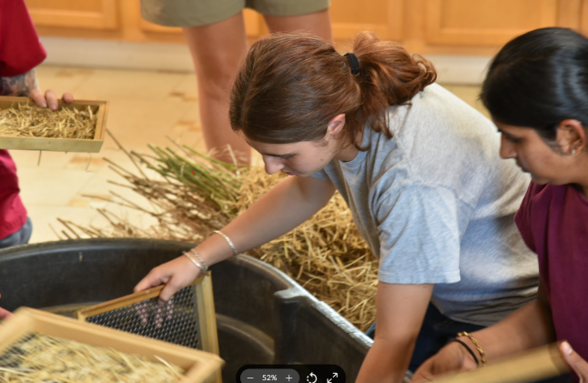
On August 6th 32 growers and extension staff from across the Capital District gathered at Philia Farm for a field day highlighting various aspects of seed production. Growers were able to learn through hands-on demonstrations of multiple scales of dry and wet seed cleaning, and to tour the OSPREY project, which highlights seed production in tomatoes, lettuce, summer squash, and broccoli.
The field meeting was also the culminating activity for Arabella Ferris, my Cornell student intern. Arabella was instrumental in the installation and maintenance of the OSPREY project, and was able to provide a comprehensive tour of the plots during our field day. Data collection in the OSPREY plots has continued since Arabella went back to school this fall, and will be used to compare the seeds yields and quality in New York to six other states repeating the same trials throughout the country. This is the second of three years of this work.
Having a summer intern was a highlight of the field season. Not only did Arabella provide assistance in the significant work of the trials, she also worked with 4-H kids who were entering produce in the fair, assisted at other grower meetings throughout the summer, and brought enthusiasm to mundane asks like routine field scouting. I look forward to hopefully recruiting another excellent intern next season!

We openly share valuable knowledge.
Sign up for more insights, discoveries and solutions.