
Spring Kicks Off Berry and Grape Monitoring Networks
Starting in May, traps across Eastern NY were put out on farms to monitor berry pests. These berry pests include Spotted Wing Drosophila, Cranberry Fruitworm, Cherry Fruit Worm, and Blueberry Maggot. Traps are checked every week, and data is input in a spreadsheet. This spreadsheet feeds the Berry Pest Monitoring Network interactive map, where growers and specialists can track pest populations across New York State which helps them make management decisions about applying insecticides.
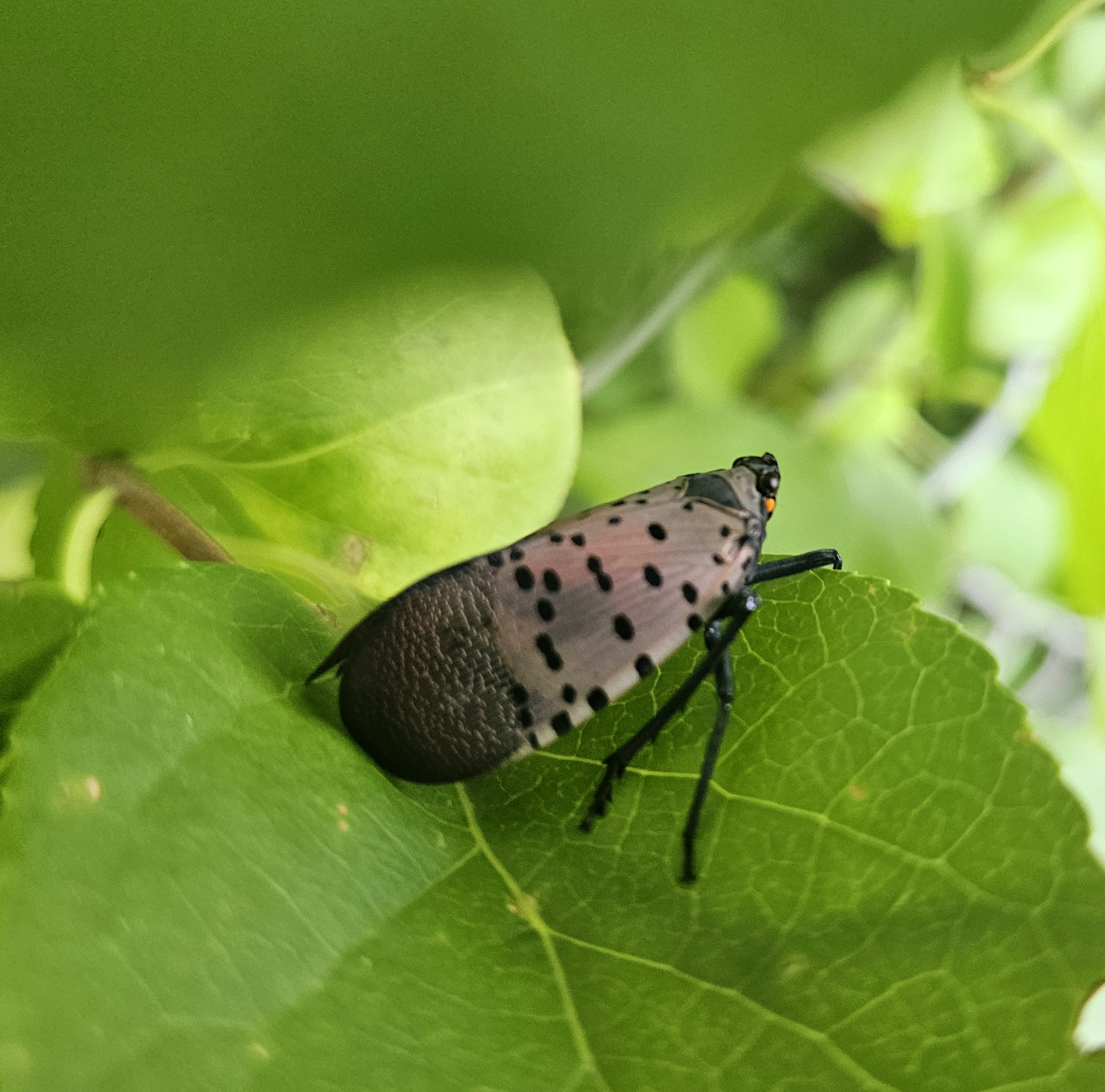
Simultaneously, CAPS Grape monitoring began in June and runs until fall. CAPS is the Cooperative Agricultural Pest Survey and monitors for new invasive pests in both apples and grapes. For grapes, the targeted invasive pests that are being monitored biweekly in traps are Christmas Berry Web Worm, European Grape Vine Month and European Grape Berry Moth. During the season, a one-time scout for Red Blotch, Mealybug, and Spotted Lanternfly after the second instar will also occur. There are two CAPS sites in the Hudson Valley, one in the Capital Region, and two above the Capital Region. Because these are new invasive species we hope to not catch or observe them. However, if the target pest is identified, the traps are then sent to a federal lab for further identification and confirmation.
Champlain Valley Apple Pruning Workshop for H2A Employees
Mike Basedow held advisory meetings with Champlain Valley orchards back in January to review workshop plans for the 2026 season. At one of these meetings, one of the orchard managers pointed out their desire to hold a local pruning meeting in the spring once their seasonal H2A workers arrived. Pruning is one of the most important horticultural tasks within the orchard, and each employee likely has a differing level of familiarity with this task, so they felt it would be good to provide a refresher.
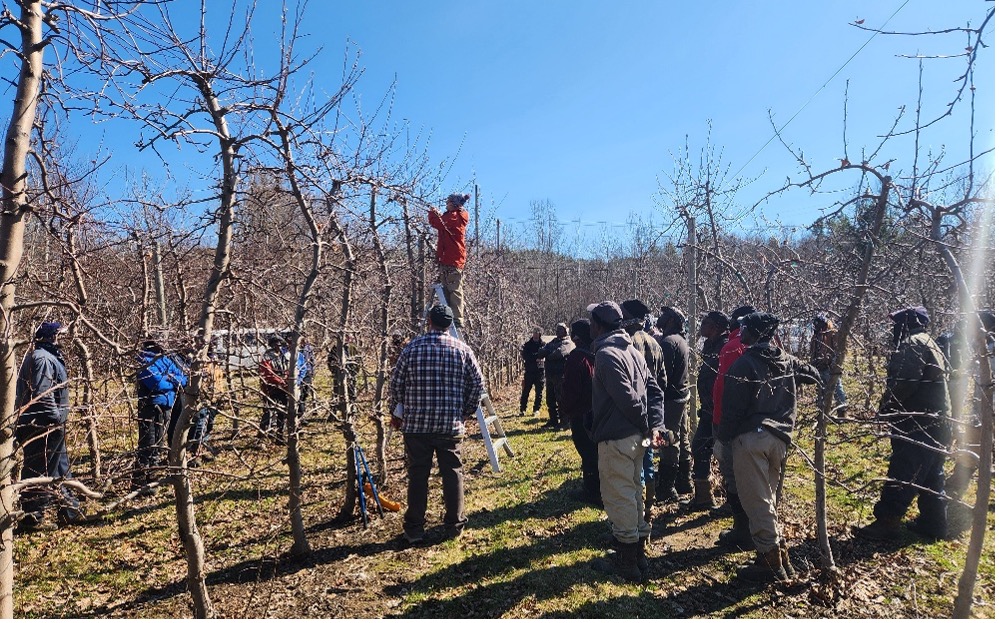
On April 8, we hosted a pruning refresher meeting at northern orchards in Peru. The meeting was attended by about 40 seasonal employees from local orchards. Mike discussed the basic physiology of pruning, the impact of pruning on fruit quality and tree growth, and how pruning could be used as an initial step in precisely managing apple crop load. From there, Mike demonstrated how to prune a few different varieties trained to a tall spindle system, emphasizing differences in vigor between different varieties. In the presentation, Mike broke pruning down to four major steps, emphasizing that the first two steps are likely the most critical, and the two that should be done every year. The final two steps could were more detailed, and are likely only necessary in years with excessive crop load. This conversation got the employees thinking more about the number of fruit buds on the trees, so that they could more confidently prune the trees the necessary amount.
In follow up conversations with orchard managers the next day, they felt the meeting was worth the time. While we are all accustomed to pruning trees a certain way, thinking through the physiology and economic aspects was a useful refresher for the employees and managers attending. We anticipate continuing these meetings annually in the future.
Organic Farming: What, Why, and How
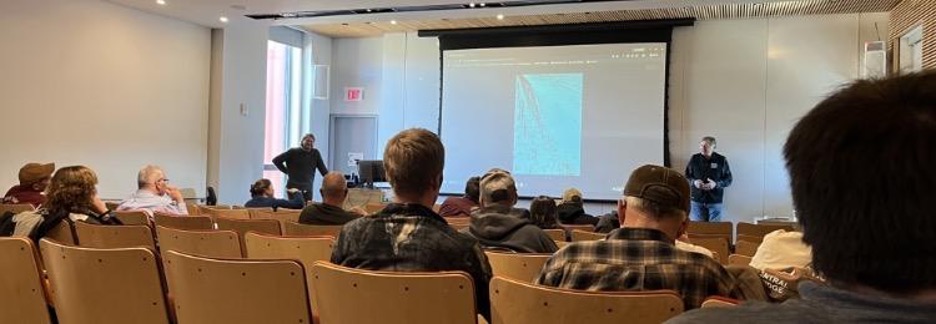
Farmers across the region came to SUNY Cobleskill on April 8th to hear Klaas Martens and Crystal Stewart-Courtens share their journeys as organic farmers. The group discussed topics from soil health to weed management, to marketing and the pros/cons of Organic certification - because sometimes it’s critical for your operation, and other times it’s more effort than it’s worth. While the event was scheduled for 2 hours, attendees stayed after the event and into the afternoon to continue their conversations and discuss opportunities.
CCE Regional Extension Response to a Severe Tree Fruit Bloom Freeze Event
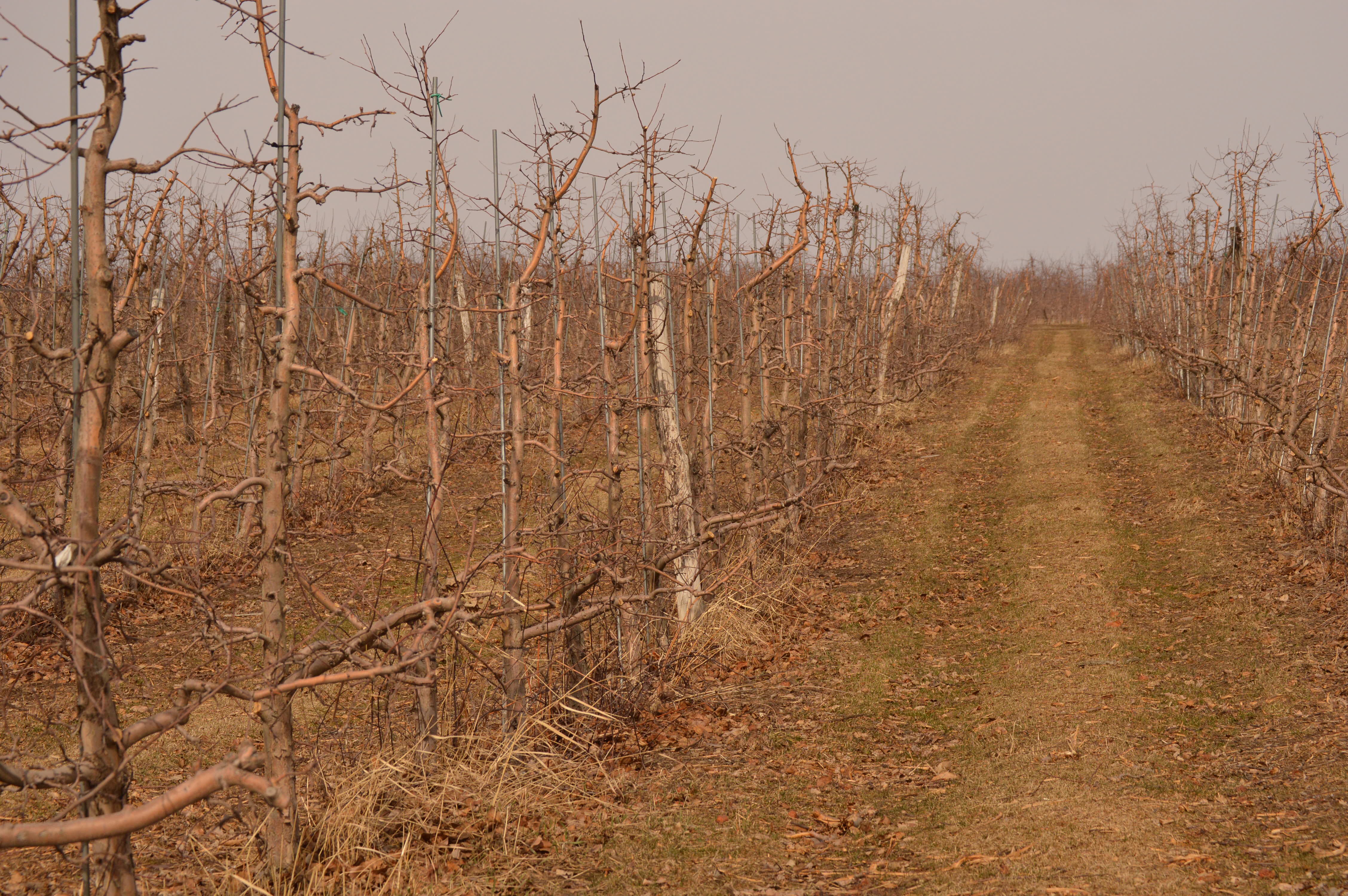
Hudson Valley tree fruit producers suffered through 4-6 hours of 22-26F temperature during the early morning hours of April 21 2026 while apple trees were in the highly freeze susceptible late pink and bloom stages. Apricots, peaches, plum/prunes and cherries were in the fruit set stage, slightly farther along but equally susceptible.
CCE-ENYCHP specialists reacted immediately with recommendations on how to best evaluate and mitigate freeze losses. As time passed specialists provided actionable guidance to growers on how to chemically thin a freeze-damaged crop, how to document losses, and how to report losses for crop insurance purposes. Finally, during the spring specialists documented the extent of the freeze losses, reported the findings to relevant government organizations.
Leading the Farm Team: Supervisory Skills for New Managers
This April Elizabeth Higgins (ENYCH), Raeyvn Sunders (Central NY regional Team), Kelley Doolin (CCE Schoharie) and Isabella Yannuzzi (CCE Dutchess) collaborated on a program to train new farm managers. This three-week webinar series was intended to help bring some of the key materials developed by the Cornell Ag Workforce Development Program’s Certificate in Ag Leadership training program to smaller farms in the region.
The program was attended by 9 farm managers from Eastern NY and participants learned some practical tools to set expectations, communicate effectively, improve employee performance, and manage workplace challenges. This was also an opportunity for CCE educators and Regional Team specialists in the ENYCH region to work together on a program.
Back-to-back meetings highlight food safety and grower best practices
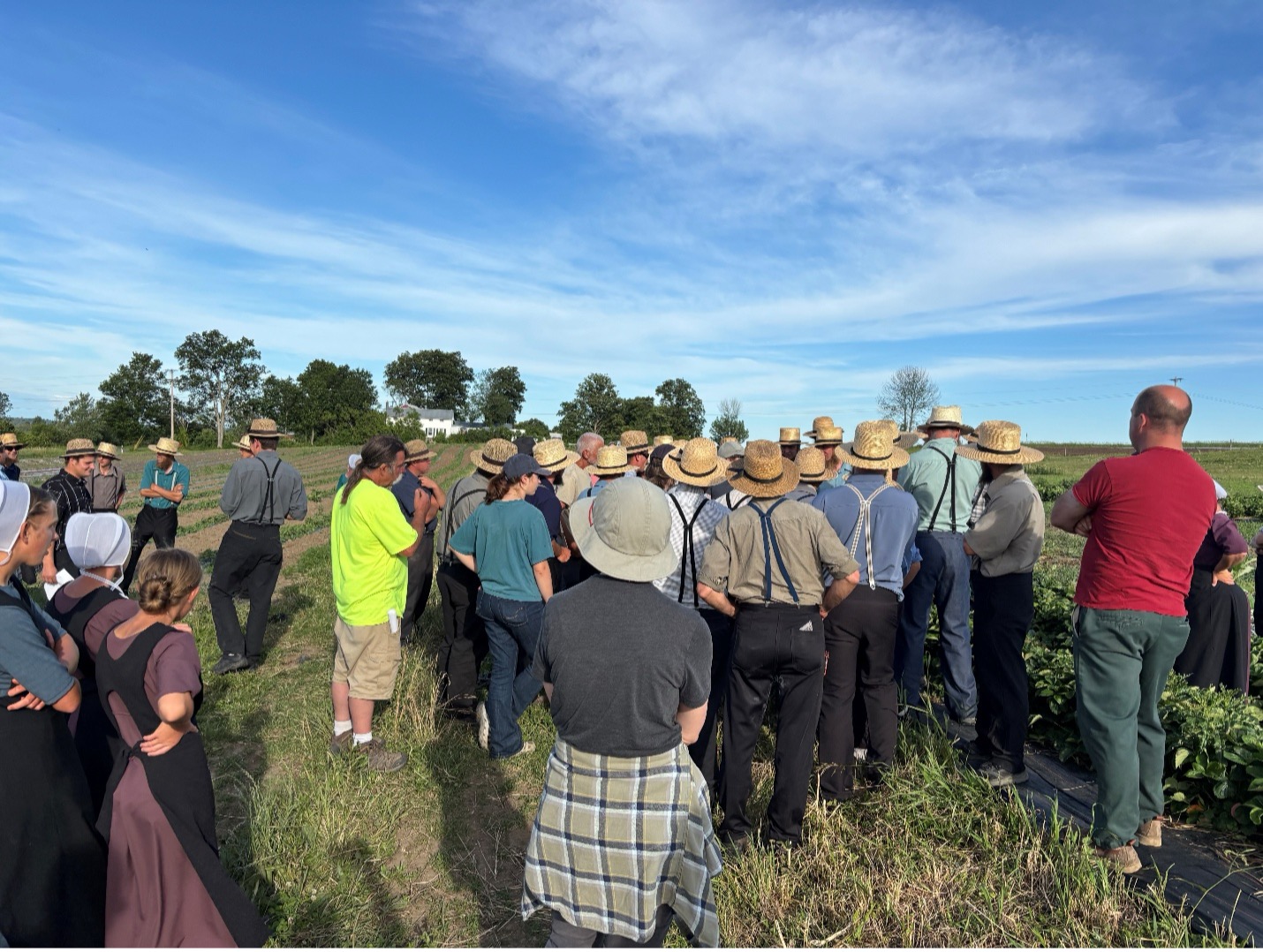
Our team worked with Ag and Markets on June 24th to deliver two programs back to back at a produce farm in Montgomery count in order to train an emerging grower cooperative on GAPS certification and to provide local produce farmers with continuing education in crop production practices.
The early afternoon convened a group of growers to hear from George Spohn, an Ag and Markets Inspector, about the process of becoming GAPS certified. This group plans to be inspected and become certified this growing season and will be working closely with CCE on meeting the standards needed to pass an inspection.
Following this meeting, a much larger group of growers arrived at the farm to discuss best practices for growing cantaloupes, sweet corn, watermelons, tomatoes, pumpkins and strawberries. Crystal spoke about pest control strategies on the vegetable crops, and Heather spoke about strawberry best practices.
New season extension research projects underway at the Cornell Willsboro Research Farm: overwintered onions and cover crops
Two new research projects are underway at the Cornell Willsboro Research Farm in Essex County this season, led by vegetable specialists Elisabeth Hodgdon and Judson Reid. Both examine strategies to extend the season for crops using high tunnels, including onions and cover crops. The projects began last fall, when crops were planted into the research high tunnels for overwintering.
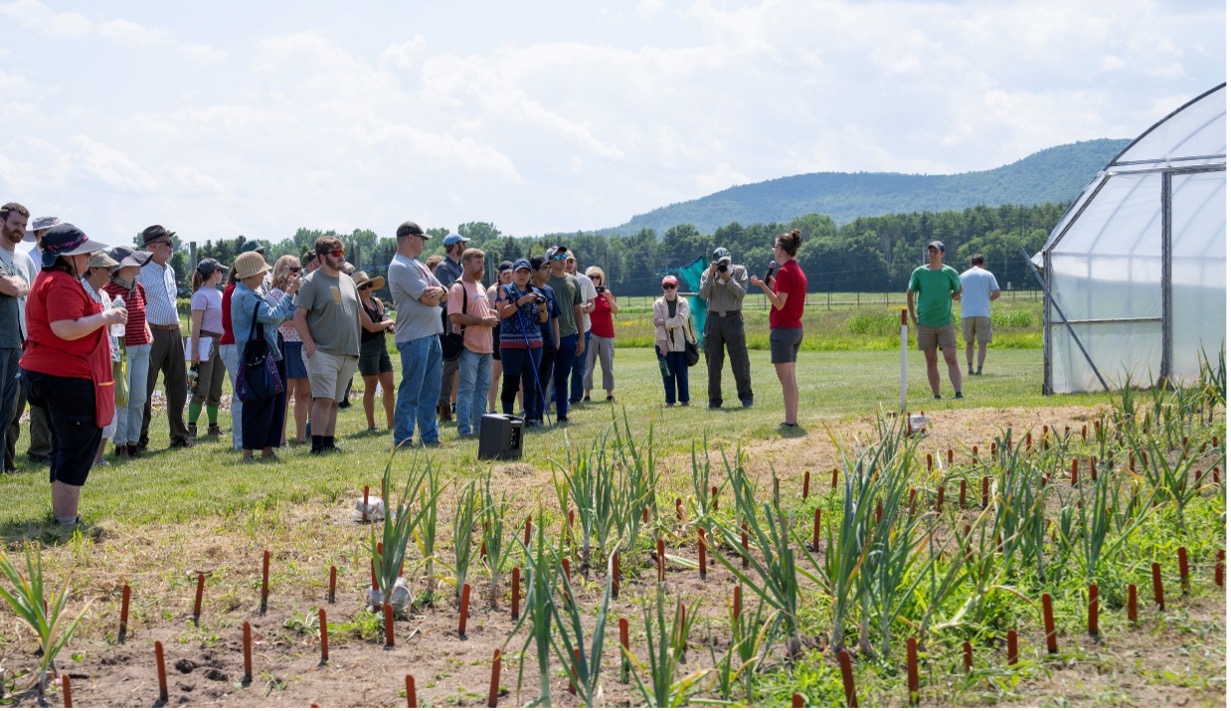
For the first project, funded by the Northern NY Agricultural Development Project, we conducted a variety trial of overwintered onions, shallots, and scallions. The alliums were planted in the high tunnel in September 2025, and harvested from March through July 2026. Scallions were harvested early in the spring, followed by onions and shallots. The trial revealed distinct differences in varietal susceptibility to bolting in the spring. Bolting is a common problem with overwintered onions; when an onion forms a flower (bolts), the bulb becomes unmarketable. We were able to partner with Bejo Seeds to trial a new experimental red onion variety for overwintering, and found that this variety was the top performer amongst red onions tested.
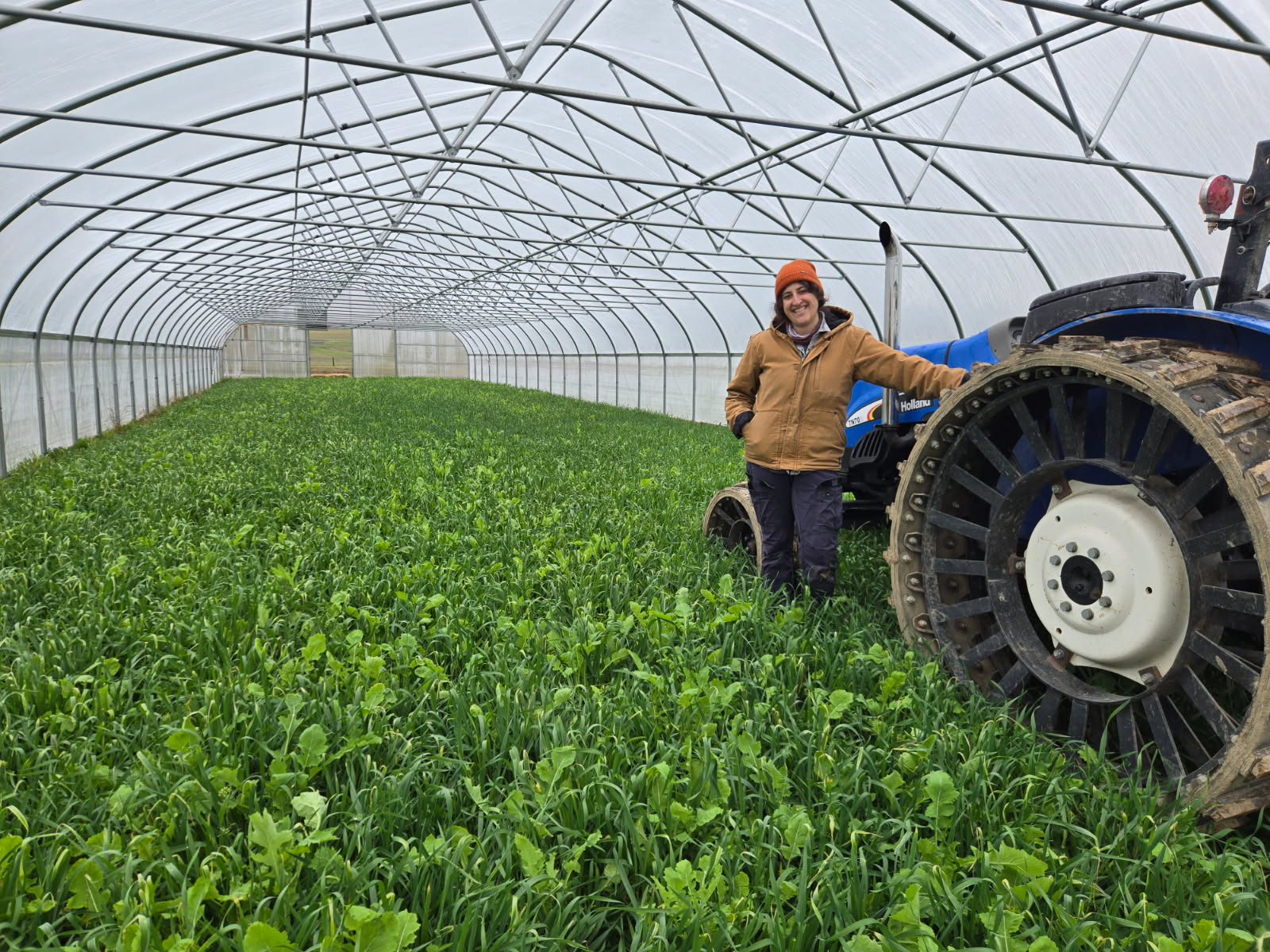
In our second trial, we asked the research question: How do overwintered high tunnel cover crops impact soil health and tomato crop yield? Cover crop treatments consisting of winter rye, Austrian winter peas, a mixture (rye, peas, crimson clover, oats, and radish), and an unplanted weed-free control were seeded in September 2025. We collected data on cover crop biomass production and soil health in the winter and spring. After the cover crops were terminated and incorporated into the soil in May, we planted tomatoes over the plots. Interpretation of our spring data is underway, and tomatoes from the experiment will be harvested through fall 2026. Our results will be used to inform cover crop species recommendations for growers, as well as tailored fertilizer application recommendations based on contributions from cover crops. This projected was sponsored by Federal Capacity Funds.

We openly share valuable knowledge.
Sign up for more insights, discoveries and solutions.