Onions
Disease Management
Control Leaf Diseases
This resource provides relative performance rankings for Botrytis leaf blight and Stemphylium leaf blight of the main fungicide options that may be used in New York to control these diseases, based on recent on-farm fungicide trial results, which reflect reduced efficacy of SLB due to development of fungicide resistance.
Scouting Tips
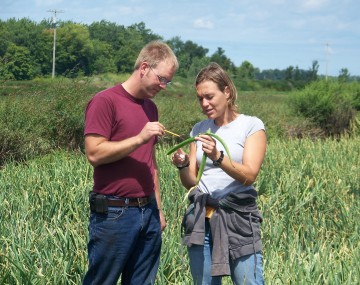
A quick how-to guide on what to look for when scouting for onion thrips in onions.
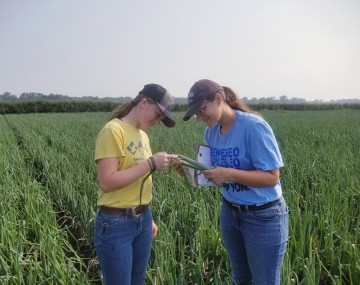
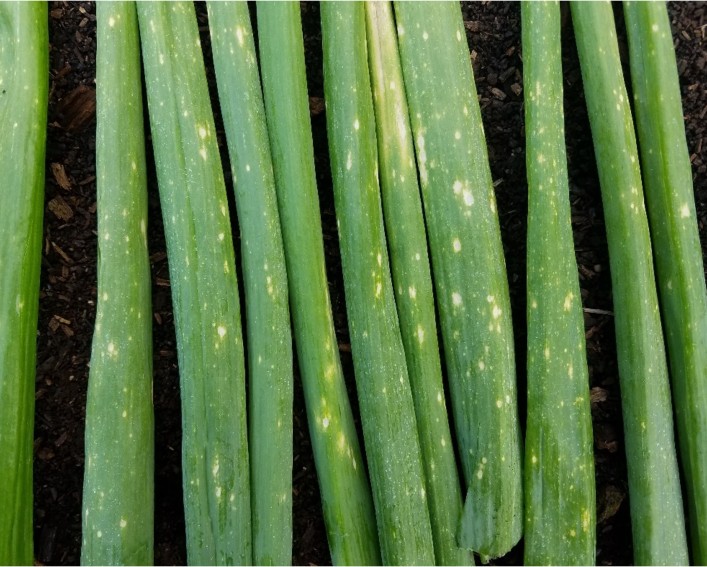
Botrytis Leaf Blight (BLB) halo lesions are the tiny pin-prick to pin-head sized yellow necrotic spots surrounded by silvery halos. The silvery halo is often blotchy in shape. Sometimes the necrotic spot is barely visible, which can make identification of such versions of these lesions tricky to identify. Here we show examples of BLB halo lesions and compare those to herbicide injury and various nicks.
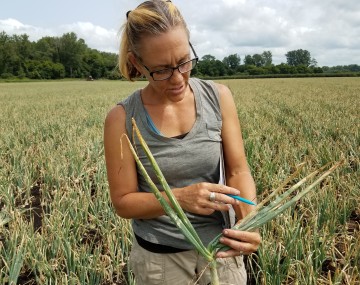
Through recent on-farm fungicide trials, we've determined that not all Botrytis leaf blight (BLB) lesions are controlled equally. There are two kinds of BLB lesions: BLB halo lesions and BLB necrotic spots and your best fungicide options for control of Botrytis leaf blight depends on what kind of spot you got!
Disease Management
Primary vs Secondary SLB Lesions
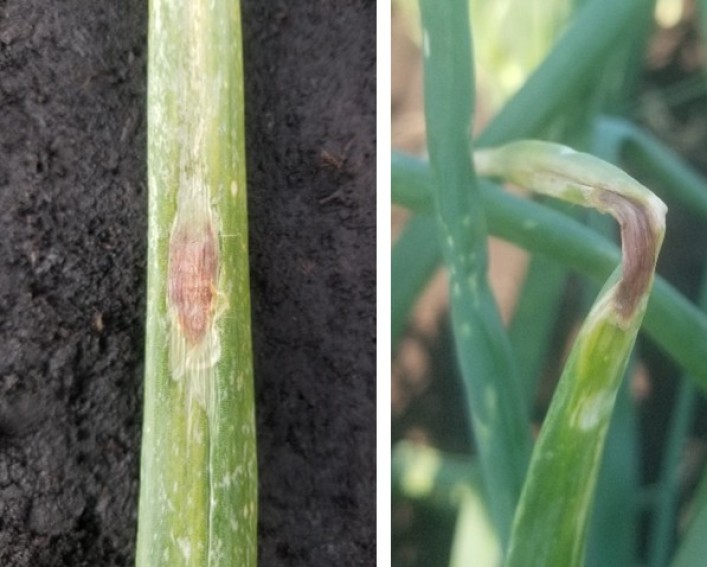
Stemphylium leaf blight (SLB) is a foliar disease of onion that causes tan, black or purple-colored target spots and leaf dieback. When uncontrolled, it results in excessive leaf dieback which causes reduced bulb size/yield and bulb quality. SLB can behave as both a primary and a secondary pathogen. When it behaves a primary pathogen, it attacks healthy green tissue, causing it to die and otherwise “causing trouble” in the crop. When SLB is behaving as a secondary pathogen, it attacks necrotic leaf tissue that has already been killed by something else, such as post-emergent herbicide injury (especially leaf burn), bacterial disease, or the lesions of IYSV and downy mildew.
It is the primary form that is of most concern.
2026 Onion Thrips Management Guidelines
The Onion Thrips Management Guidelines: Using Foliar-Applied Insecticides are designed to optimize onion thrips management in onion and to mitigate risk of insecticide resistance. Information herein is based on insecticide resistance management principles (IRAC: Insecticide Resistance Action Committee) and years of experience evaluating efficacy of insecticides used for managing onion thrips infestations in small-plot onion field trials in commercial fields, primarily in western New York.
Stop the Rot!
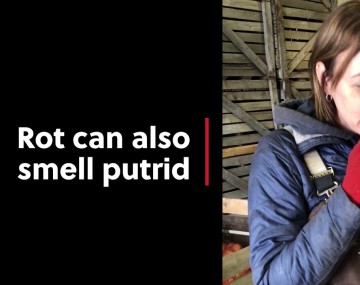
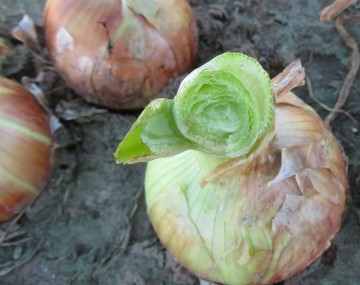
Bulb rot caused by bacterial pathogens can be confused with bulb rots caused by fungal pathogens as well as physiological disorders. It is important to accurately diagnose the cause of bulb rot/internal disorder in order to determine future effective preventative management strategies. Materials created for the Stop the Rot USDA-NIFA Project 2019-51181-30013.
Watch our videos to learn how to stop the rot!
In this simple 4 minute video, accurate identification of bulb rot caused by bacterial pathogens is distinguished from lookalikes caused by fungal pathogens Botrytis neck rot, Fusarium basal rot, black mold and blue mold and physiological disorders dry scale and translucent scale. Also available in Spanish on the Cornell Vegetable Program YouTube channel.
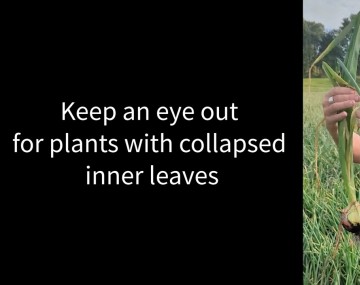
In this video, see the different forms of foliar symptoms of bacterial diseases of onion and how to distinguish bacterial diseases from other non-bacterial lookalikes.
Onions are most susceptible to infections from bacterial bulb rotting pathogens when plants have soft necks, green leaves and are standing upright. The process of rolling the onion foliage protects the leaf axils from new bacterial infections. This 4 minute video explains the concept of rolling onions to stop the rot.
Seed Treatments to Manage Maggots and Soilborne Diseases in Onion, 2026
Because onions are attacked by the onion maggot (Delia antiqua) and seedcorn maggot (D. platura), determining which insecticide seed treatments to use for managing both is important. Our recent research has shown that seedcorn maggot may kill onion seedlings before and shortly after emergence, while onion maggot is the dominant species that kills onions after emergence (80-90% of infested plants), and seedcorn maggot is less prevalent (10-20% of plants).
The "Cheat Sheet" for Seed Treatment and In-Furrow Treatments for Managing Maggots and Soilborne Diseases in Direct-Seeded Onion in New York, 2026 provides an update on insecticide options for managing both maggot species using seed treatments based on results from multiple Cornell field trials in Oswego County from 2023 to 2025.