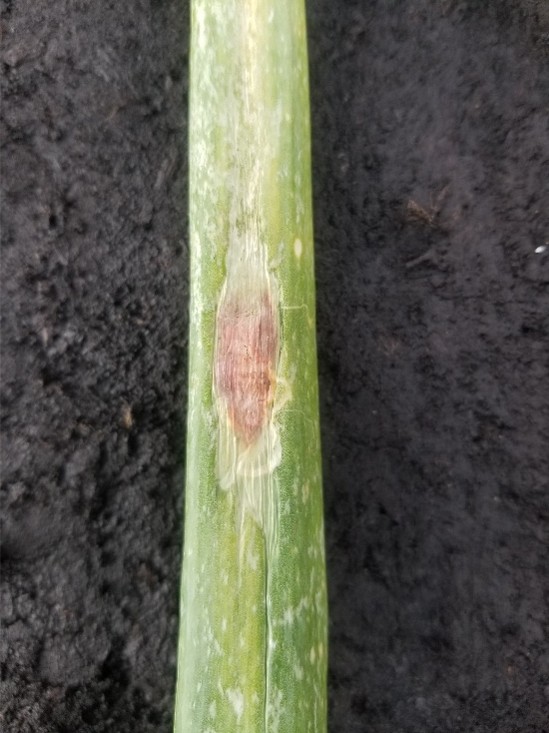
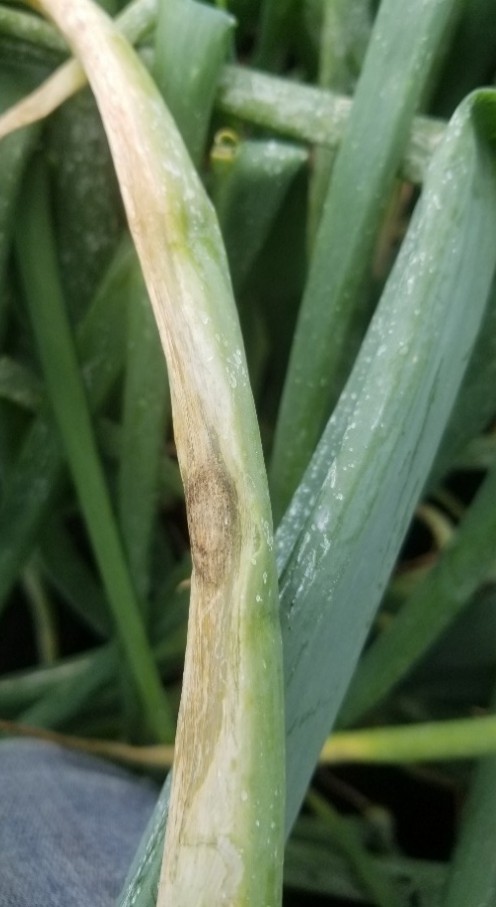
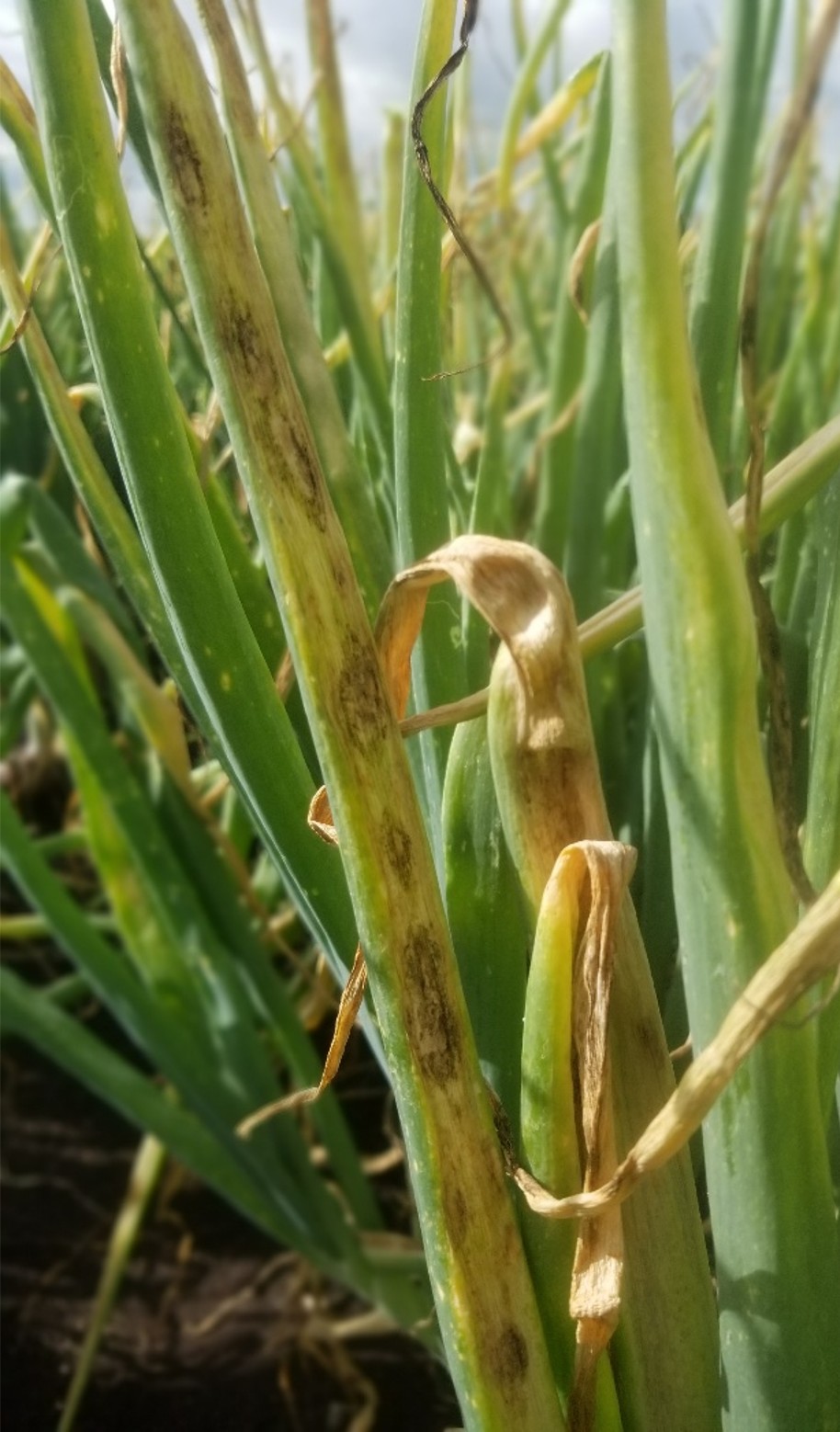
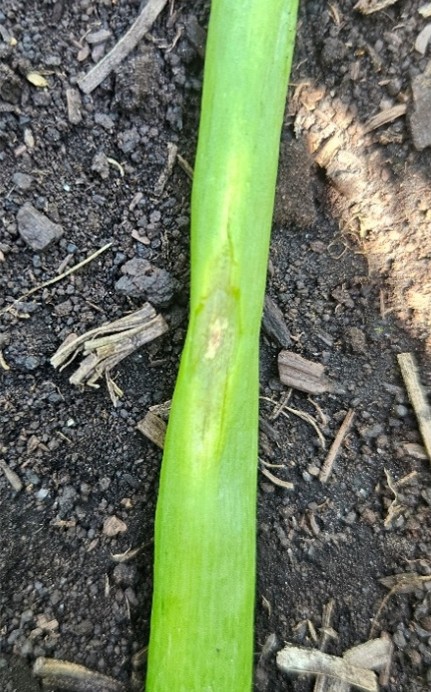
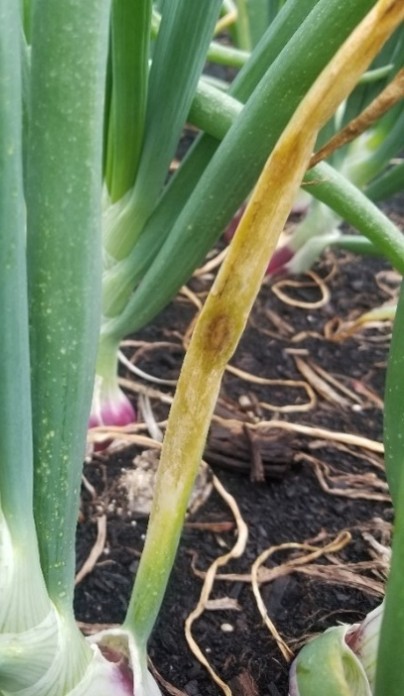
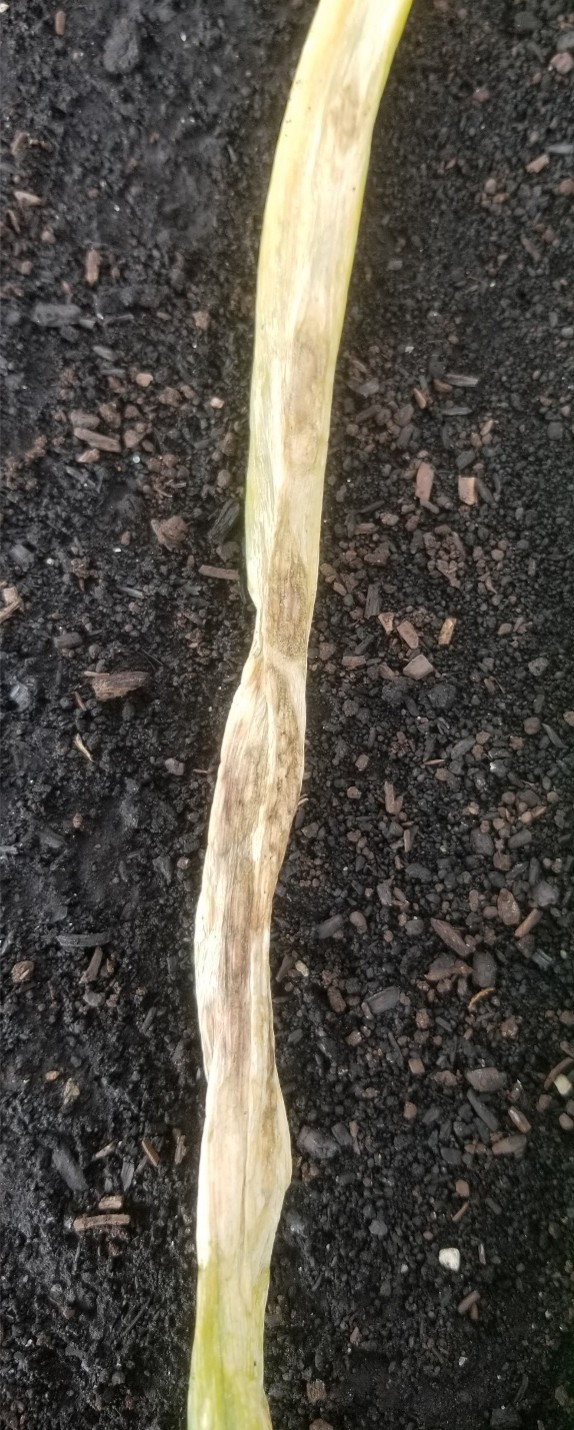
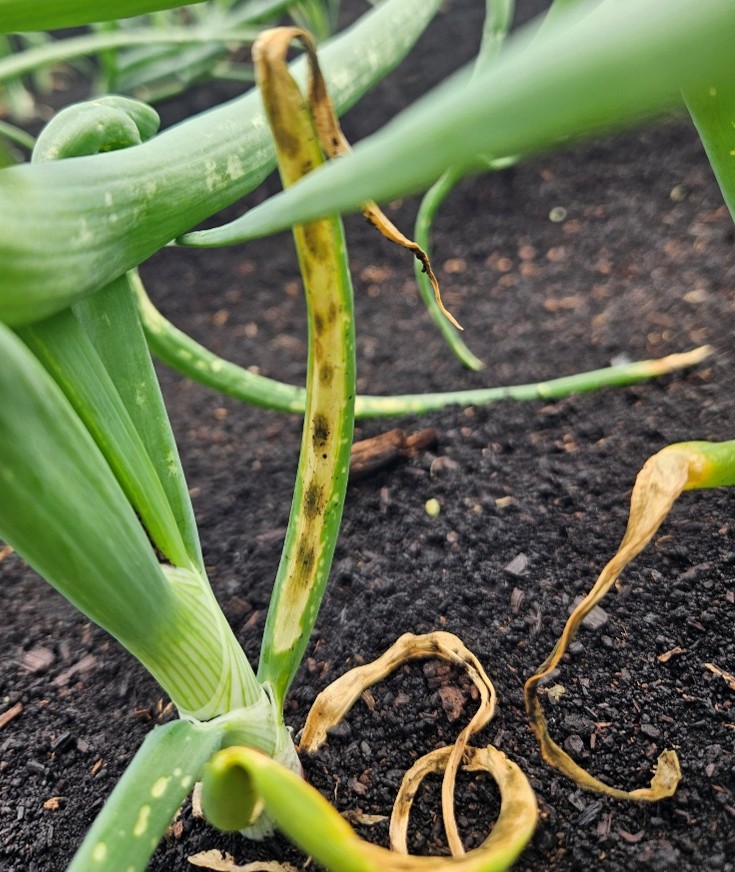
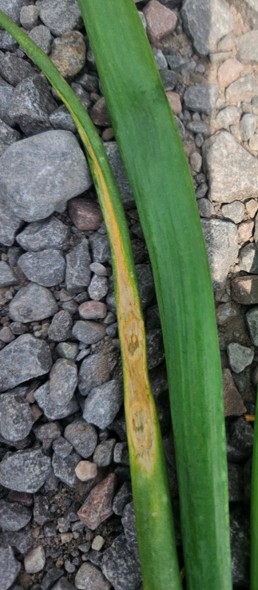
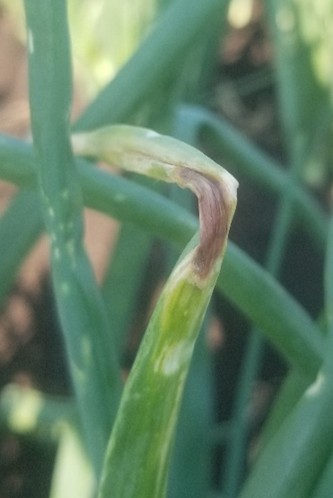
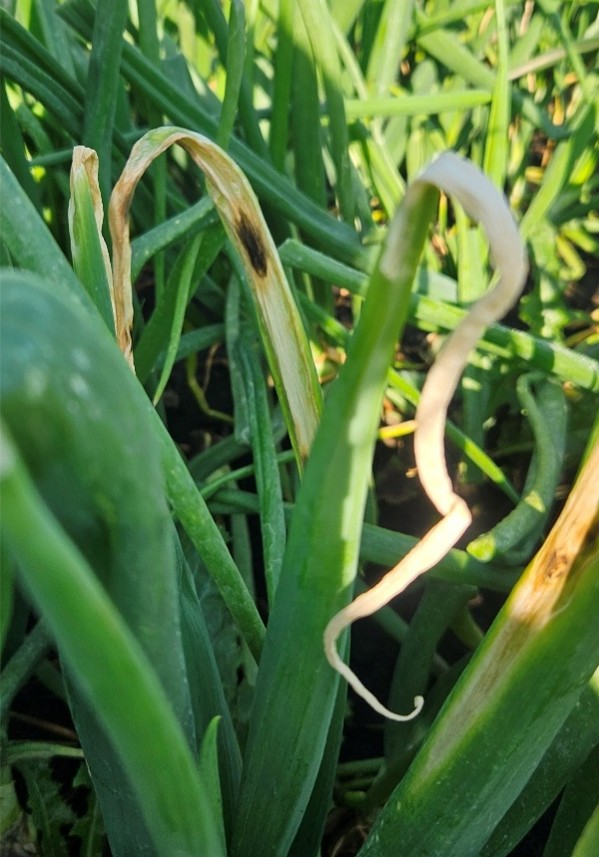
Stemphylium leaf blight (SLB) is a foliar disease of onion that causes tan, black or purple-colored target spots and leaf dieback. When uncontrolled, it results in excessive leaf dieback which causes reduced bulb size/yield and bulb quality. SLB can behave as both a primary and a secondary pathogen. When it behaves a primary pathogen, it attacks healthy green tissue, causing it to die and otherwise “causing trouble” in the crop. When SLB is behaving as a secondary pathogen, it attacks necrotic leaf tissue that has already been killed by something else, such as post-emergent herbicide injury (especially leaf burn), bacterial disease, or the lesions of IYSV and downy mildew. Secondary SLB is contained on this necrotic tissue and causes “no further trouble” in the crop. When scouting onion fields and evaluating fungicide trials, we distinguish the primary and secondary forms of SLB. Of course, it is the primary form that is of most concern.
Primary Form of SLB
The primary form of SLB is characterized by:
- Target spots of any color (tan, black or purple) on green leaf tissue.
- Once the green tissue has yellowed or become necrotic, it is important to look at the location of the target spot along the leaf. When the target spot occurs several inches from the leaf tip and the other side of the leaf is still green, then you know that the target spot originally occurred/infected green leaf tissue and is primary.
- Black sporulation on target spots that occur on necrotic or green leaf tissue.
- Target spots with a “greasy” or water-soaked appearance that occur on necrotic, yellowing or green leaf tissue.
- Purple-colored target spots, unless they clearly are on necrotic tissue that was killed by something else.