
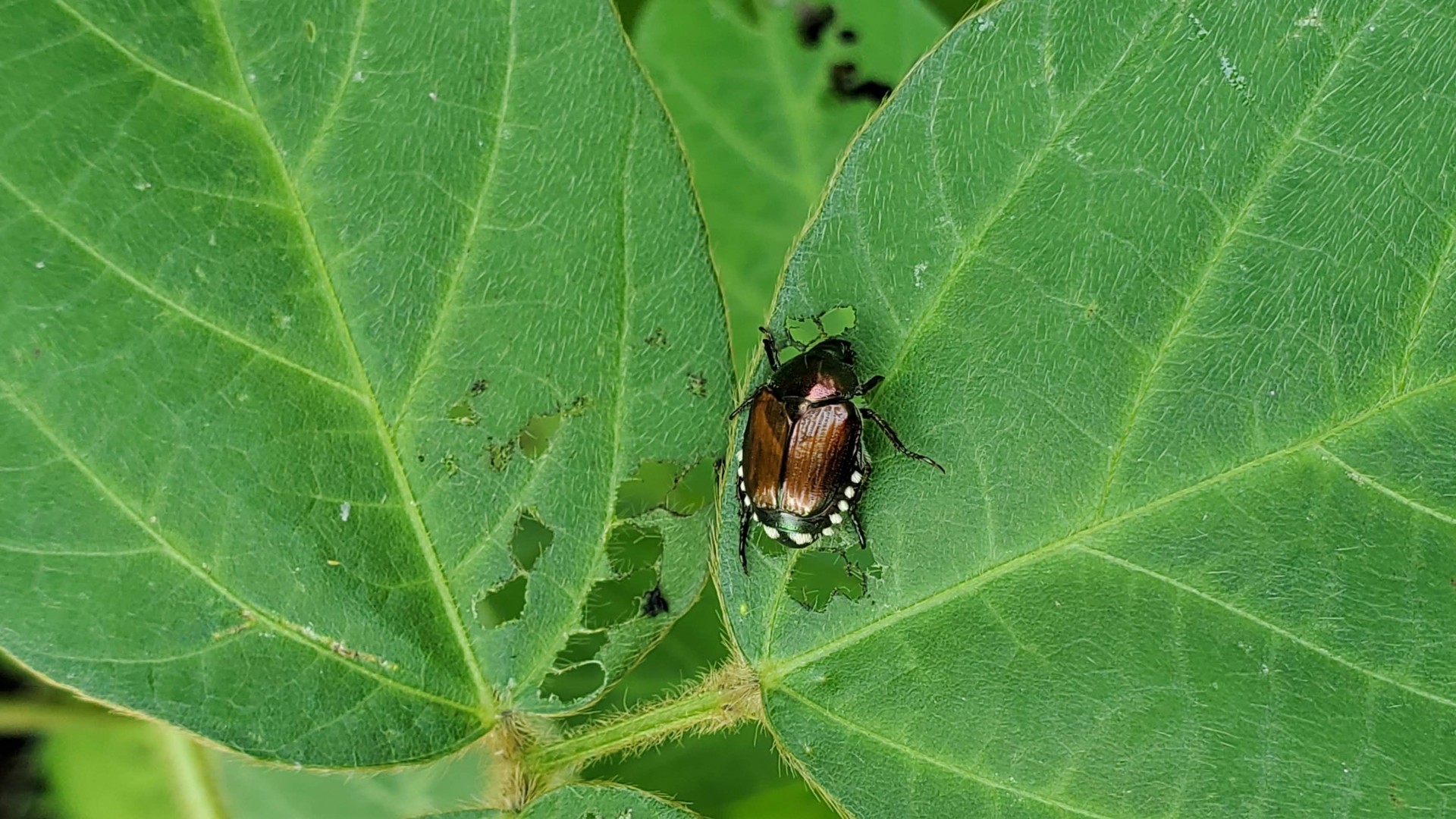

Everything’s been growing beautifully in your garden, until one day, tiny holes appear in your spinach leaves, or your cucumbers have suddenly begun wilting. Or your roses have become raggedy.
You know that your garden’s tiniest pests are back. But you will not be defeated.
Before you reach for a pesticide, though, take the time to know your opponent. That way, you can find the most effective and least toxic strategies for outmaneuvering them.
Easier said than done, though, especially when you see all your hard work chewed to shreds.
So, begin with a deep breath and a closer look at your plants.
Know the Risks
Understand what poses trouble for your plants. Familiarize yourself with any pests or diseases that are likely to affect what you grow. And be sure that your plants are in their ideal conditions so that they can grow as vigorously as possible. Healthy plants are always the first line of defense against pests.
Observation
Make note of any damage you’re seeing on your plants. What kind of holes do the leaves have? Is there any damage to the stems? Are the plants wilting? Is the damage limited to a specific area? Are any other plants affected the same way?
Also look for any potential culprits. What insects, caterpillars, moths, slugs or snails do you see on or around your affected plants? If you can, get photos of them. If they’re too small or too fast for a photo, try to note any distinguishing characteristics like size, color, stripes or spots.
Don’t automatically assume that the insects you see are responsible for the damage, though. Beneficial insects can show up where pests are at work, and you want to encourage them to stay!
Identification
If you know which pests and diseases are likely to affect your plants, you’ll likely be able to recognize them (or the damage they cause) pretty quickly.
But sometimes it’s not that simple.
If you know what the insect or damage looks like or have a photo, you can use an identification guide to help you figure out what it is. Here are a few helpful ones:
- What Insect is This? (University of Minnesota Extension)
- What’s Wrong with My Plant? (University of Minnesota Extension)
- InsectNet PestID (Iowa State University)
You can also try using apps like iNaturalist (which has a free version) or Google Lens (free). Just be aware that these are not fool-proof sources. Use your gardeners’ common sense if you get questionable results.
If you need more help, or just want to talk to someone about your pest issues, reach out to our Garden Helpline. This phone and email helpline is staffed by Master Gardener Volunteers and our Horticulture Educator Katie Oakes, who can provide research-based information to help solve your garden issues. We can assist with general gardening questions, soil sampling and analysis, identification of insects and plants, and more. To reach the Master Gardener Helpline, call us at 585-798-4265 or email orleansmg [at] cornell.edu (orleansmg[at]cornell[dot]edu).
Strategize
Once you know what you’re up against, you can figure out how best to proceed. Consider using an integrated pest management approach to manage the pests in your garden. Start with non-chemical options – hand-picking or blasting the insects with a stream of water – before reaching for a chemical pesticide. And know that you’ll likely need a variety of methods to manage these pests.
Connecting with our Garden Helpline (585-798-4265 or orleansmg [at] cornell.edu (orleansmg[at]cornell[dot]edu)) can be a good first step toward figuring out what to do.
Other helpful resources include:
- Factsheets from Cornell University’s Insect Diagnostic Laboratory
- Yard and Garden Insects from University of Minnesota Extension
And remember, managing pests in the garden isn’t about eradication. It’s about balancing an acceptable level of damage to your plants with the least toxic approaches.

We openly share valuable knowledge.
Sign up for more insights, discoveries and solutions.