
Master Gardener Volunteers
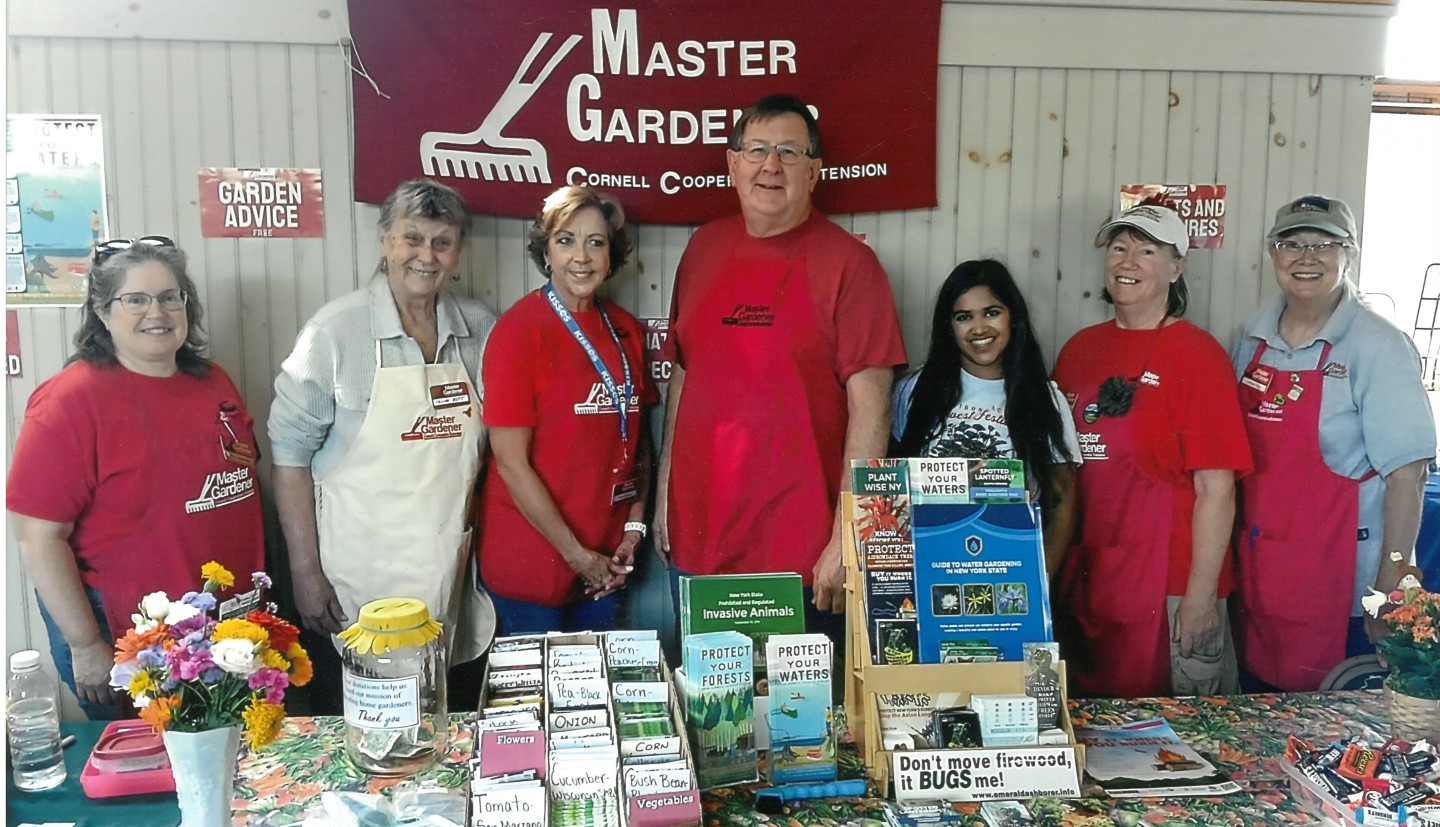
ESSEX COUNTY MASTER GARDENER VOLUNTEER TRAINING COMING JANUARY 2027!
Email or call to register your interest with Mina Weymouth-Little, 518-962-4810 x 4416, mcw252 [at] cornell.edu.
The Mission of the Master Gardener Volunteer Program is to train volunteers to teach others how to protect the environment and grow plants more effectively. The Master Gardener Program continues to evolve since its inception in New York State in 1975. Although the development of a curriculum, learning experiences, and tutoring is different now than it was over a quarter of a century ago, the standards for excellence to retain the integrity of a well-recognized and well-respected program has not. While the role of Master Gardener Volunteers is varied across the state, all their roles are educational in nature.
The first standard is selection of volunteers in a program (Master Gardener) well known for its unbiased, research-based information and client-appropriate delivery methods. The fact that Master Gardener Volunteers are volunteers doesn’t diminish the credibility of information they provide others, the educational role they play in their communities, and the educational system they represent (Cornell Cooperative Extension and Cornell University).
Gardening has universal appeal. It’s right up there at the top of most folks’ Leisure Activities list! Master Gardener Volunteer applicants are expected to have:
- Basic gardening experience prior to beginning the course;
- Ability to relate unbiased, research-based information to the gardening public;
- Ability to learn new information, some of which is practically applied information(e.g., how to prune shrubs) and some of which is basic scientific principles (e.g., the importance of knowing an insect’s life cycle in order to effectively control it as a garden pest);
- Ability to pass quizzes and a final examination, demonstrating mastery of the wide range of gardening topics required to be a Master Gardener Volunteer; and,
- Willingness, commitment, and time to volunteer in their communities knowing the training is provided in exchange for a commitment to volunteer as a Master Gardener Volunteer afterwards.
The basic core curriculum used in the Qualifying Master Gardener Volunteer Training Course includes:
- Soils and Fertilizers
- Garden Botany and Taxonomy
- Introduction to Insects
- Introduction to Plant Diseases
- Diagnosing Plant Problems
- Woody Plants (trees, shrubs, vines, and some groundcovers) including planting and maintaining (e.g., pruning)
- Ecological Lawn Care
- Weeds, Watering, and Mulching
- Vegetables
- Home Fruit Planting
- Flowers (annuals and perennials)
- Nuisance Wildlife Management
- Introduction to IPM (Integrated Pest Management)
- Pest Management Around the Home (Cultural methods of dealing with plant problems)
It is important to realize that the Qualifying Course for the Master Gardener Volunteers does not produce volunteers who are ready to volunteer in all aspects of the highly technical field of horticultural science. It does, however, introduce them to the above-listed topics and teach them how to use resources wisely. I think a quote received from one of our newly-trained volunteers says it all:
“In education it isn’t how much you have committed to memory or even how much you know. It’s being able to differentiate between what you do know and what you don’t. It’s knowing where to go to find out what you need to know and it’s knowing how to use the information you get.”
Contact
Mina Weymouth-Little
Consumer Horticulture, MGV Coordinator & 4-H Educator
mcw252 [at] cornell.edu (mcw252[at]cornell[dot]edu)
518-962-4810 x 4416