
Soil Testing
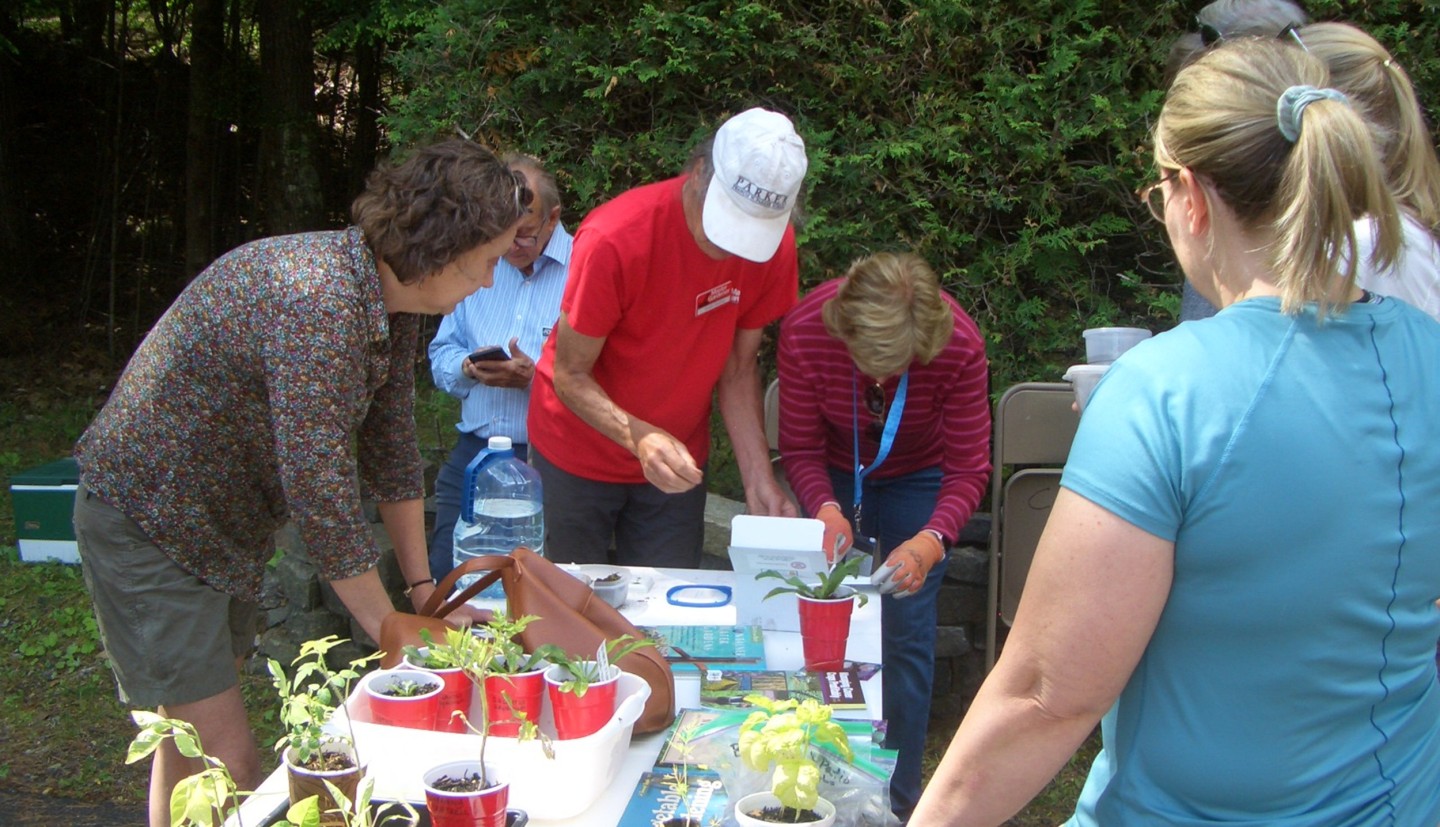
Soil testing services
Why Test Soil?
A soil test will tell you what nutrients are in your soil and what you may need to add (in the form of fertilizer) for successful crop growth. Plants need nitrogen, phosphorous and potassium (macronutrients) as well as micronutrients to grow. Deficiency or excess of these elements will impact the health and productivity of plants. In addition, the pH (acid/alkaline level) of your soil has an impact on how much of your soil's nutrients your plants will be able to use. CCE-Essex's Agriculture and Horticulture Programs can provide or arrange several different tests for your soil, and can help you to interpret the results and choose an appropriate course of action if necessary.
pH Testing
A pH test measures the acid/alkaline level of your soil. In the pH scale, 7.0 is considered neutral; lower numbers indicate acid soil, while higher numbers indicate that the soil is alkaline. Most plants prefer a pH of 6.8. pH levels influence nutrient availability, with most nutrients being available to plants when the pH is in this range (6.8-7.0). If a soil is too alkaline or too acid, certain nutrients may be limited. To change soil pH to the desirable range, you will either add lime if the soil is too acid or sulfur if the soil is too alkaline. With your pH test result, we will let you know what amount of lime or sulfur is needed if any.
The CCE-Essex Horticulture Program will perform a pH test on soil samples that are brought to our office for free for up to 3 samples. Please see instructions on "How to take a soil sample", below. You may also bring your soil samples to our plant sales & giveaways, or to farmers' markets with Master Gardener volunteers attending. Call our office for details and locations.
Nutrient Analysis
Soil samples for nutrient analysis are sent by the client to the Dairy One Soils Laboratory in Ithaca. Copies of the test results are returned to the individual and to CCE-Essex about one to two weeks later, and you may contact us, if necessary, for assistance in interpreting your results.
Dairy-One Soils Laboratory (800) 344-2697 or visit their website
Standard soil nutrient test:
This test provides recommendations for establishment and maintenance of home lawns and gardens, commercial turf, commercial vegetables, commercial fruit, and field crops (pasture, hay, annual crops). Measures pH (in water), phosphorous, potassium, calcium, magnesium and micro nutrients including organic matter. Samples are sent to Dairy-One Lab located at 730 Warren Rd., Ithaca. Expect at least one week for test results to be returned.
Download and print the correct forms to include with your soil test samples. (NOTE: when you visit the above link, you will see a list of different forms. For testing home garden soils, download and print Submittal Form H for Lawn, Garden and Landscapes.
How to take a soil sample
1. When should soil be sampled?
Soil samples can be taken at any time during the year; however, avoid extremely wet soil conditions unless absolutely necessary.
2. How often should I have my soil tested?
For most crops, every 2 to 3 years. Soil under intensive cultivation may require annual testing. Sampling from any given area should be done at about the same time as in previous years.
3. What tool shall I use for sampling?
A soil probe or auger is best; if not available, use a garden spade or shovel.
For cultivated crops and gardens, samples are taken to the tillage depth (6-10")
For no till or minimum till, take one sample at 0 - 1" and another at a 1 - 6" depth.
4. What is the proper sampling depth?
For cultivated crops and gardens, sample at 0 - 1" and another at 1 - 6" depth.
For lawns and pastures, a sample from the upper 6" is satisfactory; remove plant residue.
For tree and fruit crops, 2 samples should be submitted, one taken at 0 - 8" depth, the other at 8 - 16" (subsoil layer).
5. How do I go about collecting the sample?
With a shovel, dig a hole to the sampling depth. Cut a ½" slice from the face of the hole and trim the sides so you have a vertical slice of soil.
6. How many sub-samples should I collect from each area?
Repeat the sampling process in about 10 - 15 locations throughout the garden or field. Mix the sub-samples in a plastic bucket to obtain a representative composite sample. Avoid sampling in unusual areas if the objective is to estimate average fertility levels over the entire area.
7. Should the sample be dry?
Do not bring in wet samples. If it is necessary to sample wet soil, spread the sample on a sheet of newspaper and allow it to dry at room temperature.
8. How much soil is needed for each composite sample?
About two cups are required.
9. Where do I bring samples?
If you don't have a soil sample box, bring your sample to our office and we'll help you bag it up and do the paperwork. We're located at 6 Fairground Way in Westport, NY, between 8:30 am and 4:30 pm on weekdays. Best to call first to make sure we have staff on site to work with you (518-962-4810). Testing for pH alone is done on-site at no charge; nutrient and specialized tests are sent out to a laboratory in Ithaca. For more details on available tests, and to download the forms required for each, please see "Soil Testing Services", above.
10. Do I have to go to the CCE office?
No! You can call our office and we will mail the sample bags, along with the correct forms and instructions, to your home or business. You will then go through the process above and mail the sample from your local post office.
11. How long will it take to get test results?
pH tests conducted at our office can be done immediately, however if staff is unavailable to perform the test it may take from 1 - 3 days. Complete nutrient tests done at the lab in Ithaca take about 1 - 2 weeks. Results are mailed from the lab directly to you, and a copy also is sent to our office.
12. What if I have questions about the results?
Call us at (518) 962-4810.
13. How much does the test cost?
pH test (for up to 3 samples) - free
Standard nutrient test - Usually $16 (prices vary) per sample plus postage. You are responsible for mailing your sample through your local post office, and you will pay the testing lab when you send the sample.
Contact
Mina Weymouth-Little
Consumer Horticulture, MGV Coordinator & 4-H Educator
mcw252 [at] cornell.edu (mcw252[at]cornell[dot]edu)
518-962-4810 x 4416