
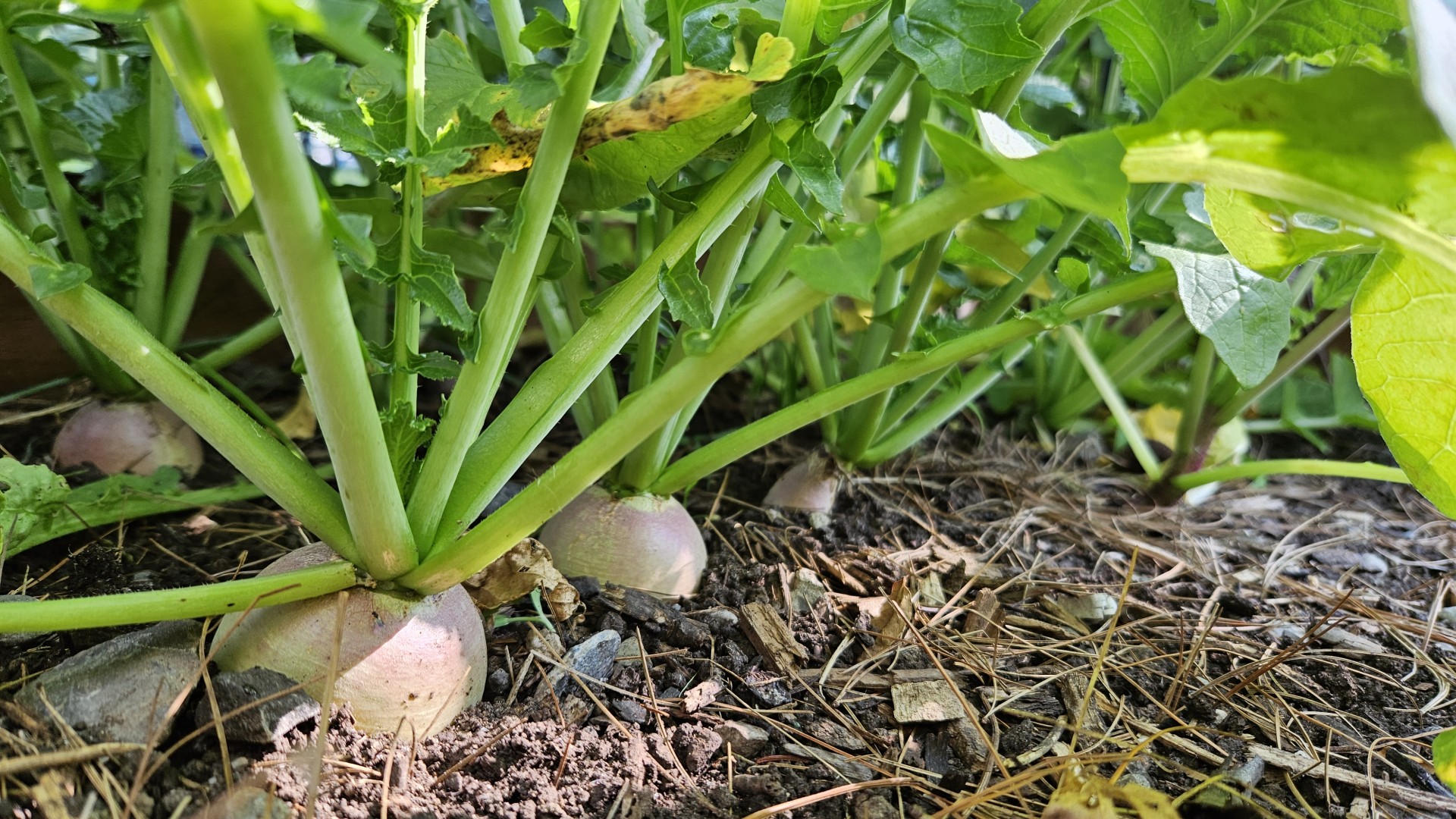

While early spring may get all the attention as a time for seed-starting, we don’t have to stop now that we’ve (hopefully, finally!) planted our gardens.
By starting or sowing seeds for your favorite vegetables, herbs or flowers at regular intervals or with different days to maturity, you can ensure continuous harvests throughout the season. This practice of succession planting can help you make the most efficient use of your garden space and give you an ongoing supply of the edibles and blooms you enjoy.
To get started, you need to know a few important things about your plants:
Days to maturity: This refers to the number of days from planting a seed or transplanting a seedling until the plant is ready to harvest. Also called days to harvest, this information is typically listed on the seed packet or plant label, and it will help you plan for how often and how long you can keep sowing.
Cold and heat tolerance: Understanding how plants thrive with the changing seasons will help you determine which crops you can plant for spring, summer and fall. Cool-season crops thrive in cooler temperatures and can typically be planted around mid-April, a couple of weeks before our average last frost. They include beets, cabbage, broccoli, cauliflower, carrots, lettuce, onions, peas, potatoes, spinach and radishes. Cool-season flowers include bachelor buttons (Centaurea cyanus), Iceland poppies (Papaver nudicale) and pansies (Viola wittrokiana). By contrast, warm-season crops need warmer temperatures to thrive and can be planted after the last frost and once the soil has warmed up, usually late May. They include snap beans, cucumbers, squash, melons, eggplant, peppers, and tomatoes. Warm-season flowers include zinnias, sunflowers, cosmos, and marigolds.
Harvest period: Some plants, like kale and tomatoes, can be harvested repeatedly. Others, like carrots and single-stem sunflowers, can only be harvested once. Understanding how long your plants will produce will also help you determine how often you may want to sow.
When you put all this information together, you can choose your succession-planting strategy. There are three primary ways to incorporate succession planting into your garden:
Planting at regular intervals
You can spread your harvests over many weeks by planting small amounts of a crop at periodic intervals – approximately every two weeks – rather than all at once. For example, if you want to have weeks of green salads, you can plant lettuce every 10 to 14 days into early summer. That way, when you finish harvesting your initial planting, the next one will be ready to eat. You can do the same thing with sunflowers every 7 to 14 days into late summer.
Replacing cool-season crops with warm-season ones
This is the simplest way to succession plant, and it is the best way to make the most of limited garden space. When your cool-season crops like spinach and peas are done, you can replace them with warm-season plants like tomatoes and beans. As your warm-season crops fade, you can bring cool-season crops like kale, radishes and beets back into the garden. Just remember that as fall brings shorter and cooler days, your plants will need more time to mature than the stated days to harvest.
Planting the same crop with staggered times to maturity
This strategy works best for crops like tomatoes and beans. To ensure weeks of harvest, choose varieties of the same crop with different days to maturity so that you have early, mid- and late-maturing plants. For example, with tomatoes, you could plant Early Girl (56 days to maturity), Cherokee Purple (72 days to maturity) and Beefsteak (85 days) tomatoes. By the time you’re finished harvesting the Early Girls, the Cherokee Purples will be ready to eat, and when those are done, you still have the Beefsteaks to look forward to.
Whichever strategy you choose, be sure to keep track of your planting and expected harvest dates. You can use a simple garden journal or even the pages of a calendar to help you plan.
And remember that we’re here to help! Your CCE Orleans Master Gardeners are available to help you figure out your succession planting strategies and to answer questions as the season unfolds. Stop by the Orleans Community Seed Share Monday through Fridays 8:30am – 4pm to find free seeds for your garden, or come see us at the CCE Orleans trial garden during Growing Community Hours on Wednesdays 4-6pm, June through August. Let's see what comes up!
To learn more, check out:
- https://homegarden.cahnr.uconn.edu/factsheets/succession-planting/
- https://extension.psu.edu/programs/master-gardener/counties/allegheny/news/fall-vegetables-with-succession-planting
- https://extension.umaine.edu/cumberland/2017/04/20/succession-planting/
- https://extension.wvu.edu/lawn-gardening-pests/gardening/garden-management/succession-planting

We openly share valuable knowledge.
Sign up for more insights, discoveries and solutions.