

We may be in the heat of August, but now is the perfect time to start thinking about bringing your herbs indoors to enjoy through the winter.
The easiest way to do this is to bring the entire plant indoors. However, if the plant is large or you’re worried about insects coming inside, consider propagating your favorite herbs.
Propagation is simply the process of creating more plants from ones you already have. Two methods that work well with herbs are division and taking cuttings.
Division
Herbs like chives, mint and lemon balm can be easily divided and potted up to grow indoors. Simply dig up the plant – or a section of the plant – and tease apart the roots to create a clump to pot up. For chives, make sure your clump has at least four to six bulbs. Any leftover clumps can be put back in the ground.
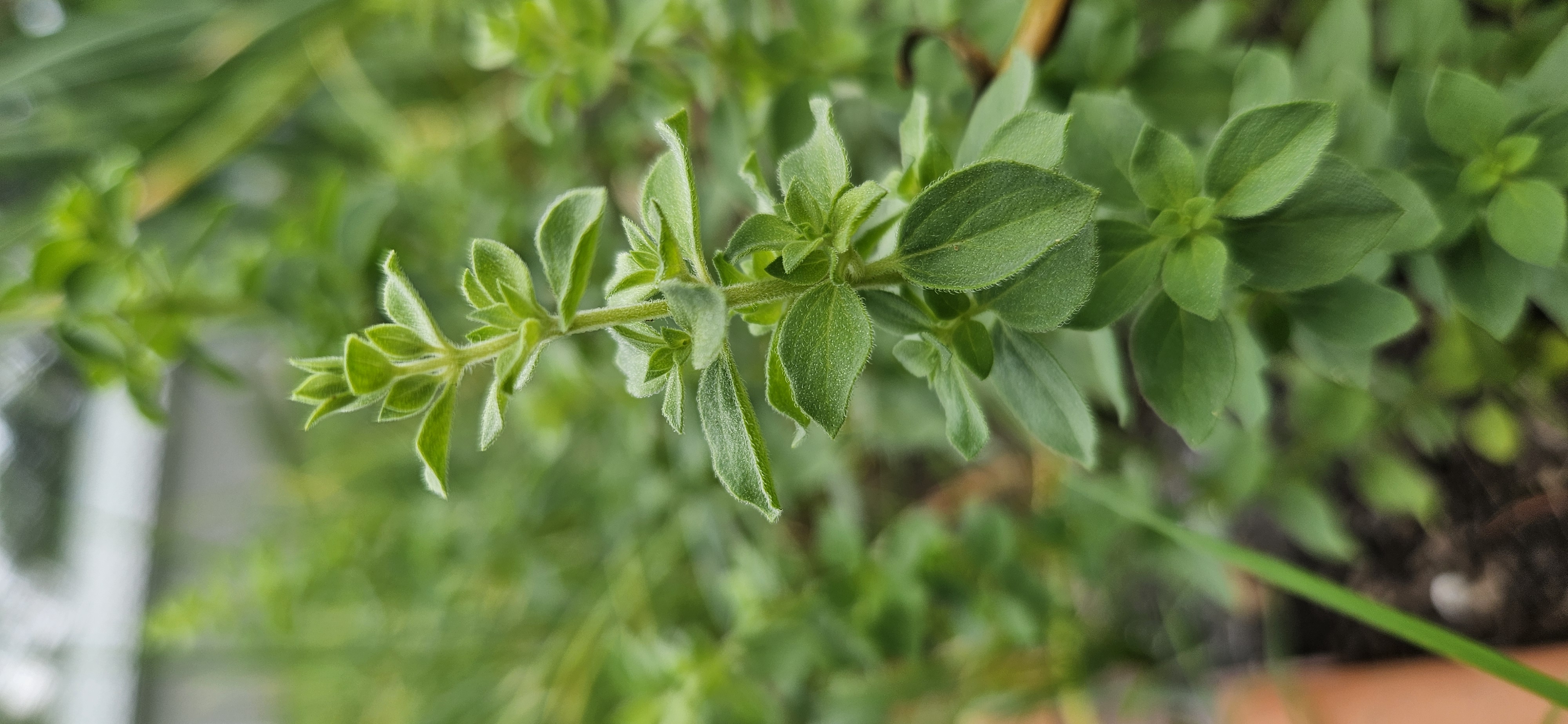
Before you pot up, inspect the leaves and roots for insects and their eggs. If you find any, you can wash them away with a hose before you plant them in the container you’ll bring indoors. You may also want to prune away any leggy parts of the plant to ensure fuller growth.
Plant your divisions in a moist, well-drained, sterile potting mix in a container with drain holes.
Taking Cuttings
When you propagate plants by taking a cutting, you are using a severed piece of the plant to create another entire plant. Herbs like basil, oregano, lavender, rosemary, thyme and sage do well as cuttings. Be sure to inspect them closely for insects and any signs of disease before taking your cuttings.
Before you take your cutting, prepare your container. Make sure it has drain holes, and fill it with a moist, well-drained, sterile potting mix.
Then simply cut healthy 4- to 6-inch stems at a node (where the leaves attach to the stem). For rosemary, cuttings are best taken from green, slightly flexible stems that are straight and have no flowers. For lavender, cuttings are best taken just after flowering. Plan to take several cuttings to make sure that you have extras in case some of them don’t root.
Once you have your cuttings, work quickly to remove the lower leaves, so that leaves remain only at the top inch or two of the stem. Using a stick or pencil, make a hole in your container’s soil and place your cutting in the hole, leaving only the part of the stem with leaves above the soil. Depending on the size of your container, you can plant more than one cutting. Just be sure there is at least an inch or two between them. Water well.
Keep your cuttings in a bright location and check them every couple of days to make sure the soil stays moist.
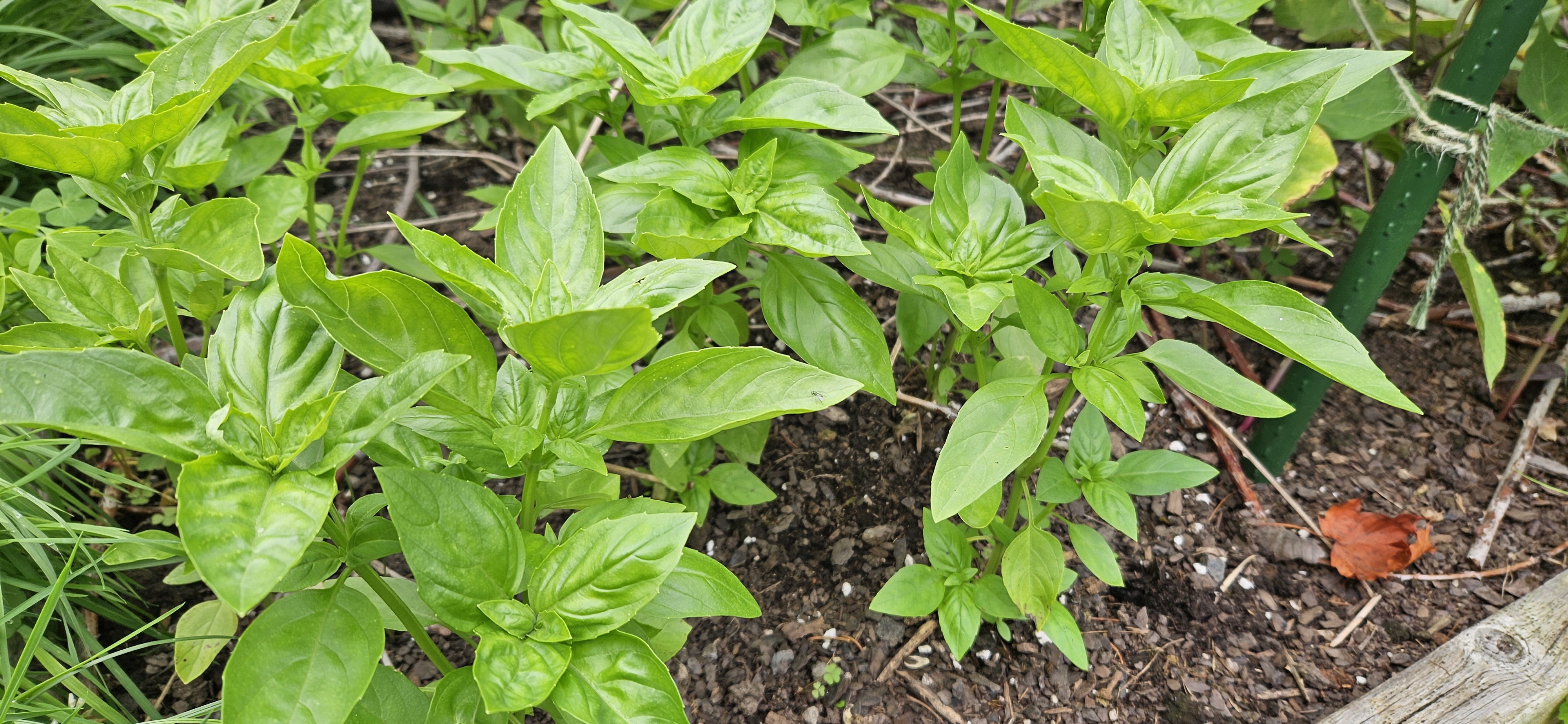
And be patient. Depending on the herb, it can take anywhere from a week to six weeks for your cuttings to develop new roots. Basil, for example, can root within two weeks, while rosemary can take almost two months.
Through the Winter
Herbs grown indoors still need plenty of light, especially when they first come inside. A sunny, south-facing window can be a good location, but as the days shorten, you will likely need some additional light. Specialized grow lights can help, but you can also use cool white fluorescent lightbulbs. Just place your herb containers 6 to 12 inches from two 40-watt, cool white fluorescent bulbs for 14 to 16 hours.
If you have your herbs near a window, be careful of dropping temperatures. While most herbs can survive down to almost 40°F, tender herbs like basil need it to be above 50°F and should be kept away from cold windows.
To keep your herbs growing and productive through the winter, you can use a low dose of water-soluble fertilizer every two weeks, but no more often than that. Using too much fertilizer can affect the herbs’ taste and aroma.
For more information:
https://www.purdue.edu/hla/sites/yardandgarden/propagate-herbs-now-for-yearlong-enjoyment/
https://planttalk.colostate.edu/topics/annuals-perennials/1056-indoor-herb-garden/

We openly share valuable knowledge.
Sign up for more insights, discoveries and solutions.