
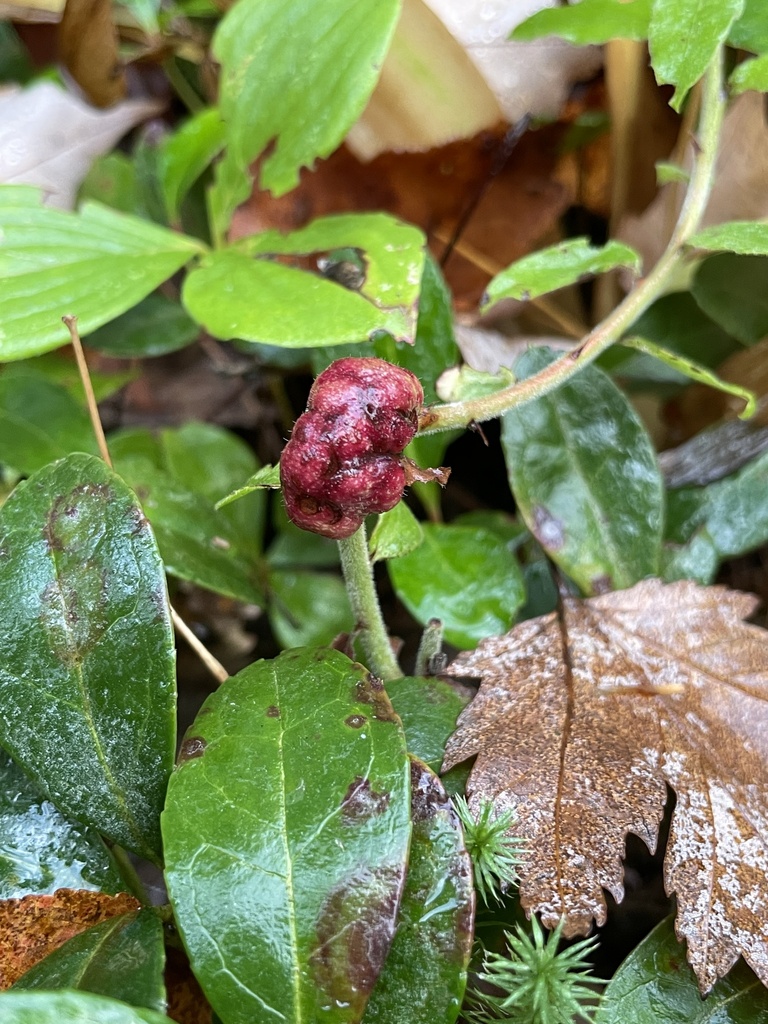

What are galls? Galls are underappreciated aspects of the ecosystem. Galls are the ultimate specialized relationship. They need their host plant, aid in biodiversity and do little harm to the plants they need. They are abnormal growths in a plant’s leaves, twigs flowers, or roots, often caused by small insects, fungus or bacteria.1
Western New York has a number of galls that exist in our local ecosystem. Gall-inducing insects modify the host’s tissues and more to improve their fitness. Gall-inducing insects mold themselves to co-exist with their host plant. “Gall-inducing insects re-differentiate the plant host tissue to form a nutritive tissue to improve the insect’s diet.”2
There are leaf galls, twig/stem galls, and flower/bud galls. Below are many of the galls found on or around Western New York. For some, the genus is listed because of the difficulty in identifying the specific species of gall.
- Genus Asphondylia - Asphondylia is a genus of bud gall midges. Bud galls are abnormal, swollen plant growths, often resembling cauliflower, that form on expanding leaf or flower buds and are typically caused by gall mites or aphids. While they can be unsightly, especially on poplars and hazels, bud galls usually cause cosmetic damage rather than significant harm. https://bugguide.net/node/view/217953/bgpage
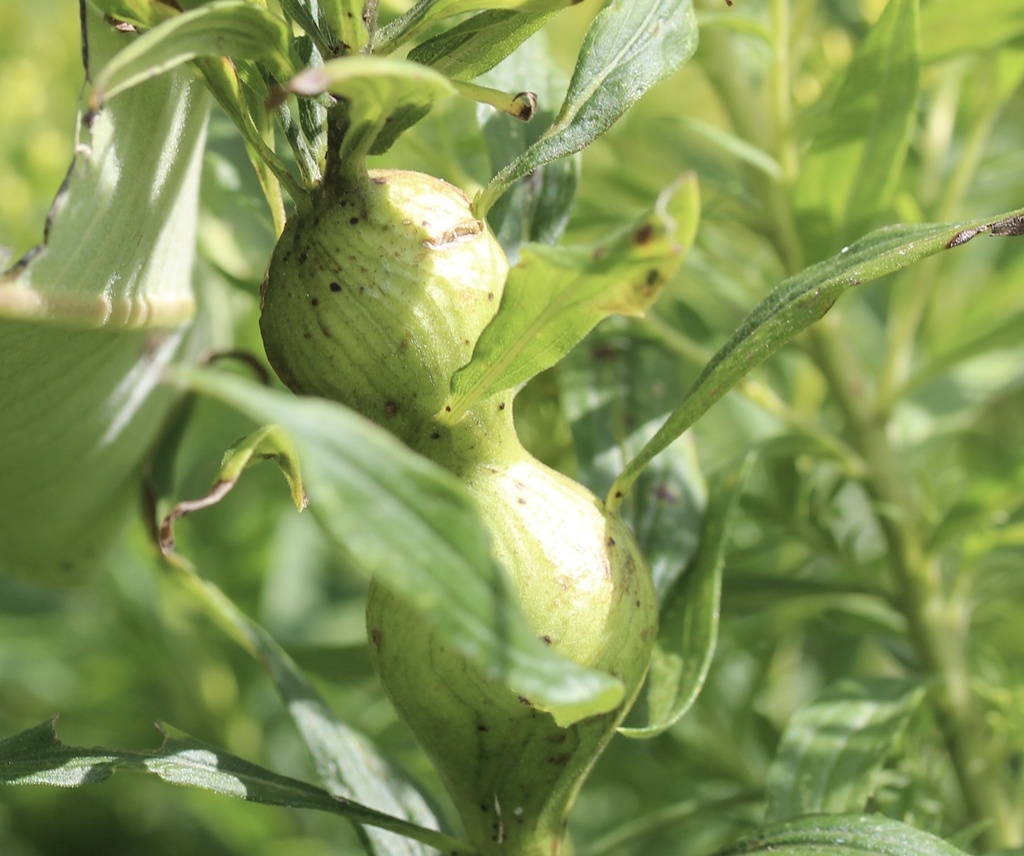
- Genus Eurosta – Goldenrod gall is a pretty common sight. One or two rounded galls can be found on each stem of Canada goldenrod. The eggs are deposited in the gall where they live and eat the inside of the rounded ball. “The larval fly’s saliva contains a chemical which is thought to mimic plant hormones so it causes the plant to grow abnormally.”3 The corky exterior of the rounded gall protects the center, which contains specialized nutritive tissues. These galls are an important part of the ecosystem without harming the goldenrod plants.
- Genus Neuroterus – Neuroterus is a genus of gall wasps belonging to the family Cynipidae, known for inducing galls on oak trees. These galls are chemically manipulated growths that house and feed the wasp larvae. Key characteristics of Neuroterus species include their two generations per year (a bisexual and a parthenogenetic generation), each producing different types of galls on the host oak. Some species, like the jumping oak gall wasp (Neuroterus saltatorius), create galls that detach from the leaf and "jump" on the ground, while others, such as Neuroterus quercusbaccarum, produce spangle galls on leaves and currant galls on catkins.4 https://bugguide.net/node/view/356495
- Goldenrod Bunch Gall (Rhopalomyia solidaginis) – This tiny fly lays its eggs at the tip of the goldenrod which then stunts the stem growth even though the leaves continue to grow. That is how the rosette forms. “Scientists call these midges ‘ecosystem engineers’ due to the fact that bunch galls can increase biological diversity of insects and spiders by creating a niche habitat within the tightly bunched leaves.”5 https://bugguide.net/node/view/324012
- Rough Oak bulletgall (Disholcaspis quercusmamma) - Rough Oak Bulletgalls split through the bark.6 The galls are most commonly found on bur oak (Quercus macrocarpa), white oak (Q. alba), and swamp white oak (Q. bicolor). Rough oak galls are covered in tiny hairs. This gives the galls a roughened appearance. Rough oak bulletgalls can look like a musket ball or like a Minie ball.
- Poplar Petiole Gall (Pemphigus populitransversus) – The poplar petiole gall aphid, scientifically known as Pemphigus populitransversus, is an aphid species that induces galls on the petioles (leaf stalks) of poplar and cottonwood trees.7 These galls are essentially abnormal growths on the plant tissue, formed as a result of the aphid's feeding and saliva. While the galls can be unsightly, they are generally not harmful to the tree itself.
- Wood nettle gall (Dasineura urticae) – The gall-midge Dasineura urticae lays their eggs on leaves of Common (Stinging) Nettle and Annual Nettle.8 Eggs can be found on the base of the leaf or in the main leaf veins, which causes a 'pouch' to form in the leaf structure so the midge eats the inner tissues of the leaf.
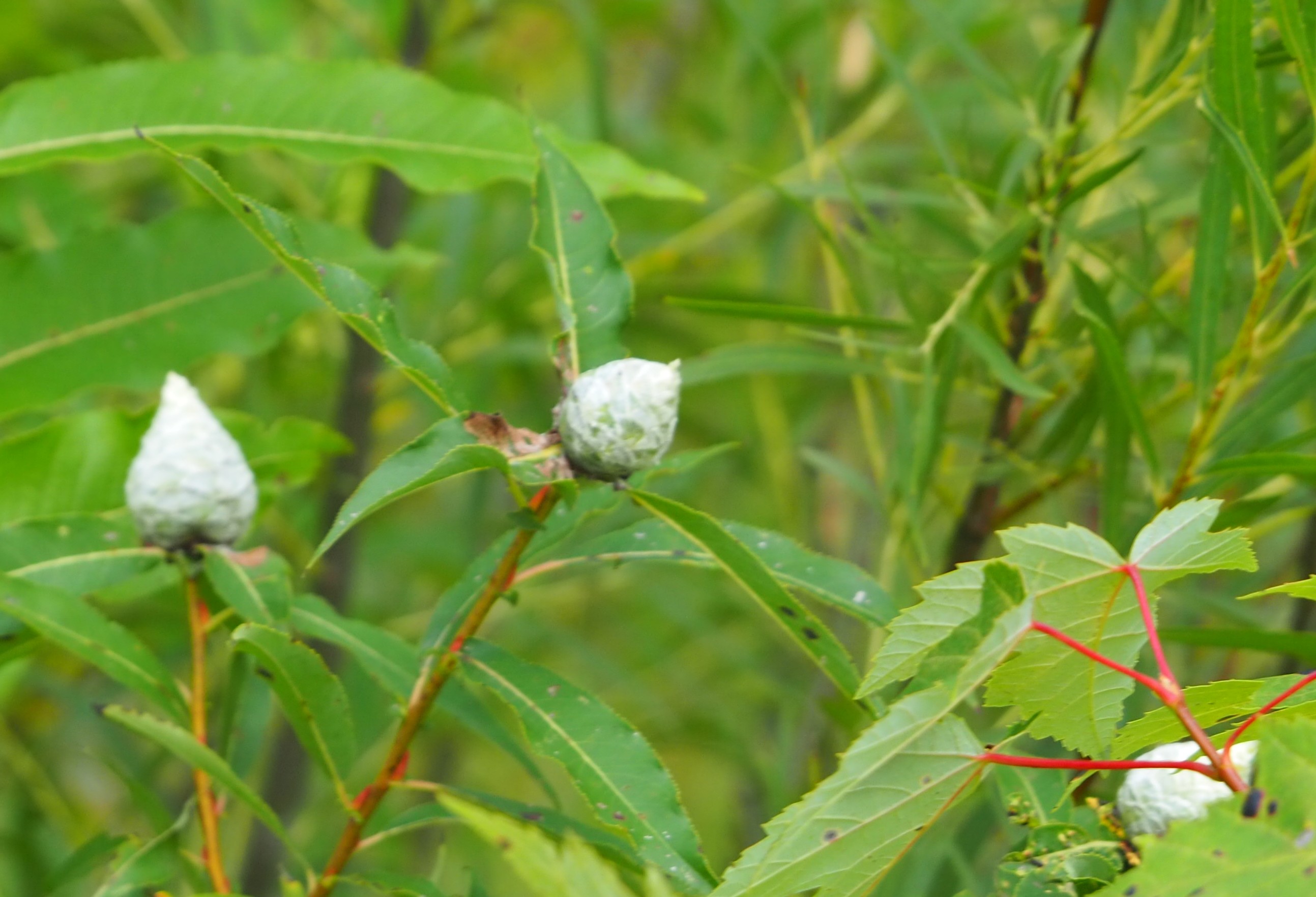
- Willow Pinecone Gall (Rabdophaga strobiloides) – Willow Pinecone Galls are produced by the Willow Pinecone Gall Midge (Rabdophaga strobiloides, family Cecidomyiidae).9 This sizable gall houses, nourishes, and protects one fly larva (maggot) in the center of the gall. This structure looks a lot like a pine cone. While they can be found on any willow, they have a fondness for black willow.
- Blueberry Stem Gall (Hemadas nubilipennis) – The blueberry stem gall wasp lays eggs inside the blueberry stem, then stabs the tender shoot many times, producing the pink gall.10 Once hatched, they eat the walls of the chamber, living in its home until spring.
- Poplar twig gall (Populus tremuloides)– The poplar twig gall fly lives throughout the winter inside the gall, which then drops to the ground in the spring.11 As new leaves grow, the fly emerges to lay eggs in another gall. Stems with the galls grow and become swollen.
- Elm Cockscomb gall (Colopha ulmicola) – The elm cockscomb aphid females emerge and lay an egg underneath the bark.12 The egg lives there during the winter and leaves the bark in the warming spring. These nymphs eat from the leaf tissue creating the gall, which resembles a rooster’s comb.
- Grape phylloxera– Grape phylloxera is native to eastern United States. The leaf galls caused by grape phylloxera look unsightly, but don’t cause any real damage.13 However, they can become a problem should they infect the roots.
- Willow beaked gall (Rabdophaga rigidae) – This reddish brown oval-shaped gall is formed by a midge in the center of a willow twig, producing a “beak” shape at the twig’s terminal bud.14 This unharmful midge is in the same genus as the willow pinecone gall midge.
- Oak Rosette Galls (Andricus quercusfrondosus) – These galls, caused by wasp in family Cynipidae, forms many-leaved rosettes from the buds of a variety of oaks, mainly those in the white oak group. While this can stunt terminal leaf development in the short term, in the long term, the oak will grow as normal and be unharmed by the gall.15
- Sumac Gall (Melaphis rhois) – A large sac is formed by an aphid laying an egg on the leaf of staghorn sumac. The resulting nymph reproduces asexually, creating hundreds of clones until the gall falls and releases the new aphids.17
- Blackberry Psyllid (Phylloplecta tripunctata) – Cicada-like insects, which nest on conifers in the winter,18 emerge in the spring to lay eggs in curls that form in blackberry and raspberry leaves. They are not harmful long-term, but can result in failed fruit formation.19
Resources and More Reading
1 https://nystateparks.blog/2018/12/11/how-galling/
2 D.C. Oliveira, R.M.S. Isaias, G.W. Fernandes, B.G. Ferreira, R.G.S. Carneiro, L. Fuzaro, “Manipulation of host plant cells and tissues by gall-inducing insects and adaptive strategies used by different feeding guilds” Journal of Insect Physiology, Volume 84, 2016, Pages 103-113, ISSN 0022-1910
4 https://www.inaturalist.org/taxa/55599-Neuroterus
5 https://lakecountynature.com/2013/09/20/goldenrod-galls/
6 https://bygl.osu.edu/node/2238
7 https://ipm.ucanr.edu/PMG/GARDEN/PLANTS/INVERT/gallaphids.html
8 https://www.naturespot.org/species/dasineura-urticae
9 https://bygl.osu.edu/node/1819
10 https://www.adirondackalmanack.com/2010/01/taking-a-closer-look-blueberry-stem-gall.html
13 https://grapes.extension.org/grape-phylloxera-foliar-or-aerial/
14 https://www.gallformers.org/gall/1636
15 https://bygl.osu.edu/node/2542
16 https://mail.google.com/mail/u/0/?tab=rm&ogbl#inbox?projector=1
17 https://www.seashoretoforestfloor.com/sumac-gall-aphid/
18 https://blogs.cornell.edu/berrytool/raspberries/1126-2/
19 https://www.virginiafruit.ento.vt.edu/blkbrrypsyllid.html
Master Gardener Volunteer Column