

After a summer of deadheading to produce more blooms, it’s time to appreciate the allure of seed heads in your garden.
Seed heads are what’s left on a stem when flowers have faded and their petals have dropped. They hold the plant’s mature seeds, and they can be as beautiful as the blooms were. You can save them to use in autumn bouquets or wreaths, or you can leave them to add winter interest in your yard. You can always harvest a few to save seeds for next year, or you can let them serve as a food source for overwintering birds.
Just be cautious of aggressive, self-seeding plants, and be sure to remove and destroy any diseased plant material.
As you survey your garden for fall, here are some plants with seed heads or seed pods that you may want to keep:
Purple coneflower (Echinacea purpurea) seed heads are dark, spiky domes that are a good food source for birds. They also look lovely when touched by frost.
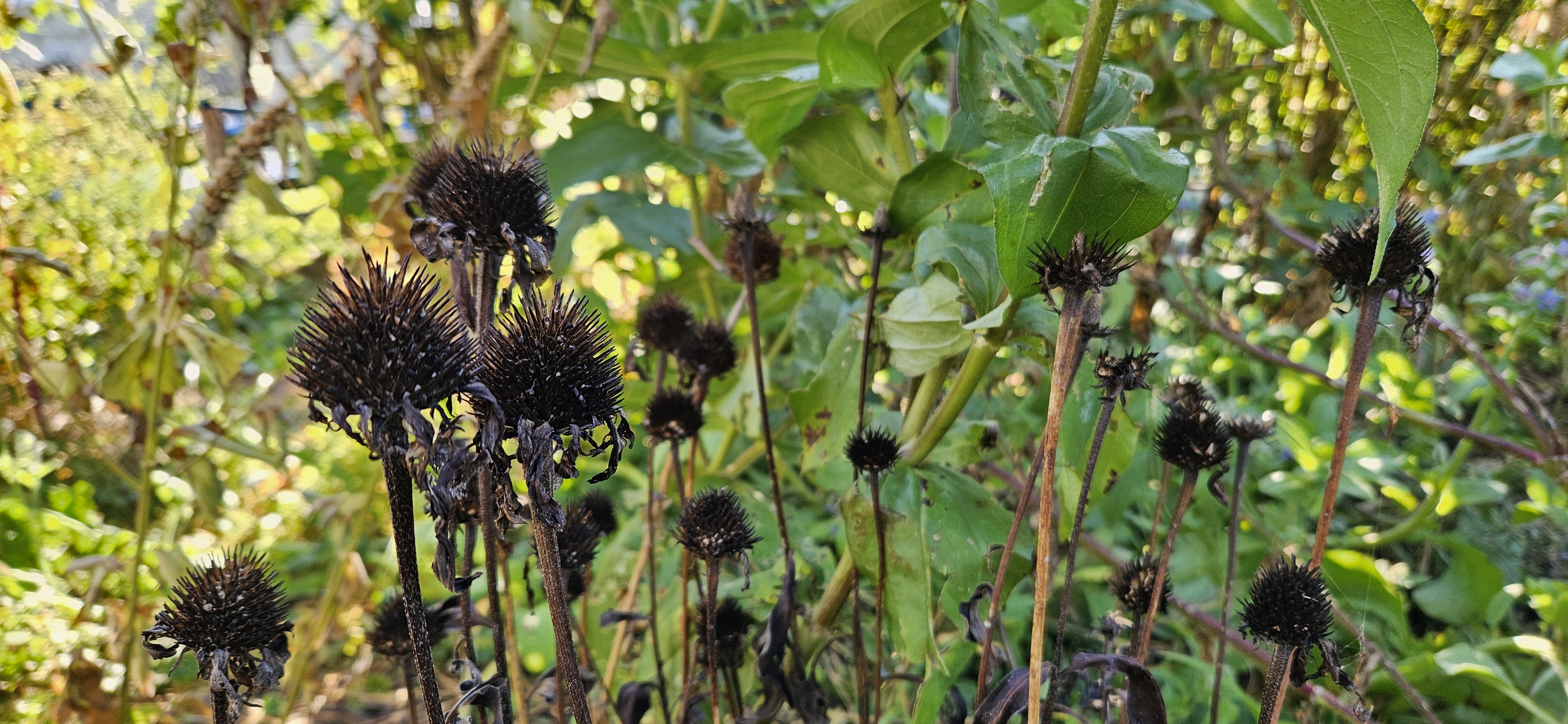
- Rudbeckia species, including R. hirta (black-eyed Susan), R. fulgida, R. grandiflora, and R. triloba, have spiky seed heads similar to Echinacea, and they are a popular food source for birds.
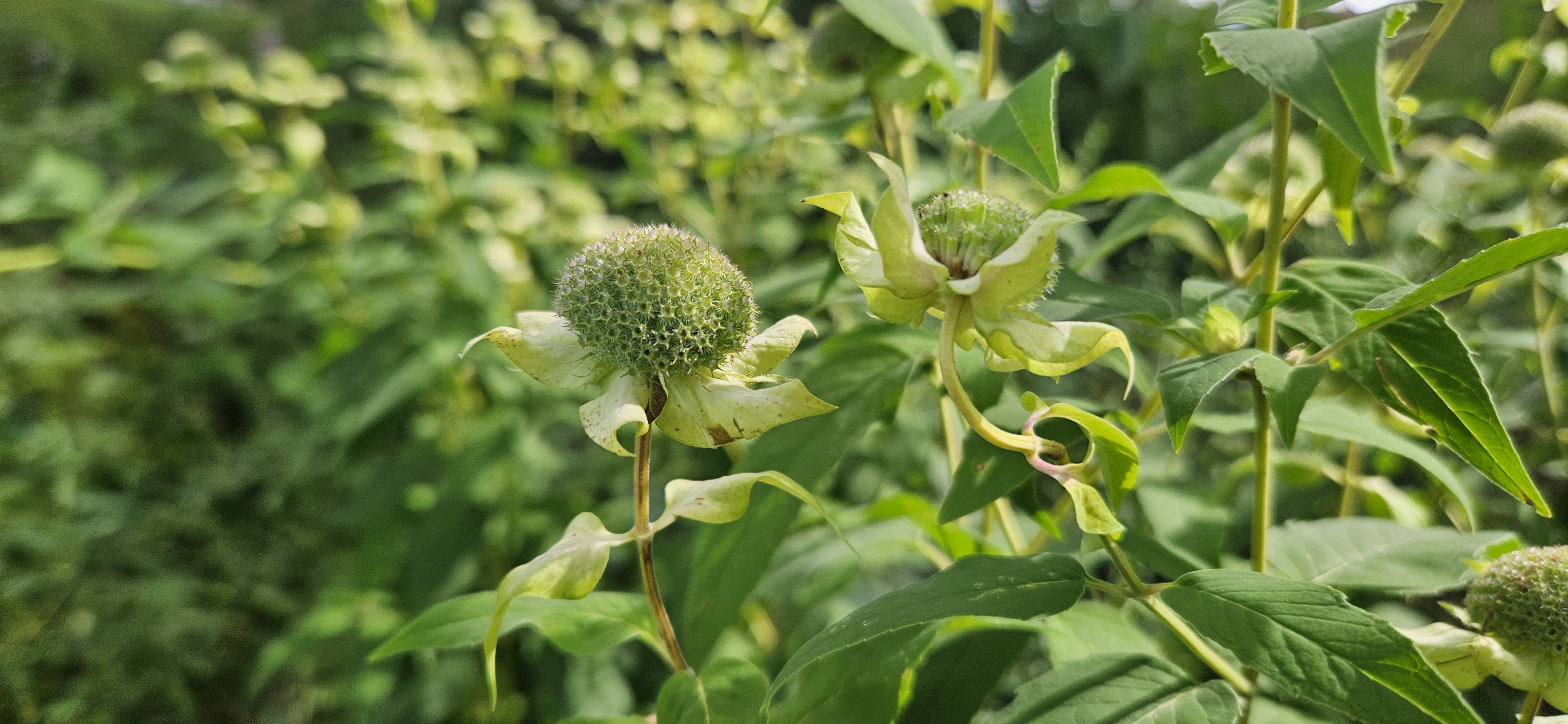
Bee balm (Monarda spp.) produces a fabulous round seed head studded by an array of papery tubes, and its seeds are also popular among birds.
- False indigo (Baptisia spp.) has deep blue pods that rattle in the wind.
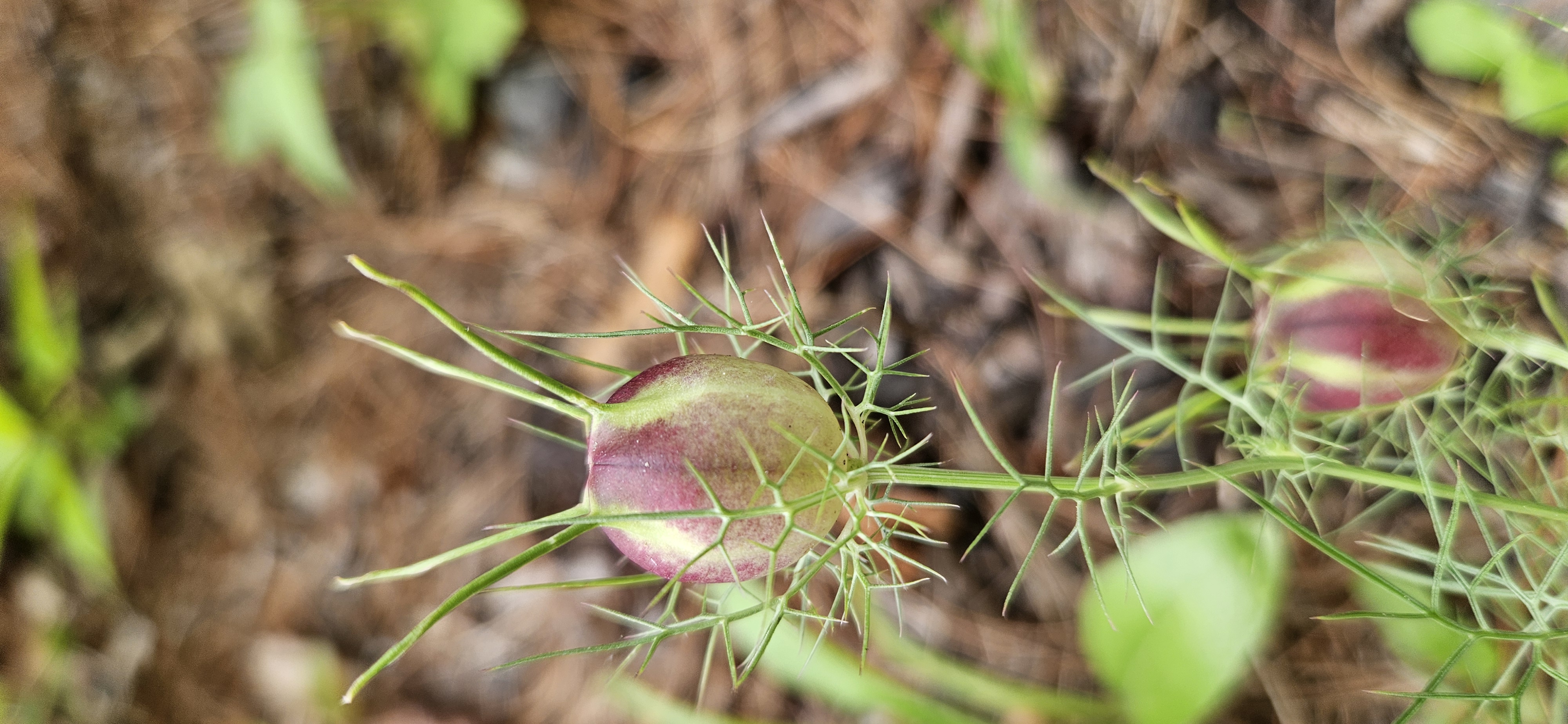
- Love-in-a-mist (Nigella damascena) is an annual that has green and burgundy striped seed pods and readily self-seeds. Before the pods’ color fades, they can make a striking addition to a bouquet.
- Breadseed poppies (Papaver somniferum) create a gray-ish bulbous seed pod topped by a star-shaped crown. They are stunning in floral arrangements, and the poppyseeds, if you choose to save them, can be used in baked goods. But be vigilant as these annual poppies will sow themselves with abandon.
- Stonecrop sedum (Sedum hylotelephium) flowers are star-shaped and grow in clusters. As they die back to form seeds, they take on a rich, dark rose or coppery color that is perfect for fall decor.
- Ornamental grasses, such as feather reed grass (Calamagrostis × acutifora), northern sea oats (Chasmanthium latifolium), and Japanese silvergrass (Miscanthus sinensis), also have interesting shapes and seed heads that can give your garden some structure through the winter.
To learn more about plants you may want to keep this fall for aesthetic reasons or to support wildlife, check out:
- https://yardandgarden.extension.iastate.edu/how-to/perennials-winter-interest
- https://arboretum.wisc.edu/news/arboretum-news/gardening-with-native-plants-winter-gardens/
- https://extension.illinois.edu/news-releases/consider-plants-winter-interest-landscapes

We openly share valuable knowledge.
Sign up for more insights, discoveries and solutions.