
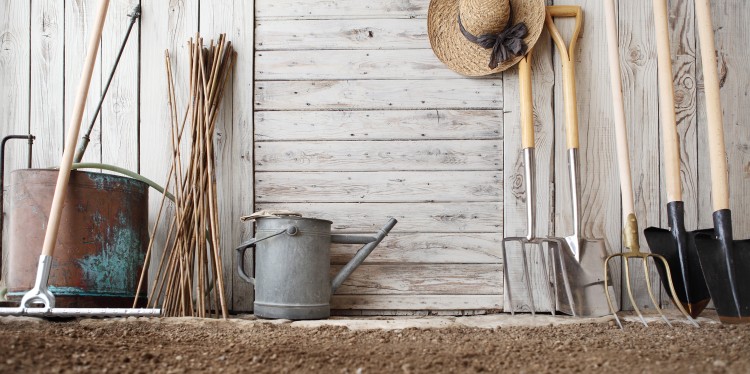

Clean up, clean up! Children hear the song in their toy room, but this refrain applies as well to garden tool care. After having invested effort and funds in finding tools that serve your needs, you want to maintain them. Spending a short amount of time, both on a daily basis and as the season closes,will help keep your equipment in top shape.
Working within your gardening areas, it is very easy to overlook small clumps of soil, a bit of a broken root, or a smear of plant sap. These are visible signs that transfer of plant pathogens or plant materials can happen, thus you must add a final step. As you work, continue to brush off, wash, dry and also disinfect tools before moving to new plantings. By their microscopic nature, diseased materials easily hide on all equipment parts.
Blades with pivot points, connections, and two-part construction are particularly vulnerable to harboring pathogens. Disinfect them by treating them for 30 seconds with a 10% bleach mixture, according to University of Minnesota Extension. Use one part bleach to 9 parts water, and only combine with water or laundry detergent. A 70% alcohol dip may also be used, but is flammable and does not disinfect apples experiencing fire blight. Dry the tools before moving on with your tasks.
At day's end, take a few moments to make sure the tools are cared for. Rinse and brush off dirt, remove any sap with soap or turpentine, and if rust is seen, use a coarse-grade steel wool to remove it. Directions from Oregon State University Extension Service suggest keeping “a 5-gallon bucket ⅘ full of sand with (optionally) about a quart of car engine oil thoroughly mixed into it… plunge the tool into the bucket a few times to help clean the blade and coat it with oil.” Wipe with a lightly oiled rag, and hang or place the tool in a clean, dry spot. This quick step works for forks, hoes, and shovels, as well as small hand tools. As you find a spot for the tools, place them on a shelf, or if hanging them, make sure the handle is not touching the ground to avoid rot.
As gardeners, we work to maintain our equipment throughout the summer. Then with the first frost, a dip in temperatures, or when snowflakes begin to fall, we can easily forget that the garden equipment will work more effectively in spring with a little winter maintenance. This begins with a thorough cleaning. Using gloves and eye protection is important as you make one final check of each piece of equipment. Begin with a careful cleaning, which includes the removal of any rust, followed by a light oil wipe down to help to prepare tools for winter’s rest. Wipe down wooden handles with linseed or mineral oil, followed by a quick cloth polish to eliminate any excess oil being left behind.
Examine tools with cutting blades for damage. Don gloves and eye protection, secure the tool in a vice or clamp, and use a whetstone or file while you work away from your body to maintain the blade angle and give it an edge. Scissors or pruning shears must be disassembled and secured before treating their edges. Use a drop of machine oil to lubricate the joints as you take the tool apart. Taking a quick picture will also assist in reassembling the items. When the tools are reassembled, work them a few times to move the oil into the smaller spots and follow up with a final wipe to remove any extra oil and coat exposed surfaces with a light oil cover.
While you are in your workshop area, check to be sure that the weed eater and lawn mower are free of grass debris, and have the gas drained from their tanks. Store batteries inside. Check the spark plugs, replace filters, and change the oil. This will give you a great start to your spring season.
Do all gardeners approach this ideal? I know that I now have a goal and a large number of sources that offer very detailed lists to make gardening more efficient. Use this article as a starting point and check out the excellent resources:
- Sharpening Garden Tools, Oregon State University Extension Service
- Care and Maintenance of Garden Tools, Oregon State University Extension Service
- Clean and Disinfect Gardening Tools and Containers, University of Minnesota Extension
- Maintaining Lawn and Garden Tools, University of Wisconsin-Madison Extension
- How To Take Care of Garden Tools, UGA Extension Forsyth County
Master Gardener Volunteer Column