
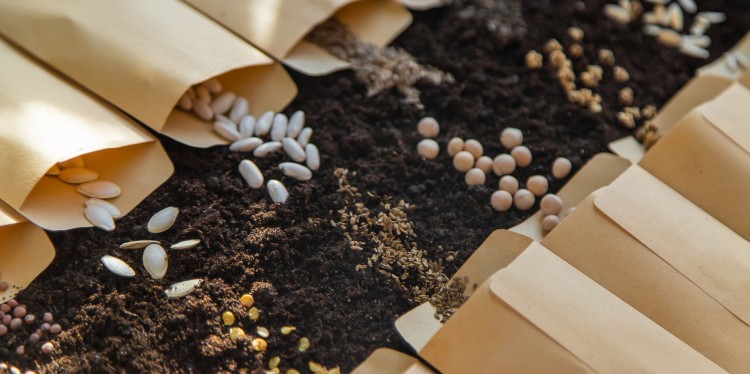

Reclaiming Our Inheritance
Somewhere along the way, we shifted away from saving our own seeds and became dependent on the commercial garden industry instead. We rely on hybrid and patented seeds and plants, which we have to purchase year after year, and we lost track of the self-sustaining traditions of our forebears. But here's the good news: gardeners and farmers everywhere are writing a different story. They're reclaiming their agricultural inheritance, one seed at a time.
When you save seeds from plants that thrive in your specific conditions, you're nurturing varieties that truly belong in your garden. You're breaking free from dependency while preserving the genetic diversity that keeps our food system strong. Our recent dry seed-collecting class showed just how ready our community is to embrace this ancient practice.
Seed Development
Before you start saving seeds, it helps to understand what's happening inside those tiny packages. Seeds go through a fantastic journey—pollination leads to growth, then maturity, and finally dormancy. Each stage matters if you want seeds that will actually grow next year.
Here's something that might surprise you: not all fruits are created equal when it comes to seed saving. Dry fruits and fleshy fruits need completely different approaches. Some pods split open naturally (that's nature's way of saying "take me!"), while others need your help to release their treasures.
Choosing Your Seed Parents
Every successful seed saving adventure begins with good selection. You want to choose your healthiest, most vigorous plants—the ones that made you stop and say "wow" when you walked through your garden. These are your seed parents, and they'll pass their best traits on to the next generation.
A word of caution: skip the hybrids and patented varieties. They won't give you what you're expecting. And keep an eye out for disease—healthy plants make healthy seeds, and that health carries forward.
Timing is Everything
Knowing when to harvest seeds takes a bit of practice and a lot of observation. Too early, and your seeds won't be viable. Too late, and they might scatter to the wind or start deteriorating. You're looking for that sweet spot where seeds are as mature as possible but still in their driest state.
Whether you're plucking individual seeds, cutting entire seed heads, or harvesting stems and pods, patience is your friend here.
Processing Your Seeds
Once you've got your harvest, the real fun begins. Processing seeds might sound complicated, but it's really just using techniques people have perfected over thousands of years. Threshing, screening, and winnowing—these ancient methods are still the best ways to separate your precious seeds from all the chaff.
Think of it as meditation with a purpose. There's something deeply satisfying about cleaning seeds by hand, knowing you're continuing a tradition that stretches back through countless generations.
Keeping Your Seeds Safe
Good storage is like insurance for your seeds. You want to protect them from moisture, pests, and temperature swings. Some seeds you'll plant next season, others you might store for years. Either way, clear labeling is your best friend—trust me, you won't remember what those mystery seeds are next spring!
Consider Sharing
Here's where seed saving gets really exciting: it builds community. When you share your extra seeds, you're not just helping a friend, family member or neighbor. You're strengthening the resilience of your entire community and connecting with people who understand why preserving genetic diversity matters.
If you’re not sure who will best use your extra seed, make a donation to the Orleans Community Seed Share. Your extras could be exactly what someone else needs to start their own seed-saving journey.
Learn More
Ready to dive deeper? You can download the Dry Seed Collecting Workbook from our website. Or join us for our Wet Seed Processing Class on September 20th. We'll explore the fascinating world of saving seeds from tomatoes, cucumbers, and other fleshy fruits. It's a whole different ballgame from dry seed processing, and it'll round out your seed saving skills perfectly.
Don't forget to mark your calendars for our 2nd Annual Seed Swap on January 31, 2026. Picture this: a room full of seed enthusiasts sharing varieties, swapping stories, and celebrating the incredible diversity we're all preserving together. Stay tuned for more details!
Every seed you save is a small act of rebellion against a system that wants to keep us dependent. It's a vote for biodiversity, food security, and community resilience. And honestly, it's just plain satisfying to grow something from a seed you saved yourself.
So why not give it a try? Your ancestors would be proud.
Resource/Report
European Cherry Fruit Fly & Spotted Winged Drosophila Insects Identification & Management Resources ECFF & CFF Quick Guide - Cornell IPM ECFF Fact Sheet - Cornell IPM ECFF Updates - NYSDAM Additional information at Cornell IPM website - https:/...
Resource/Report