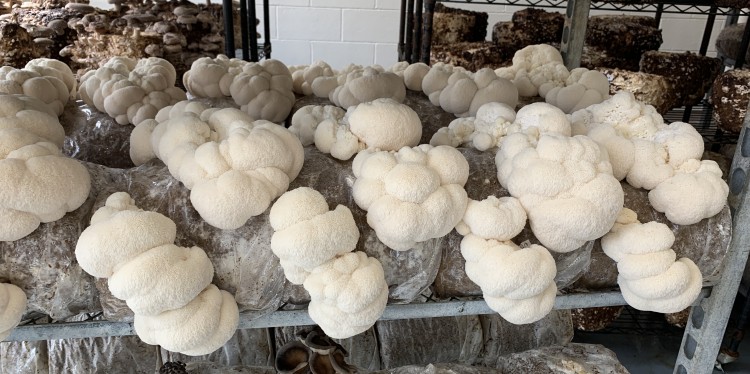

Let’s set aside the familiar button, cremini, and portabella mushrooms (all in the same species of Agaricus mushrooms) and focus on a different and growing segment of the mushroom industry: specialty mushrooms. The USDA defines “specialty mushrooms” as any non-Agaricus mushroom, which includes Shiitake, Oyster, Lion’s Mane, and many more.
Specialty mushroom production benefits include new income sources, crop diversification, utilization of unused space or waste streams, and building soil health. These mushrooms are grown in a variety of low-cost ways in outdoor, indoor, and hybrid systems including on logs, in the ground, in raised beds, or in blocks contained in buckets or plastic bags. Crops are sold fresh, dry, powdered, or incorporated into value-added products.
Like plants, mushrooms need specific environmental conditions to form, but sunlight is not a necessity. Humidity, temperature, and air flow are the most important considerations.
Mushrooms are neither plants nor animals but in their own unique group of organisms called fungi. A mushroom is the fruit of a fungus. Underneath the mushroom is the branching, thread-like, main body of the organism called mycelia. To be able to grow mushrooms, we first need to grow healthy mycelia. Once we have a healthy mycelia base, then we can focus on the fruiting process to get mushrooms to form.
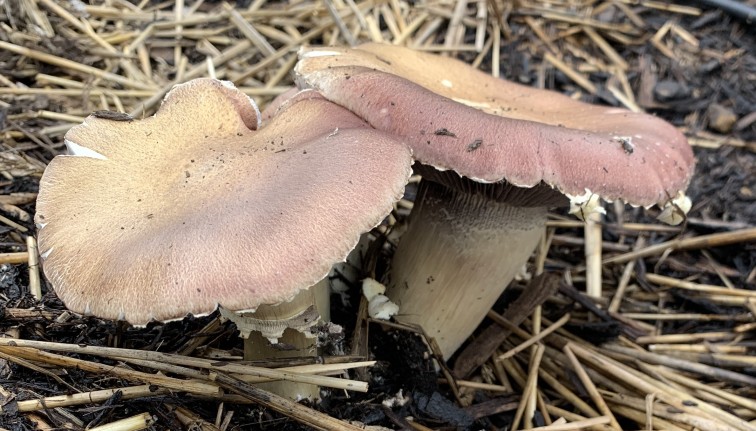
Wine Cap mushrooms fruiting in raised bed. Photo by Lori Koenick, Cornell Vegetable Program