• Agriculture
  • Vegetables
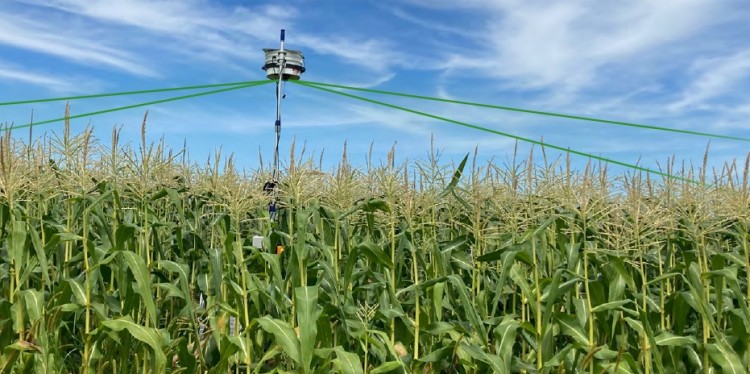
A laser scarecrow is a device that has one or more laser modules connected to motors. The specifications of the lasers are optimized to the color and motion sensitivity of bird’s eyes. When laser beams move across a field, birds become frightened and attempt to move away from the perceived threat. Light from the laser covers an area quickly and moves through the canopy without causing injury to the crop. Research demonstrates that birds do not readily become habituated to the laser.

Summary

A laser scarecrow used as the sole deterrent typically results in a significant reduction in crop damage. Combined with an auditory device, damage can be reduced even more. When used as part of an integrated management program for bird control that utilizes habitat management and multiple scare tactics, laser scarecrows can be useful tools for growers of multiple crops. All scare tactics must be deployed before birds find the field. The effectiveness of lasers depends on multiple factors such as bird species, bird populations, habitat and food availability. Lasers are not effective at deterring deer, racoons, coyotes or other mammals. 

Background

A laser emits a highly focused beam of light at a single wavelength. Lasers differ from standard light-emitting diodes (LEDs) in that the light from an LED is not focused into a tight beam. The tight focus of a laser beam allows it to maintain its intensity across long distances, and to precisely deliver energy to a very small target. Low power lasers are used as pointers and in devices such as DVD players and supermarket checkout scanners. High power lasers are used for cutting and burning in medical and industrial applications. Medium-power lasers with large diameter beams are used in light shows and can also be used to deter birds.

The idea of using a laser to protect large areas of open space from bird damage dates to the 1970s but did not become practical until the 21st century. Early lasers relied on glass tubes filled with gas to create the single wavelength light; they were very powerful but required massive amounts of energy. Between 1990 and 2020 several technological advances came together that made practical and affordable laser scarecrows possible: the development of inexpensive green lasers based on light-emitting diodes, the miniaturization of computer microcontrollers, and improvements in battery and solar panel technologies. 

A modern laser scarecrow consists of one or more laser modules connected to motors that move the lasers in response to commands from a computer microcontroller. The movement may be randomized (like the scarecrows used in the studies summarized in this fact sheet), may follow a series of waypoints, or simply rotate. A laser scarecrow may also have sensors that enable the microcontroller to turn the laser beams on or off in response to external factors such as light level, the position of the laser, or a change in the location of the laser scarecrow. All of this is powered by a rechargeable battery, and the solar panel keeps the battery charged.

Laser scarecrows take advantage of birds’ extremely keen eyesight. Most birds have color vision that is ten times better than typical human color vision. This means that birds can perceive the single wavelength light from lasers even under high ambient light conditions when the laser beam is not visible to humans. Birds rely on vision to detect predators and are very sensitive to motion. The wavelengths produced by the green lasers used in laser scarecrows are near the peak of sensitivity of the motion receptors in birds’ eyes. We cannot know exactly how birds perceive and interpret the laser beam, but they respond to it as if it were a solid object, and they will seek to avoid a moving laser beam. The microcontroller and motors in the laser scarecrow allow the laser(s) to be constantly moving, and the microcontroller can be programmed with multiple patterns or with random components to the motion so the birds cannot predict where the laser beam will move to next. Usually birds respond to the perceived need to avoid contact with the moving laser beam by leaving the protected area completely.

Safety

Lasers can cause distractions, glare or flash blindness. Regardless of the power of a laser, it is illegal to aim any laser at an aircraft or vehicle. Laser scarecrows typically use Class 3B lasers (5mW to 499mW) which can cause eye injury. Read and follow all directions included with a laser scarecrow, which may include completion of a laser safety course. Additional information can be found at Laser Safety Facts. 

We have seen some bird deterrent lasers offered for sale with Class 4 lasers – 500mW and up. These can cause immediate and severe eye injury to humans (and very possibly to birds). We suggest you avoid these very-high-power devices unless advised by a knowledgeable and trained laser safety officer. 

Laser devices are subject to regulation at national, regional/state, and local levels. You must research and comply with laws that apply to your situation.
 

Frequently Asked Questions

A: Birds rely on eyesight to detect threats and have enhanced ability to see colors and detect motion. Ornithologists who study bird behavior suggest that birds may perceive the beam as a solid object and a threat. 

A: Lasers appear to work best on birds that flock together. In agricultural crops those include blackbirds, cowbirds, starlings, cedar waxwings, robins, crows and geese. Lasers do not appear to deter finches, sparrows or cranes. 

A: The rapid movement of the laser beam means that the direct hit to a bird’s eye would occur at low frequency. Studies are ongoing in this area, but difficult to perform. 

A: Laser scarecrows that have varied movements of the laser beam pose a dynamic threat to birds such that they are unlikely to become used to it. In studies at the University of Florida, captive birds did not become acclimated to the laser scarecrow over the trial period. 

A: No. Mammals do not have the enhanced eyesight that birds do and rely on additional senses to detect threats. 

Are Laser Scarecrows Effective?

Laser Scarecrow Alone

Most of our research has been conducted with sweet corn using a research laser scarecrow (https://laserscarecrow.info/). The scarecrow was tested in sweet corn fields in Rhode Island using a split-field design where half of each field was covered by the laser and the other half served as a control. Bird damage was significantly reduced in the portion of the field protected by a laser (Table 1).

Table 1. Effect of a laser beam treatment on bird damage to sweet corn fields at the University of Rhode Island Research Farm. Summarized from Brown and Brown, 2021.

Trial YearPercent Damaged EarsSignificance (p-value)*
Untreated ControlLaser Treatment
201823.813.70.0046
201920.314.90.0332
* A treatment is considered significantly different than the control if this value is 0.05 or less.    

In Combination with Distress Call System

One weakness of laser bird deterrents is that laser beams travel in straight lines. Variation in plant height, changes in field topography, obstacles, and the need to avoid directing the beam across roads or into windows can all create gaps in coverage, and birds can be adept at finding and taking advantage of these gaps to damage the crop. Recent field tests have focused on combining laser scarecrows with Bird Gard® Super Pro distress call systems (Bird Gard, LLC, SIsters, Oregon USA) to eliminate gaps and improve coverage.

A trial at the University of Rhode Island (URI) in 2022 under intense bird pressure showed that combining the distress call system with the laser scarecrow significantly reduced damage relative to the laser scarecrow alone, with an average of 7.1% damaged ears in the doubly protected plots and 20.7% damaged ears with the laser scarecrow alone. Data was collected over a four-week period and damage never exceeded 10% in the doubly protected plots while peaking at 30% damaged ears with the laser scarecrow alone.

In 2022 trials in processing sweet corn fields in western New York, bird damage in unprotected fields averaged 20%. Fields protected with the laser scarecrow alone averaged 7.5% damage and fields with a laser scarecrow plus Bird Gard averaged 3% damage. 

URI trials in 2020 and 2021 showed that the Bird Gard system used alone did not differ from the unprotected control (no reduction in damage).

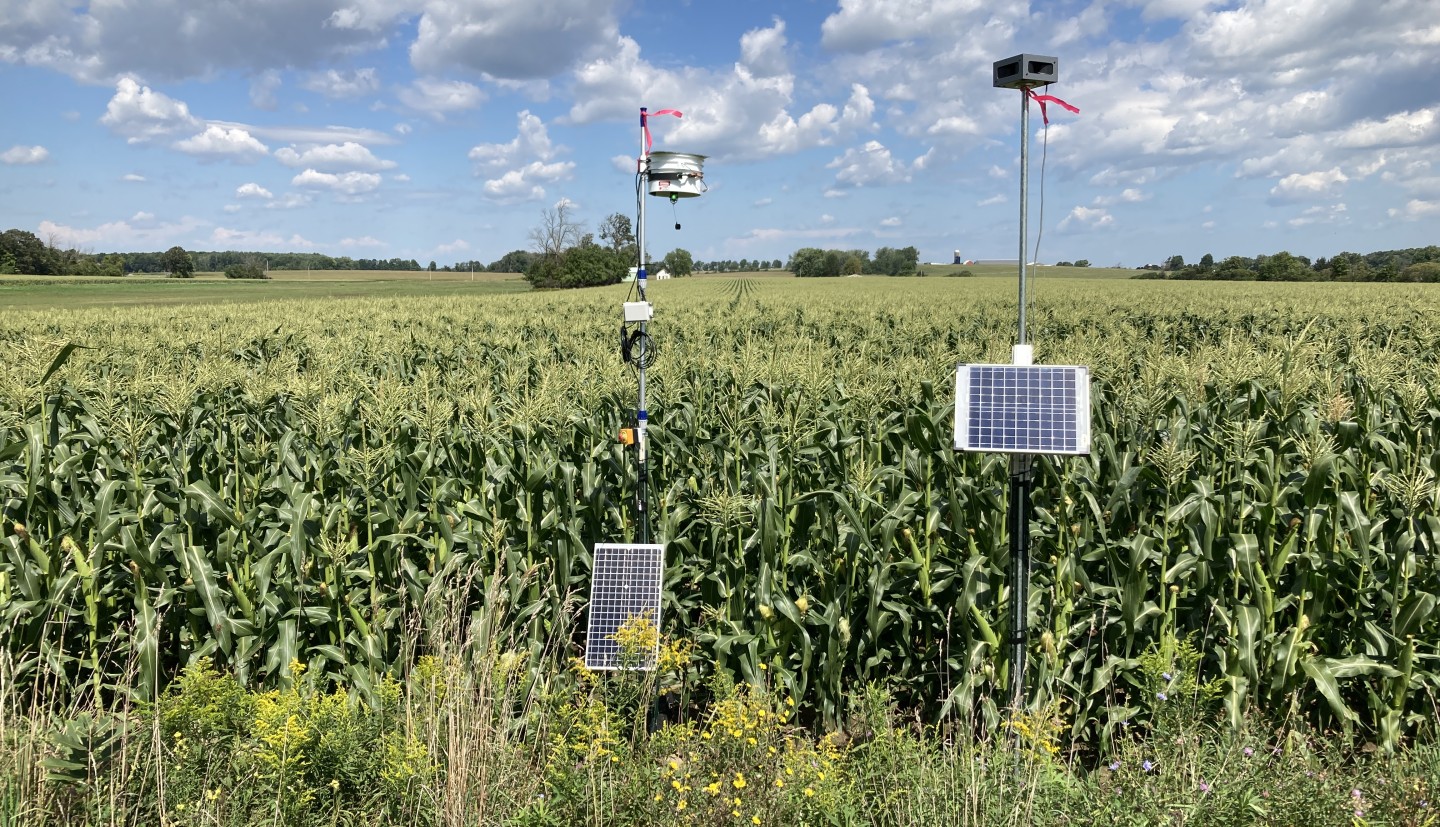
Edge of a sweet corn field with a laser scarecrow mounted on top of a tall pole with a solar panel at the base to power it. To the right of it is a Bird Gard squawk speaker mounted at the top of a tall pole. It too is powered by a solar panel.

Field Protection

A laser scarecrow (left) plus a Bird Gard® Super Pro distress call system (right) averaged less crop damage than use of either product alone.

Controlled Bird Population Trials in Florida

Some questions cannot be answered with field trials because bird pressure cannot be controlled and is difficult to accurately measure. Tests in large outdoor enclosures known as flight pens allow researchers to control the number of birds that have access to the corn, and to track the behavior of each individual bird over time. Trials with captive European Starlings were conducted at the USDA Wildlife Research Station in Gainesville, Florida in Fall 2021 and Spring 2022 using both ears of sweet corn mounted on wooden posts and sweet corn grown in the flight pen. Ears of corn in laser-protected plots were ten times less likely to be damaged than ears in control plots. Birds preferred to feed as far from the laser as possible and did not appear to lose their fear of the laser in the actual corn field (Manz et al. 2024).

Not all species of birds respond in the same way and there are a lot of species that have not been studied.

Grower Feedback

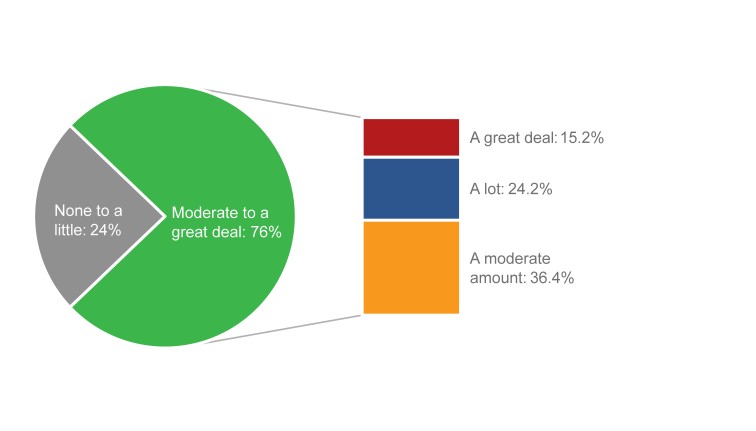
A survey was sent to sweet corn growers who participated in testing of the URI research laser scarecrow on their farm. Seventy-five percent of respondents indicated that they planned to continue use of laser scarecrows, while 13% were undecided and 12% did not plan to continue use. When asked “How much did a laser scarecrow reduce bird damage in sweet corn on your farm?”, 76% reported a moderate to high amount. 

Proper Placement of Laser Scarecrows

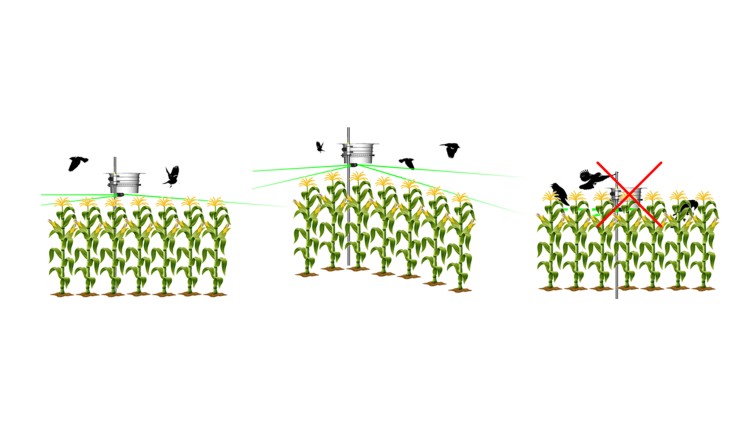
When using a laser scarecrow, it may be helpful to think of the beam as the birds do – like an extremely long rod that is moving through space. The beam needs to cross the path the birds use to access the crop, so that it appears to the birds that the field is blocked by solid objects. For crops such as sweet corn where birds primarily enter from above, the beam should sweep just above the crop canopy, so birds have to cross the beam path to enter the crop, and so sentry birds perched on the plants are in the path of the beam. For crops such as blueberries or grapes where birds can access space between the plants the beam should be angled down into the crop from above, so it reaches the ground between the plants. This will help prevent birds from flying under the beam to access the crop. Combining the laser scarecrow with an auditory deterrent such as a bird distress call system or propane cannon can enhance the effectiveness of the laser scarecrow by flushing birds out of the crop canopy and into the path of the laser beam.

For the best results, the laser scarecrow should be placed in the field and turned on before the birds begin feeding on the crop. Lasers are different from auditory scare devices in that the beam cannot penetrate obstacles. In other words, it only works to protect areas that are within line-of-sight of the scarecrow unit. Placement in the middle of a field provides the broadest coverage. Multiple laser scarecrow units may be required to protect fields that are L-shaped, oddly shaped, or very long. Bird pressure can vary across a field if there are ponds, trees, or other favorable habitats for birds nearby. 

Projection of the laser beam across the crop field is best observed at dusk or nighttime. Watching the beam move across the field can also help to determine if the beam is at the desired height and if it is parallel to the ground. (Do not look directly at the laser beam; only at its reflection from foliage or the ground.)

Most of our research has been with sweet corn. The suggested placement is for the beam to be at or slightly above the tassels to sweep across them so that birds don’t perch on the corn. The terrain of the field needs to be taken into consideration. If the beam is too high above the tassels, birds can fly underneath. If plants are of varying heights, position the scarecrow so shorter plants are not in a laser "shadow." The scarecrows will likely need to be moved from fields that are harvested to those that are nearing ripeness (successive plantings).

Advantages / Limitations

Advantages / Benefits

  • Birds are less likely to become accustomed to the laser, ensuring reliable bird control over time.
  • Lasers can repel birds from a large area without physically traversing the field.
  • Humane technique/positive perception and low environmental impact.
  • Reasonably affordable and easy to deploy.
  • Low maintenance and autonomous when using batteries that are recharged with solar power.
  • Commercial devices may be monitored through a user-friendly app.
  • Less likely to disturb neighbors (compared to propane cannons).
  • Can be used in multiple crops.
  • Open access designs are available to support adept individuals to build their own units. 

Limitations / Precautions

  • Care must be taken to avoid human eye exposure within the hazard distance. The laser should be turned off when workers are in the field.
  • May be challenging to place when roads, houses, buildings and airports are nearby.
  • Should not be considered a stand-alone device or silver bullet. Laser scarecrows are best used in combination with other deterrents.
  • Can’t just set and forget – must be checked on.
  • Bird pressure, habitat and availability of alternate food sources affect the success of any bird deterrent.

Prepared by

Julie R. Kikkert, Extension Vegetable Specialist, Cornell Cooperative Extension, Cornell Vegetable Program

Rebecca N. Brown, Professor of Plant Sciences – Sustainable Agriculture, University of Rhode Island

David H. Brown, Computer Science, University of Rhode Island

Charles D. Bornt, Extension Vegetable Specialist, CCE Eastern New York Commercial Horticulture Program

Marion E. Zuefle, Vegetable IPM Extension Area Educator, New York State Integrated Pest Management

Brown, R.N. and D.H. Brown. 2021. Robotic Laser Scarecrows: A Tool for Controlling Bird Damage in Sweet Corn. Crop Protection 146; 105652. 

Manz, S.T., K.E. Sieving, R.N. Brown, P.E. Klug, and B.M. Kluever. 2024. Experimental Assessment of Laser Scarecrows for Reducing Avian Damage to Sweet Corn. Pest Management Science 80 (3): 1547–1556. 

URI laser scarecrow website

Success with Laser Scarecrows webinar (2022)

Research support was provided by:

The New York Farm Viability Institute Project FVI 20 048

USDA AMS Specialty Crop Multi-State Program Award AM190200XXXXG001

Funding for this project was made possible by a grant/cooperative agreement from the U.S. Department of Agriculture (USDA) Agricultural Marketing Service. Its contents are solely the responsibility of the authors and do not necessarily represent the official views of the USDA.

Educational purposes only. The information contained in this publication is intended solely for education and is not intended to provide legal, accounting, or other professional advice.

Cornell Cooperative Extension is an employer and educator recognized for valuing AA/EEO, Protected Veterans, and Individuals with Disabilities and provides equal program and employment opportunities.