

Exploring biomimicry, agroforestry and innovative tree propagation methods for farming systems
How can we learn from nature in our farming systems to address our essential services of food, water, waste, shelter, energy, and ecosystem management? This program will include three presenters discussing different methods: syntropic agroforestry, air prune raised bed tree production, and integrating nature-based solutions and biomimicry in farming systems. For anyone interested in food production and ecological restoration, this program is an opportunity to connect with community members about methods for creating self-sustaining systems that can feed us while supporting ecological health.
About the presenters:
Integrating Nature Based Solutions in Farming Systems
Elinor Kwitney Stapylton has a M.S. in biomimicry from Arizona State University and B.A. degrees in biology and environmental and urban studies from Bard College in New York’s Hudson Valley. Elinor also holds a teaching certificate in sustainable construction methods from Earthship Biotecture in Taos, New Mexico and is a certificate recipient from NSF I-CORPS Puerto Rico. Elinor will discuss Nature Based Solution (NBS) tools and methods to create intentional data informed practices for our farming ecosystems. Covering examples of passive greenhouse designs and integrated ecological food production, wastewater treatment and energy generation systems, as well as how to incorporate adaptive management methods for on-farm research to continuously evaluate our practices to ensure they promote resilient solutions.
Agroforestry as a Social Movement: Lessons in Transitioning Toward Regenerative Systems
Jonathan Dean, a writer, farmer, and agroforester based in the Hudson Valley will share more about his experiences transitioning into a career in farming and food. He will share lessons learned and what he wishes he knew 5 years ago before beginning this transition.
Jonathan is currently working in a local agroforestry nursery and diversified farm practicing syntropic agroforestry, a farming system that mimics natural forests' strata and forest succession to restore ecosystems, resulting in densely planted, highly diverse systems that produce sustainable yields. After the presentation, we will jump into dialogue around how we can collectively create equitable and regenerative food systems for the future.
Trees for the Masses: an Introduction to Air Prune Raised Beds
Connor Youngerman is the Cornell Small Farms Agroforestry and Mushroom Specialist. He has a B.Sc in Biology from the University of Prince Edward Island and M.Sc. in Soil and Crop Science from Cornell University; he is currently working on a PhD in Horticulture at Cornell. Connor works with urban and rural farmers across the state to advance farm resilience through novel mushroom cultivation strategies; and agroforestry implementation with a focus on forest farming, silvopasture, and urban food forests.
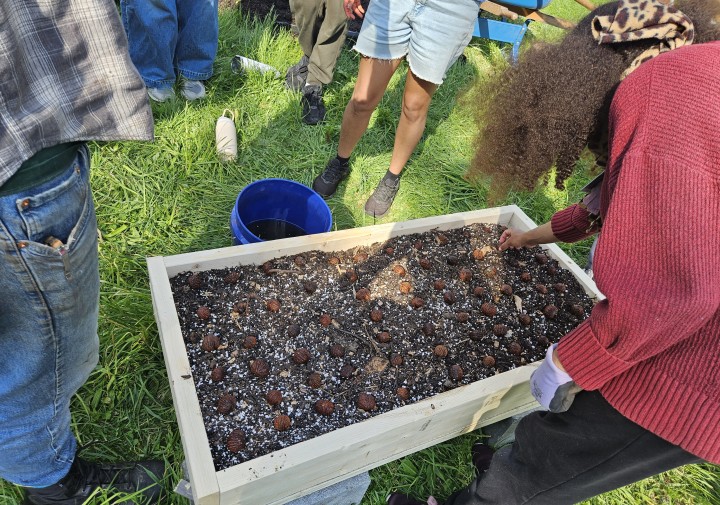
Connor will cover discuss air pruned raised beds (APRB): construction, best practices, potential species, seed collection and research avenues being explored by Cornell Small Farms program. APRBs allow for high density tree seedling production of both native and non-native food producing species, in a small space with minimal training, giving them applications in agroforestry, conservation, and forestry work. No land ownership required.
Date & Time
October 13, 2026
6:00 pm - 8:00 pm
More information about this event.
Contact Information
Kathryn Brignac
- klb339 [at] cornell.edu
- (845) 340-3990
Cost
Website

We openly share valuable knowledge.
Sign up for more insights, discoveries and solutions.