
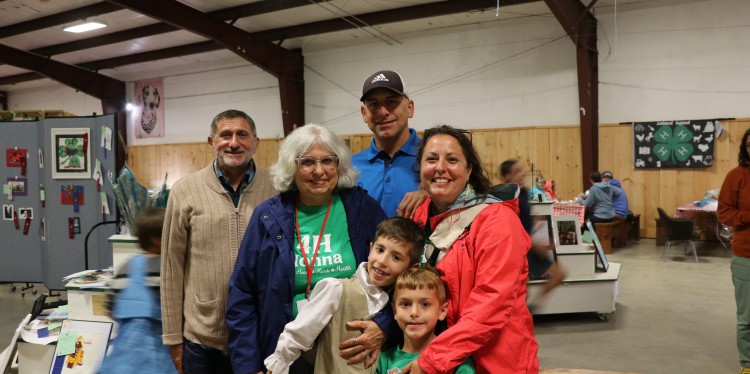

Like so many of our 4-H families, Lee Reidy’s connection to 4-H spans generations. Her story began with a sheep named George in a suburban New Jersey community. Today, it continues as Lee proudly watches her grandson find his voice through 4-H Public Presentations.
For as long as she can remember, service, hard work, and learning were woven into Lee Reidy’s daily life. Her father immigrated from Italy and after marrying her mother in Sicily, worked tirelessly to build a life for his family. During the day he worked for Ford Motor Company. At home, there was always more work to do at the family Nursery and Landscaping business.
On their eight acres in central New Jersey, the family raised chickens, ducks, and vegetables. When she was 15 years old, she convinced her busy father to help her take on one more project: a sheep. Even with his demanding schedule, he built a stall for her new animal. She named the sheep George because he had been born on George Washington's birthday.
Her mother first introduced her to the 4-H program. Though a seamstress herself, she felt she wasn't the best teacher for her daughter. What Lee found in 4-H was something extraordinary: a place where young people could learn from caring adults and discover talents they never knew they had.
"4-H gave me opportunities that I would have never had."
In those years, boys and girls often participated in different project areas. She joined a club that focused on sewing and cooking led by local volunteers. The volunteer leaders were not necessarily experts. They were neighbors who cared about young people and were willing to learn alongside them. Supported by high-quality university-developed curricula, those volunteers helped youth explore far more than basic skills.
"We didn't just learn how to sew. We learned about the sewing industry. We learned the reasoning behind the way things worked."
For example, through cooking projects, youth explored the science behind food preparation, learning topics like the differences between baking soda and baking powder. The projects encouraged curiosity, critical thinking, and problem solving.
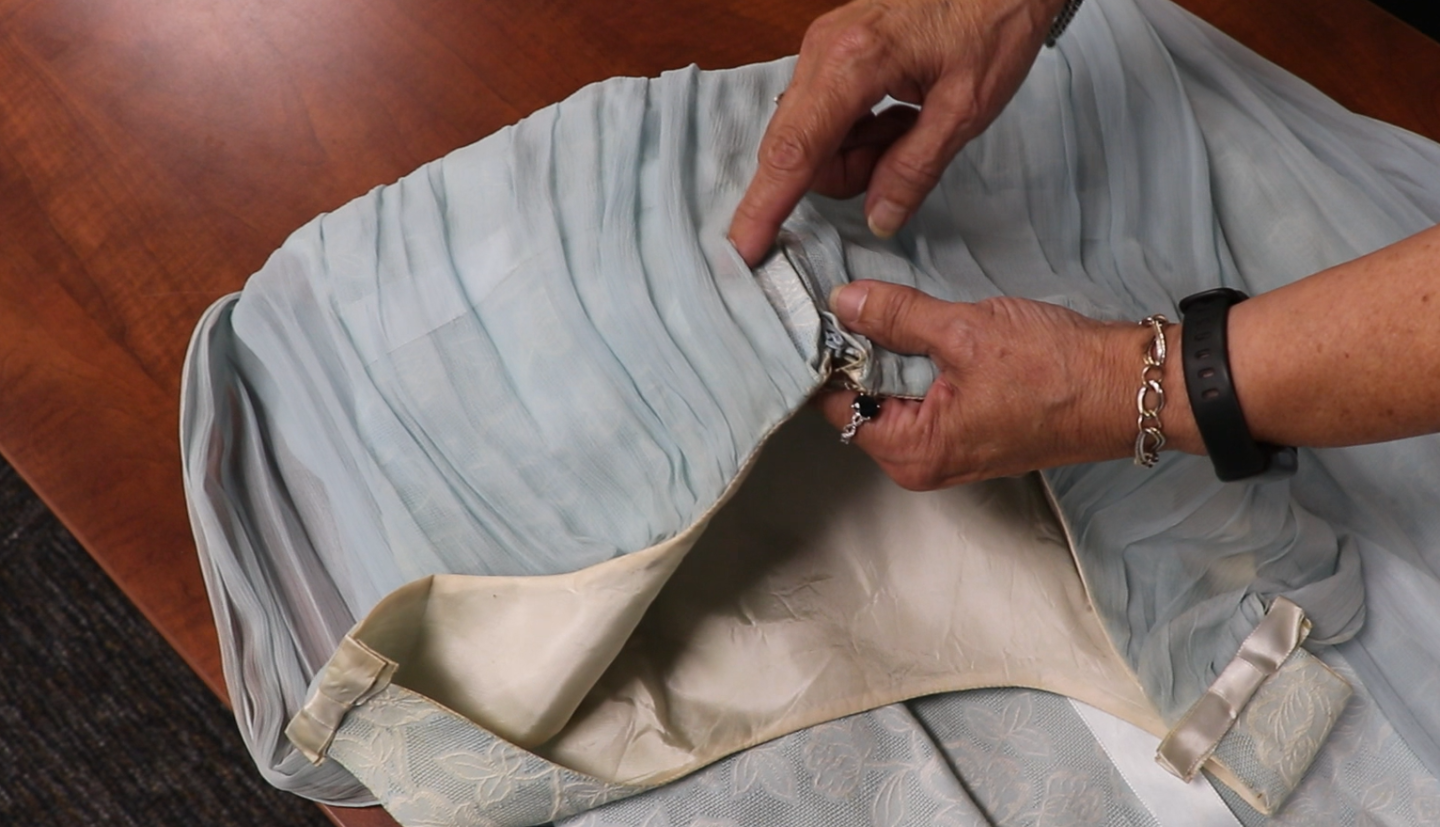
One volunteer leader, Ms. DiDario, made a lasting impression. Working with a small group of children from her modest home, she mentored and encouraged each of them. Together, they designed a prom dress that remains one of her treasured possessions today and went on to be used by four other women in Lee’s family. Those experiences taught an important lesson: learning happens when caring adults invest in young people.
As she grew older, 4-H continued to widen her world. Through 4-H camp, the International Farm Youth Exchange program, and trips to Washington, D.C, she met people from different backgrounds and cultures. She developed a deep appreciation for the environment during summers spent at 4-H camp in Stokes State Forest. Her 4-H Program Leader, Mr. Peter Martens, faculty at Rutgers University had a tremendous influence on her 4-H career and served as a model for her work as a CCE professional.
She went on to study Extension programs at the University of Connecticut and eventually dedicated her professional life to Cornell Cooperative Extension, serving as 4-H Leader at CCE Steuben, Putnam and Executive Director of CCE Ulster.
"4-H is where I got my foundation to be a community leader.”
She also learned the value of service. Community service was a major part of the 4-H program and a concept that was highly encouraged and one Lee took seriously. That belief became a lifelong commitment to strengthening communities through education, leadership, and volunteerism. Not surprisingly, when her own children were old enough, she enrolled them in 4-H and became a 4-H volunteer herself along with her husband, Bob. Through her years of service, she watched her children and other young people gain confidence, develop skills, and discover their strengths. All of her children participated in Public Presentations – a 4-H activity that teaches children public speaking, leadership, and goal setting - which she says continues to serve them. Today, her daughter, Allison, is a 4-H leader in the Town of Ulster.
In recent years, Lee’s legacy with 4-H has continued through her grandchildren.
As just one example, her grandson Hunter participates in 4-H Public Presentations. This year, at the age of 9, he presented on the cello and received critical feedback during county presentations. He absorbed that feedback, made changes, and presented a much-improved presentation at the Fair. That, Lee believes, is one of the things that makes 4-H unique.
"Kids get feedback from adults who aren't related to them," she explained. "They're teachers and evaluators. There really isn't another program like it."
Through age-appropriate public speaking, goal setting, project work, leadership opportunities, and relationships with caring adult mentors, 4-H helps young people discover what they are capable of achieving.
For her family, that impact has lasted across three generations.
From a teenage girl raising a sheep named George to a lifelong Extension leader and grandmother watching her grandson find his voice, the story is the same. When young people are given opportunities to learn, explore, and lead, their lives change. And those positive changes can echo through families and communities for generations.

We openly share valuable knowledge.
Sign up for more insights, discoveries and solutions.
Please enter a valid email address to subscribe to the newsletter.