

Cottage Gardens
Settlers in America were limited in their seed choices. Were the best seeds saved from their past garden, or should they trade with a neighbor? Would the European imports grow under new conditions, or did seeds lose viability over the long ocean voyage?
Beginning in the late 1700s throughout the Northeast, Shaker families found a ready market for their high-quality seed packets, or "papers." Although farm stores sold cloth bags of bulk seed, the paper envelopes constructed by the Shaker groups contained smaller amounts of seed. This was much more fitting to the cottage garden.
Creating a Sturdy Envelope
Finding that cutting the paper envelopes was labor intensive and slow, Shakers designed a speedier process by molding chisels with an offset blade and finding the perfect paper to create a sturdy envelope. This was integral to the seed sales’ success. Chisels of varying sizes were designed to stamp out a modified rectangular pattern with three flaps which were folded in and glued. Labeling included the type, variety, cost, production area, planting tips, and perhaps even recipes.
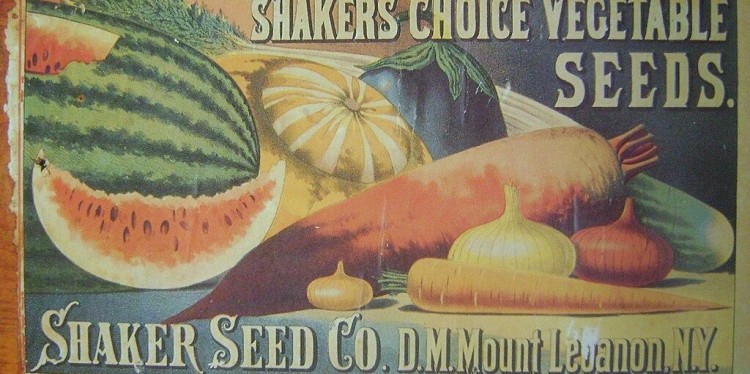
The order's brethren distributed sectioned sales boxes along their routes in late winter or early spring. They then returned in fall to collect profits, returning unused seeds to be examined and used within their gardens. Diary notations from 1784 record each wooden compartmentalized box as containing 200 packets of seeds selling for $.05 to $.06. Marketability was increased as the process of lithography added to the eye-catching colors and illustrations of the sales box. The opened top, or “show bill,” listed the seed offerings, helping long past gardeners dream of flourishing yields.
Shipping Seeds
A smaller, lighter packaging allowed Shakers to expand their market through the mail system, shipping across the country. Competition led to improved products, better prices, and wider diversity which aided the consumer. Yet, as membership within the religious community waned and leadership questioned the worldliness of the orders' focus the seed business was closed.
Today, we can continue to relish the spare beauty of the designs by purchasing replicas of the early seed “papers” and sales boxes, though the cost is above the original five or six cents.
Learn More
- Shaker Museum
- New York State Museum
- Smithsonian Institution
Master Gardener Volunteer Column