
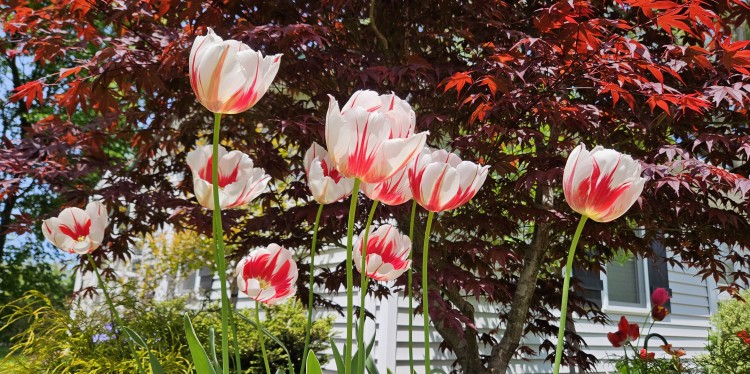

October is an ideal time to get spring-blooming bulbs in the ground. In fact, they can be planted any time before the ground freezes. That means we still have a few weeks to plan a colorful succession of blooms that could last from March through June.
When you’re choosing your bulbs, there are a few factors to consider:
Hardiness Zone
Because spring-blooming bulbs need to survive our winters, it’s essential to select ones that can thrive in our USDA Plant Hardiness Zone. In Orleans County, that means choosing bulbs for Zone 6 or lower.
Light and Soil Requirements
Most spring-blooming bulbs require full or partial sun. Even if you have a yard that’s usually shaded by deciduous trees, you can include earlier blooming bulbs like crocus, winter aconite and early varieties of daffodils that will flower before the trees leaf out.
Spring bulbs also prefer well-drained soil. Poorly drained or wet locations can cause the bulbs to rot.
Pest Resistance
Many spring-blooming bulbs are tasty treats for rabbits, deer, chipmunks and other creatures. Tulips and crocus are particular favorites. Animals can dig up bulbs and eat them in the fall, or they can munch on the tender leaves and emerging flowers in the spring. While no bulb is truly critter-proof, some are less bothered than others. And a little protection never hurts.
Strategies to protect your bulbs include:
- Covering the soil surface after planting with hardware cloth or chicken wire that is secured with landscape staples or bricks to prevent digging. The cloth or wire can be removed when the foliage appears in spring
- Fencing in tender emerging foliage when it appears in spring. The fencing can usually be removed safely once the plants start to bloom. By then, they are big enough to deter rabbits and other rodents.
- Using repellents such as pepper or peppermint that taste bad to the animals or those that smell bad such as coyote urine or garlic. The repellents have to be reapplied often, especially after it rains, and they are most effective when used in combination with other strategies like fencing.
Bloom Times
Consider when you want your flowers to bloom, and plant a combination of early-, middle- or late-season bloomers. Winter aconite, snow drops, and crocus, for example, can bring color to your yard as early as late February or March, while tulips generally bloom much later in May. Some flowers, like daffodils, can have early, middle and late varieties.
Where to Plant
This may be one of your toughest decisions. The good news, though, is that spring-blooming bulbs can work just about anywhere in a garden. They can be planted in clusters along your home’s foundation or as a border along the edge of a vegetable or flower garden. They work under deciduous trees and shrubs, and some, like crocuses and daffodils, can be naturalized across your landscape.They can even work in containers.
Spring bulbs have the most visual impact when planted in mass. Larger bulbs like daffodils and tulips can be planted in groups of at least 12, while smaller bulbs can be planted in groups of as many as 50. If you have a smaller space, a cluster of three or four daffodils or tulips can have a big effect, especially if they are all the same color.
Learn more about bulbs and find other ideas:

We openly share valuable knowledge.
Sign up for more insights, discoveries and solutions.