
Share

As the days get shorter and temperatures get cooler, it’s easy to think that tasks in the garden are done for the year! But there is still much to do to not only close out this growing season but also to set yourself up for success for next spring as well.
Fall Garden Checklist
Some tasks that I do in my garden at this time of year are:
- Prepare the vegetable garden soil for the future garden. I remove any dead or diseased material. (FYI: don’t throw your diseased trimmings into your compost pile, some diseases can overwinter in plant material and re-infect your gardens next spring). Plant fall crops (spinach, garlic etc). Add organic soil, compost, manure and lightly till both directions. This will give my beds a head start to build up beneficial microorganisms. I will eventually cover my 4 raised beds with cardboard or black plastic to reduce the presence of weeds, but only after my fall crops are done.
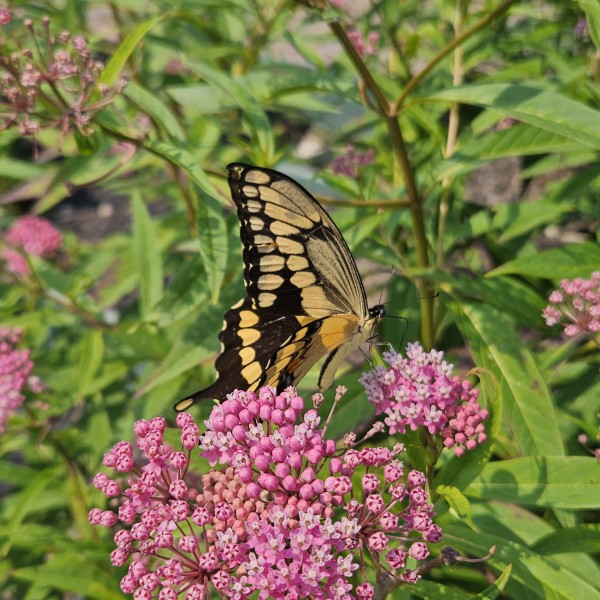
- Don’t deadhead native flowers - I leave the seeds for the birds. I also leave the ornamental grasses for nesting sites and hollow-stemmed plants as a winter home for our beneficial insects.
- Bulbs – To dig or not to dig? My gladiolas and tulips stay put. I do dig up the Canna and Dahlia because they are not winter hardy in our area. But, it’s easy – gently dig out of soil, clean the bulbs and place them in a box with perlite and store in a cool dry area. That will keep them from completely drying out. Remember-label what they are!
- Overwinter Geraniums? Yup! I have some that are over 5 years old and they are still beautiful. I forgot to label the color so one pot this summer had three different colors and I really liked the effect. Basically, I clean off the root structure, trim dead parts and sometimes hang them from the rafters in the basement with a paper bag over it (just so the floor isn’t a mess). Last year I trimmed/cleaned and place them in a perlite-filled large window box and shoved about 5 or 6 plants in the perlite. This is known as bare root planting. No watering/keep out of light until March. You can find more information on several extension websites.
- Clean and sharpen your tools for the fall trimming and then do it again before putting them away.
- Label perennials that you may forget about next season! I am marking those pretty Scilla Asparagaceae that come up with blades of grass-like leaves before the stem appears and I think I’ve pulled them in the past. I’m also marking where the Hibiscus are, as they die back to nothing over the winter. I mark where my Red Lupine is because I’m curious about its habit, and that teeny little Mouse Ear Hosta, with leaves as big as a nickel. What do you want to mark that you forget you have?
- Now is a great time to notice what might be too crowded. As time has gone by, some plants got larger and need more space to continue to be healthy. Consider which plants can be easily moved or divided. Finding a place for them is the quandary for me. I don’t relish digging a new garden!
- Don’t forget to water! Just because summer is over doesn’t mean we discontinue giving our plants moisture. Even your evergreens need moisture reserves for the dryness of winter winds. They will survive better if they receive about 1” of water once a week (according to Michigan State Extension) until the temperatures are in the 40’s.
- Add mulch to your gardens bed in the fall. Mulch derived from natural materials is usually best – it adds nutrients as it breaks down and allows water to permeate. I usually mulch after all has been trimmed/moved etc. and when I’m pretty much done watering. I don’t want to cause an overly damp situation. Other reasons to mulch, besides healthy plants in spring are the beneficial insects/bees that overwinter underground.
I hope this article will help you incorporate at least one new method for your fall gardening experience.
Master Gardener Volunteer Column
My brain runs at warp speed all the time. It's almost always the many tasks I need to do. Instead of focusing on the here and now, I may be focusing on the next five tasks on my lists, and others for next week and next month… I need mindfulness...