Fact Sheet

    Chainsaw Safety & Storm Cleanup

    Chainsaw injuries surge after storms as residents clear trees and debris. Most injuries occur from improper handling, kickback, fatigue, and lack of protective equipment. 

    This fact sheet outlines essential chainsaw safety for New Yorkers handling post-storm cleanup.
    Step 1

    Before Use

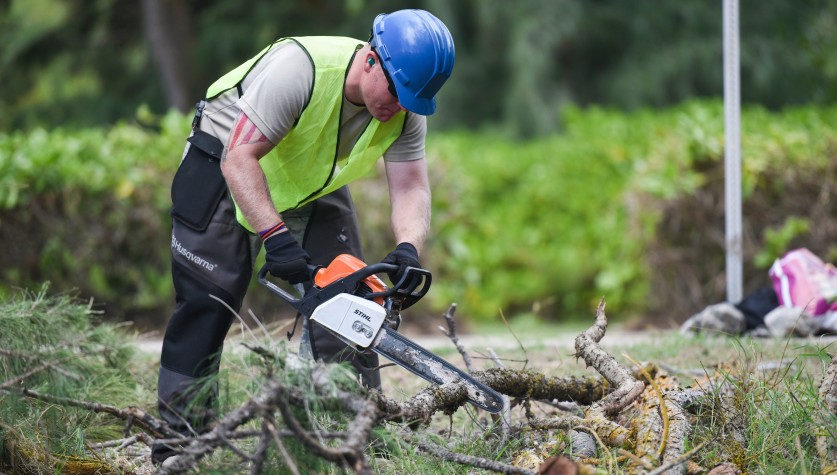
    • Wear protective gear: helmet, gloves, chaps, steel-toe boots, eye/ear protection.
    • Inspect chain sharpness, tension, and chain brake function.
    • Fuel and start saws outdoors, on level ground.

    Step 2

    Safe Operation

    • Maintain a firm two-handed grip.
    • Stand with balanced footing.
    • Be aware of the kickback zone (top of bar tip).
    • Never cut above shoulder height.
    • Keep others at least 30 ft away.

    Step 3

    Storm-Damaged Trees

    • Watch for hanging limbs and tensioned branches ("widow-makers").
    • Never attempt to cut uprooted, leaning, or tensioned trees without training.
    • Hire a certified arborist for hazardous trees.

    Step 4

    Preventing Fatigue & Injury

    • Work in teams when possible.
    • Take breaks every 20–30 minutes.
    • Stop immediately if you feel tired or unstable.
    1. NYS Department of Health – Chainsaw Safety
    2. University of Missouri Extension – Chainsaw Selection & Maintenance
    3. UNH Cooperative Extension – Safe Timber Harvesting
    4. Indiana DNR – Chainsaw Safety