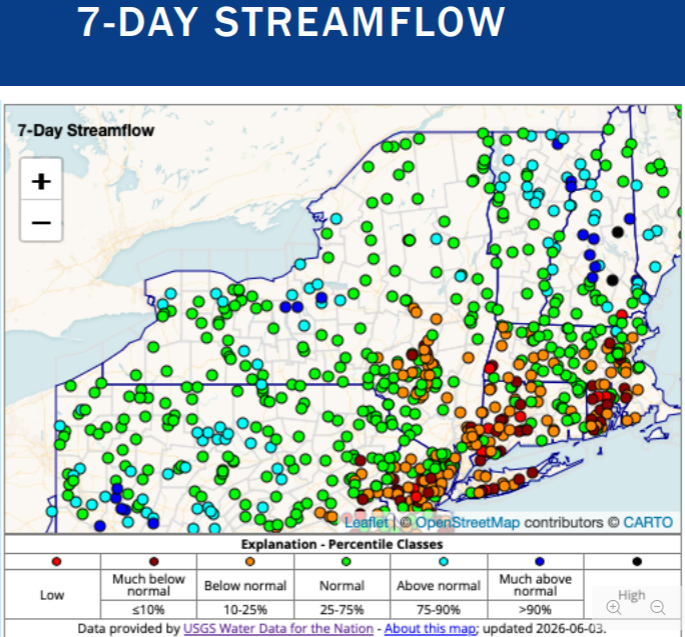
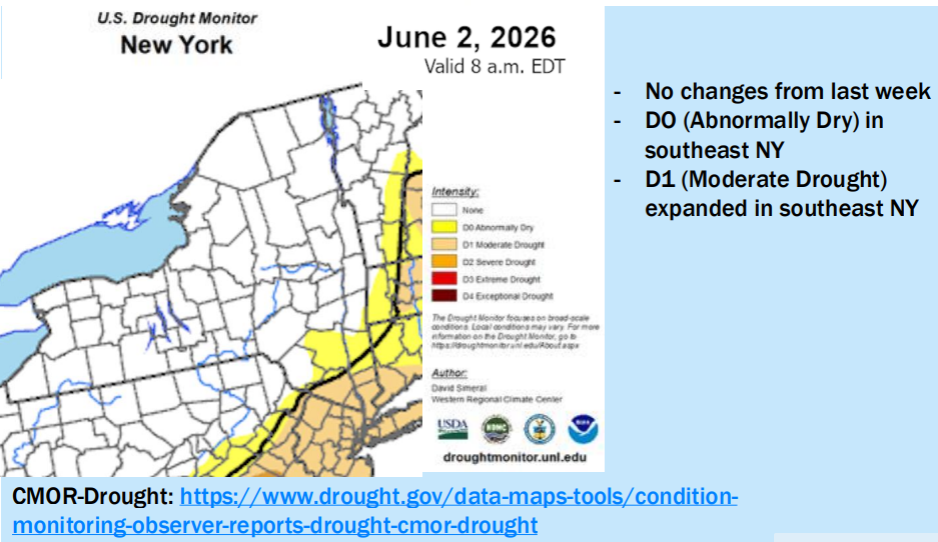
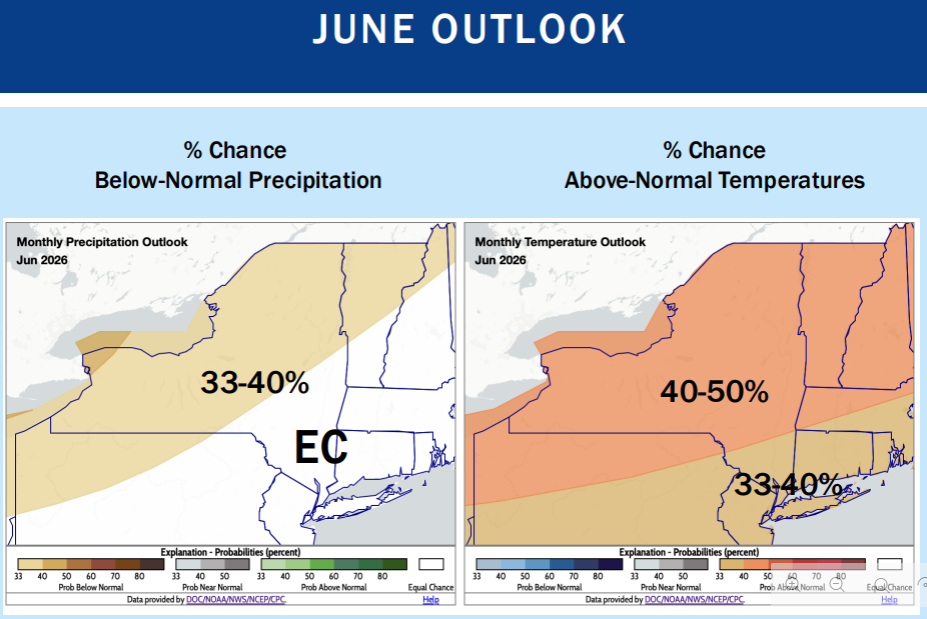
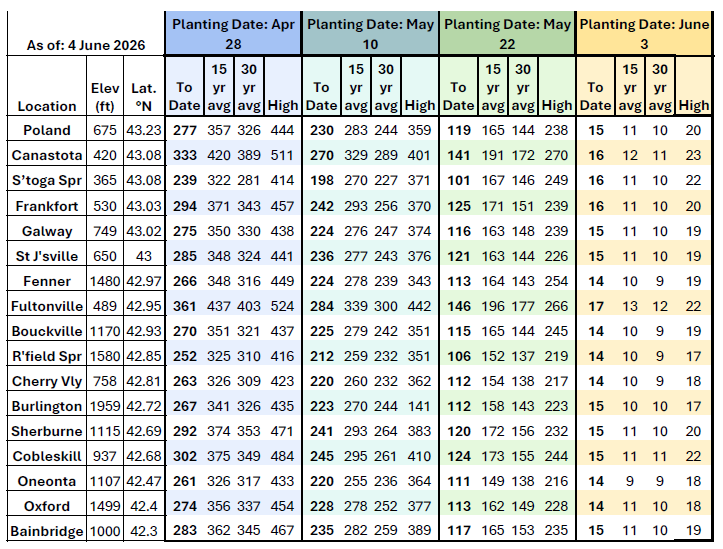
So far, so good - Lots of great weather for planting, making hay, and for winter grain development.
We saw lots of alfalfa being harvested at the beginning of this dry spell, followed by planting, and now we’re seeing dry hay being harvested - and even some herbicide applications on the earlier plantings. On this subject, and considering the current weather conditions, Mike Hunter (Cornell IPM) recently shared the following article from Univ of Wisconsin with our Field Crops Extension group.
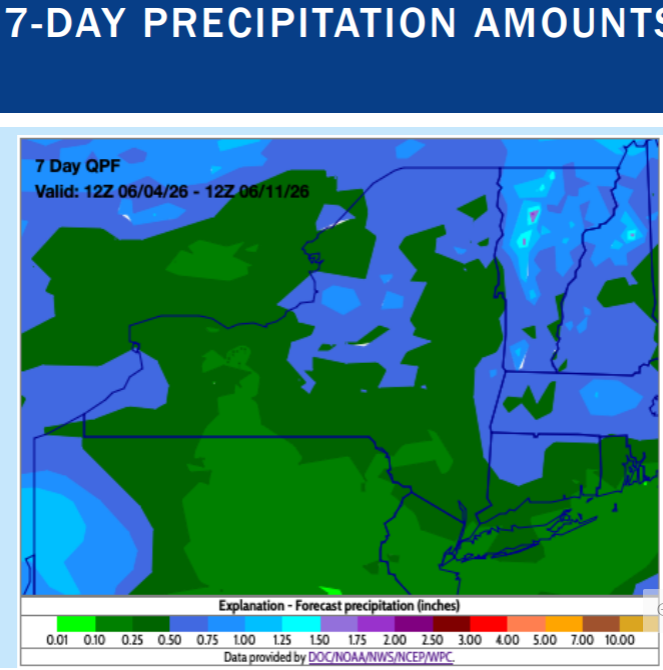
Winter grains are looking great, and winter wheat that’s past flowering just might be relatively free of fusarium head blight even without fungicides. But looking ahead to the potential rain in the weekend forecast, later-flowering grains may still be at risk.
Next month, I’ll be hosting a free Corn and Soybean Seed IPM field day at SUNY Cobleskill (Champlin Hall and field plots) to show some results and updates from our ongoing neonicotinoid seed treatment trials across the state. July 7th, 10AM - 1:30PM. Once we manage to create the registration website (coming soon), pre-registration will be very helpful for our planning efforts - but for now, this is a Save-The-Date. We’re offering 2.25 DEC credits (Cat. 1A, 4, 10, 21, 23) and 2.25 CCA credits (1.75 IPM, 0.5 Sustainability). And of course, free lunch!