
Field Observations
- Small Grains - Now that we're getting some rain and humidity to go along with our warm weather, be prepared for crown rust in oats. I see tons of it on the buckthorn trees, so susceptible oat crops are at risk. Similarly, these conditions are perfect for stem rust and leaf rust of wheat.
- Corn and Soy - Most of our conventional corn and soy acres have been planted, and now that we're getting some moisture, soybeans are finally beginning to grow beyond V1. Corn, being a C4 plant, is more tolerant of reduced moisture, so they've been chugging along - some crops are just emerging, while others I've seen in the area are at V3-V4 (and perhaps beyond by the time you read this). Sidedressing and herbicide applications are underway in a field near you, and we're well on the way to head-high-by-the-fourth-of-July.
- Forages - Winter grain forages and perennial hay first-cuttings were light. Across the state - so while that suggests that the cause was likely weather-related, applying a topdress of N can boost seconds cutting yields now that we have some rain in the forecast and grasses can draw on some moisture. Knapweeds are in the bud stage and about to bloom, so cut them now to mitigate seed deposition and maximize stress to their root reserves.
Weather Update
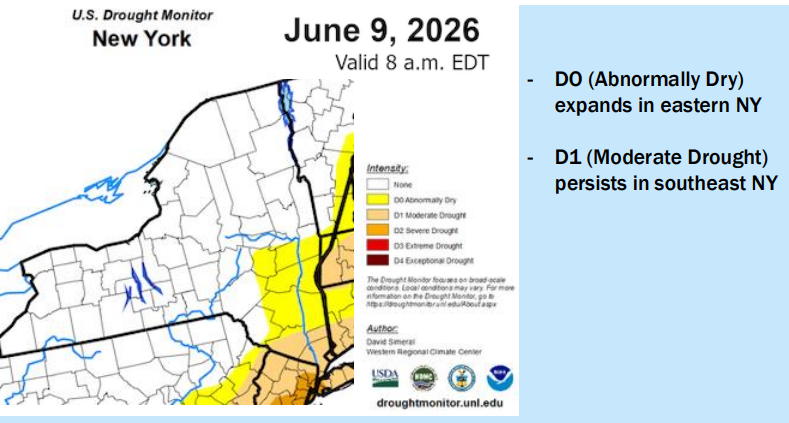
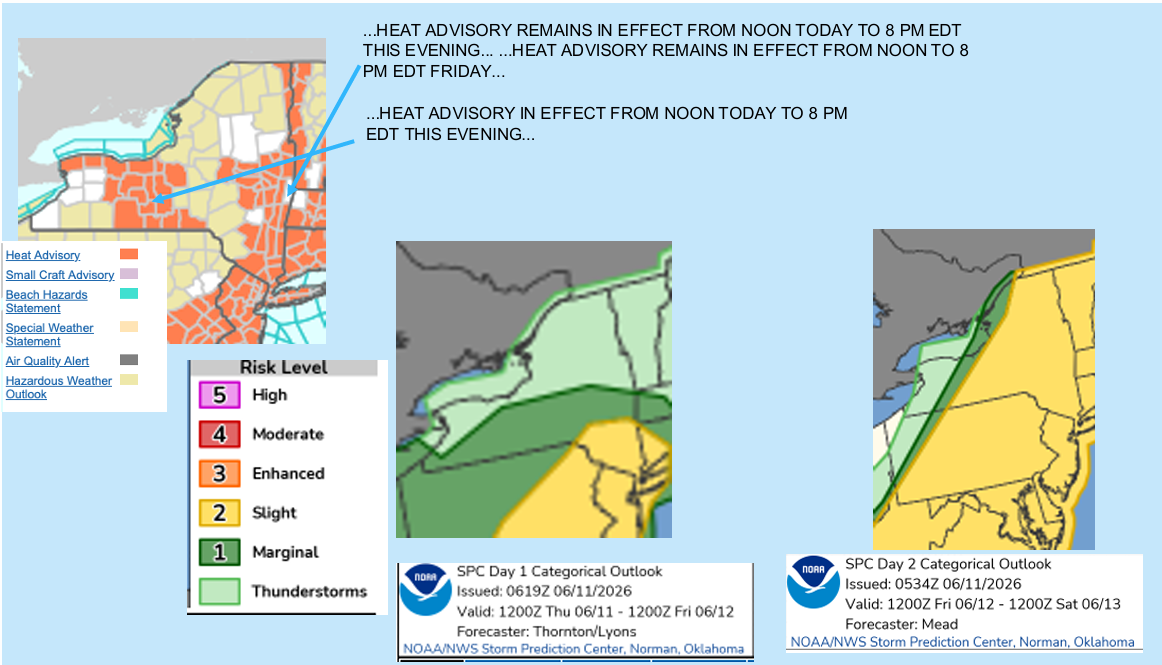
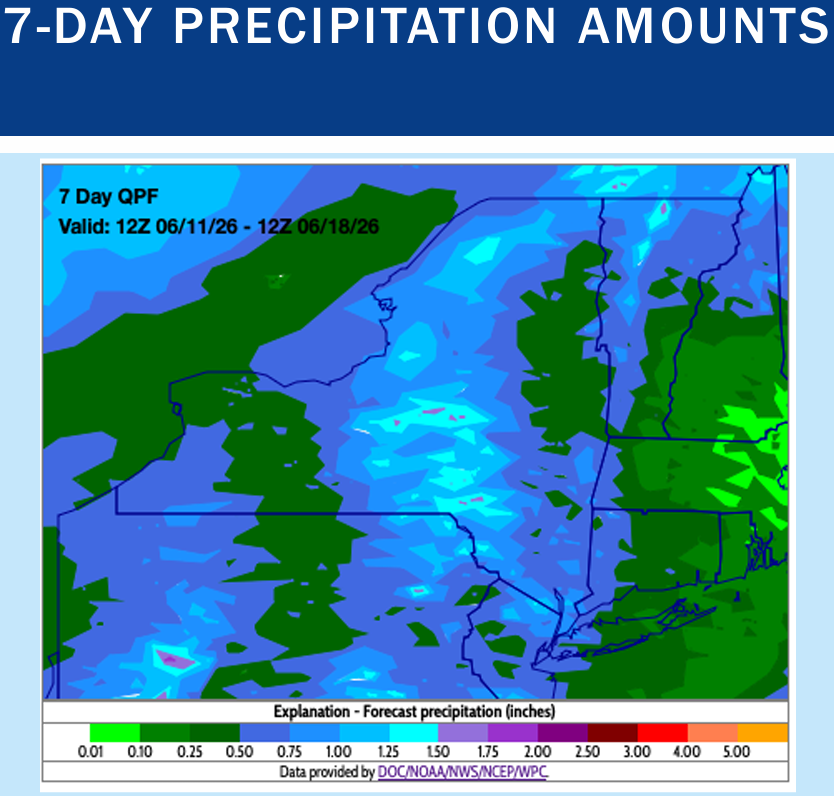
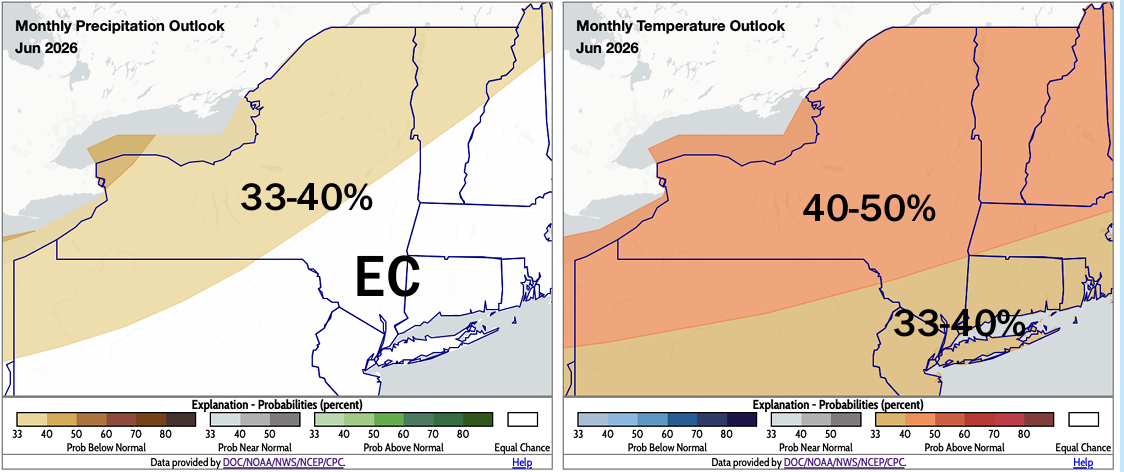
Rain! But not constant, and not too much. About 1-1.5" over the next week. We'll take it. Especially now that we're side-dressing and applying herbicides. Slides supplied by Jessica Spaccio (NRCC Climatologist, Cornell):
Pest Monitoring
Cutworm and armyworm remain at low, but noticeable levels. I have yet to see any soybean aphids or cereal leaf beetle, but I hear reports of them from western NY, so be on the lookout. And with the recent storm system, I've been seeing plenty of leafhoppers on various vegetation - so it stands to reason that potato leafhopper has arrived in our alfalfa fields. We will begin sweeping for this pest next week.
Growing Degree Days
(See: Climate Smart Farming Growing Degree Day Calculator)
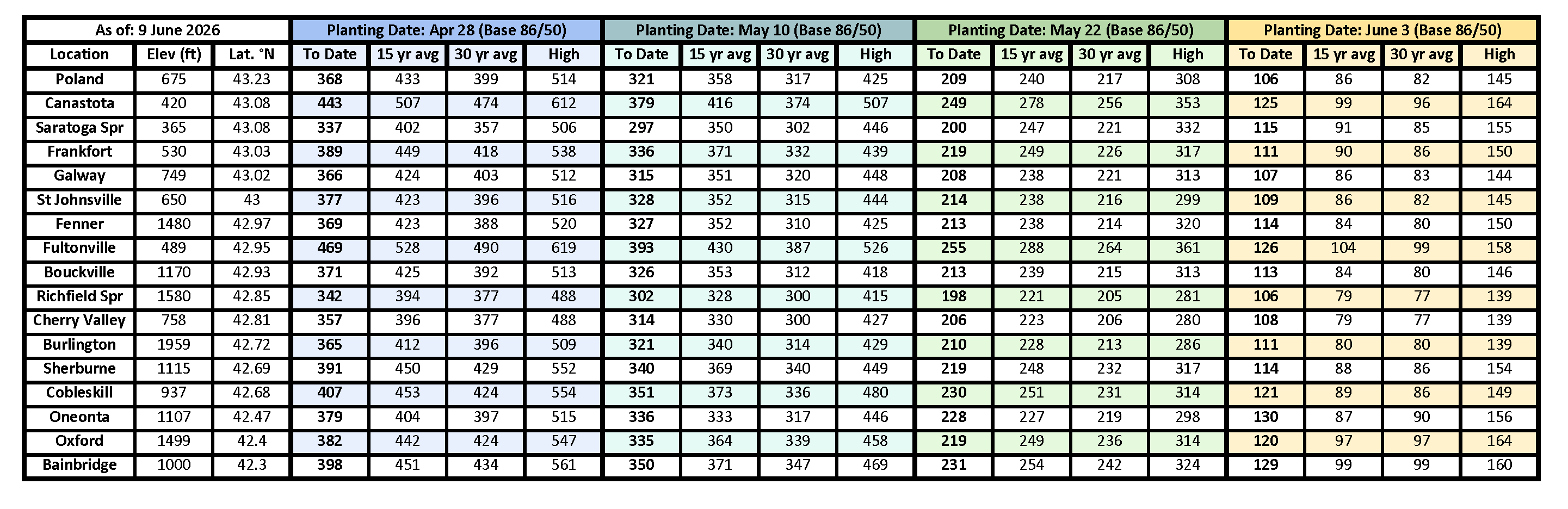
Growing degree days (GDD) are calculated by taking the average daily temperature and subtracting the base temperature for development of a given organism ((High + Low)/2 – base temp = GDD). For corn silage, we are using base 50/86, as corn development starts at 50 degrees F and ceases above 86. Check your location and planting date:
- Field Crops
- 4-H Youth
Master Gardener Volunteer Column
We openly share valuable knowledge.
Sign up for more insights, discoveries and solutions.