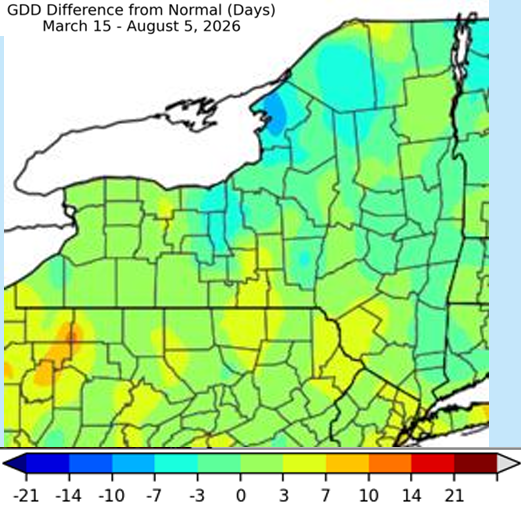
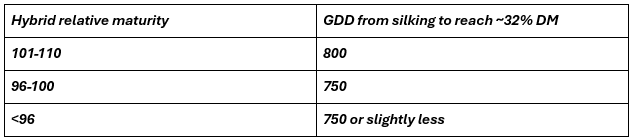
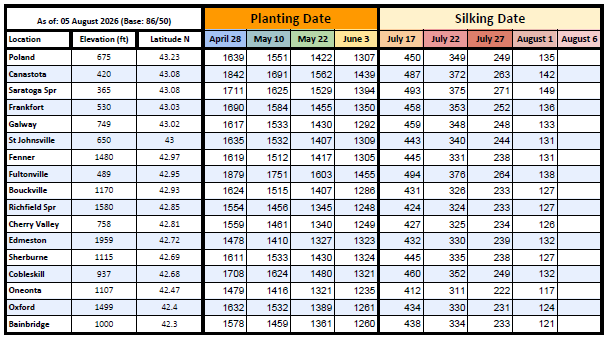
Still seeing some corn just beginning to tassel, while the earliest acres tasseled nearly 3 weeks ago- so we're about halfway through the flowering season for corn. This should give us a nice, broad corn silage harvest window. See the Growing Degree Days section for a reminder of how we use tasseling dates to predict silage harvest. Crops are looking good, taking advantage of the recent warm weather and rainfall.
Soybeans are filling out nicely, as they are also taking advantage of the moisture and heat. As long as we keep getting periodic rainfall, that will help suppress aphid and thrips pressure. BUT you may begin to see the effects of white mold if you have it. And please get in touch if you know you have either tall waterhemp or Palmer amaranth! We have several studies coming up in the next few years to investigate long-term management strategies, and we (a) need to know just how broadly these invasives have spread (which counties), and (b) are looking for farmer collaborators to host field trials. And of course, I'm always looking for ANY herbicide resistant weed populations so we can continue to keep tabs on their spread and keep up with every new mode of action that is no longer effective.
From the desk of Mike Stanyard, CCE Field Crops Specialist, Northwest NY:
NY Corn and Soybean Yield Contest Deadline is August 15-
The contests are sponsored by the NY Corn and Soybean Growers Association. Entries are due by August 15 and can be found here.
NY growers also have an option to enter in the National Corn Yield Contest. Deadline is August 12 and you can enter here. You can enter your national contest final yield entry into the NY corn contest but only if you enter both contests.
The New York Ag Showcase will be held on August 12 and 13 at Rodman Lott & Sons in Seneca Falls (separate registrations):
Day 1, August 12. This event highlights corn and soybean production across New York with timely, relevant topics shaped by grower leaders. Expect practical takeaways you can bring back to your operation, along with opportunities to connect with industry partners and fellow growers. Sponsors will have equipment and displays onsite throughout the event, giving you the chance to see products up close, ask questions, and explore solutions that fit your operation. For the full agenda and registration visit their event site here.
Day 2, August 13. This event highlights soil health practices, current research, outdoor field demonstrations, and practical on‑farm applications. It offers farmers and ag professionals the opportunity to explore strategies that improve soil function, sustainability, and long‑term productivity. Attendees will also enjoy a BBQ lunch from Mooney’s BBQ, adding great food to a day filled with top‑tier learning and practical insights.
CCA and NYS DEC pesticide applicator credits will be available here.