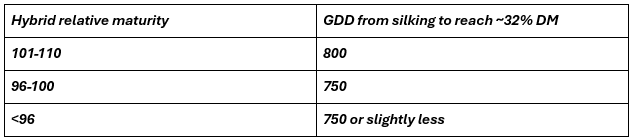
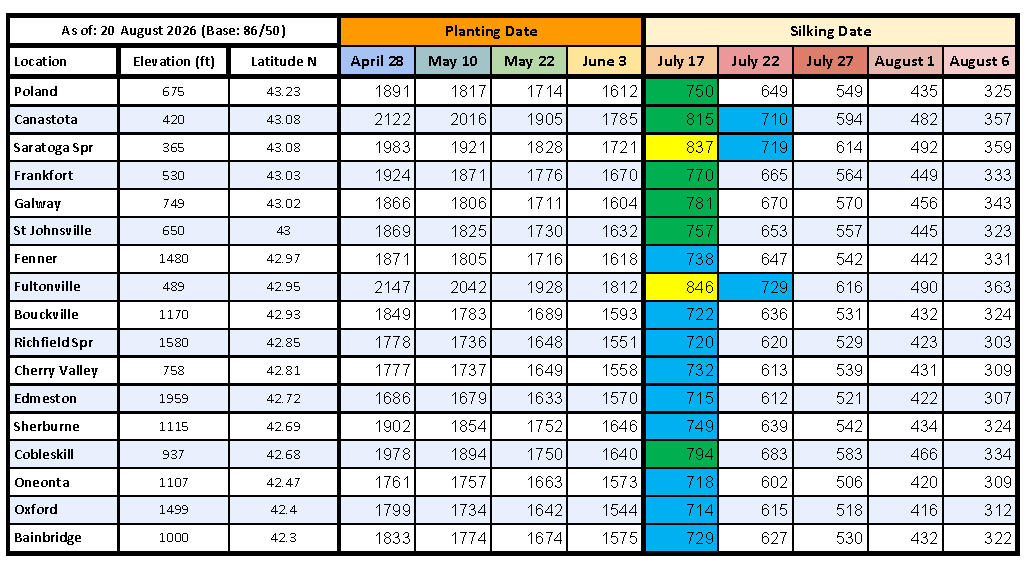
A. Silage. This year's weather and extended planting window led to a similarly broad silking window in corn - so while most crops are still several weeks from silage maturity, some of the earliest acres may be approaching harvest in the next week or two, especially if those early acres have short RM. We had a slow start to the season, but we have had a lot of heat since silking - so be sure to stay on top of your crop. So with your silking dates in mind, take a look at Section 4. Growing Degree Days to see if you should be checking your whole plant DM soon. And don't be alarmed by the yellow locations/dates - those would be for those earliest acres.
Speaking of which, we are currently in the process of scheduling at least one (perhaps two) Corn Silage Dry Down events next month. So we will announce those dates and locations very soon (one will be at the Keystone Mills in Fonda, and the other is very likely to be at the CCE office in Madison County (Morrisville)).
B. Waterhemp. More and more, everywhere I look. Today we had a very informative waterhemp field walk in Dryden with Dr. Vipan Kumar, Cornell weed science professor. If you missed it (and even if you went), we'll be taking a deep dive into management strategies for this weed (and others) going forward at this winter's Central NY Corn and Soybean Day crop congress - save the dates: January 19th (central NY - venue TBD) and January 20th (Saratoga Co CCE) (stay tuned for more details and a registration link).
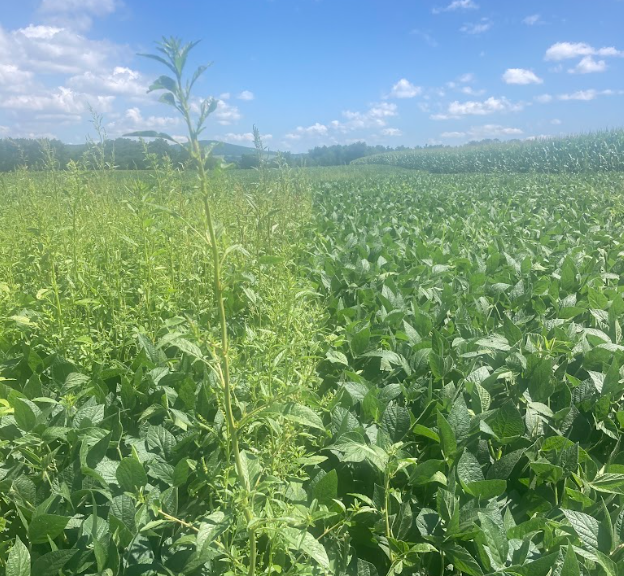
If you're organic, this is another pigweed to contend with, along with the other summer annuals with extended germination windows. But if you rely on herbicides, pre-emergents have to be part of the program for this weed - you cannot rely solely on post-emergents if you want ongoing management. And glyphosate does nothing. See the left side of the picture below for the full-rate glyphosate treatment at the recommended time.
At this point in the season, even spraying an effective herbicide is not likely to kill the plant (even if it isn't off-label to spray that given product at this point, which it very well could be!!). If you have a very sparse population, perhaps the first year of an infestation, it may certainly be worth it to pay some local kids to simply pull them out of the ground before they produce seed. Otherwise, each plant could produce half a million seeds, leaving you with a very difficult reality the following year after the harvester spreads those seeds everywhere.