- Field Crops
2. Weather Update
3. Pest & Disease Monitoring
4. Growing Degree Days
1. Field Observations
We have some reports of corn rootworm damage around the state, so please get in touch if you suspect you have some damage. And remember if you have Bt traited seed, depending on your dealer, you may be obligated to report suspected corn rootworm damage to them if you see it. So don't ignore it!
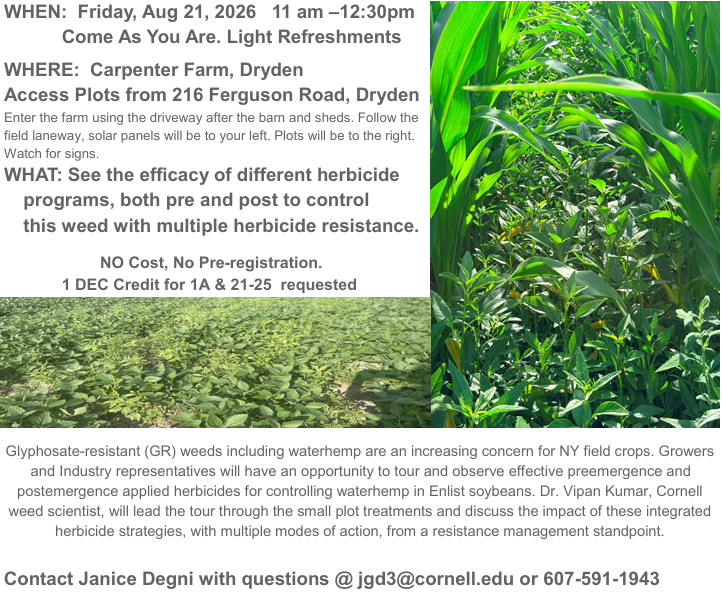
As for weeds, the current era of knapweed infestation has become a plague. If you are seeing plants in full flower, you may have missed the best time to clip to minimize seed production, but clipping now will still help reduce the spread! This is not the time to spray (fall or spring are better), but clipping at the bud/flower stage is a critical part of attempting to manage this weed, along with timely, appropriate fertility amendments and sprays (if those are options for you). And we are seeing more, and more, and more fields with waterhemp. Here's another one to reach out to us about. We're testing resistant populations for multiple modes of action and developing protocols for NY tall waterhemp (and Palmer amaranth) populations in corn-soy systems through our research. One of those tall waterhemp field trials will be the focus of a Weed Walk in Dryden next Friday.
And one last reminder from the desk of Mike Stanyard, CCE Field Crops Specialist, Northwest NY:
NY Corn and Soybean Yield Contest Deadline is August 15:
The contests are sponsored by the NY Corn and Soybean Growers Association. Entries are due by August 15 and can be found here.
NY growers also have an option to enter in the National Corn Yield Contest. Deadline is August 12 and you can enter here. You can enter your national contest final yield entry into the NY corn contest but only if you enter both contests.
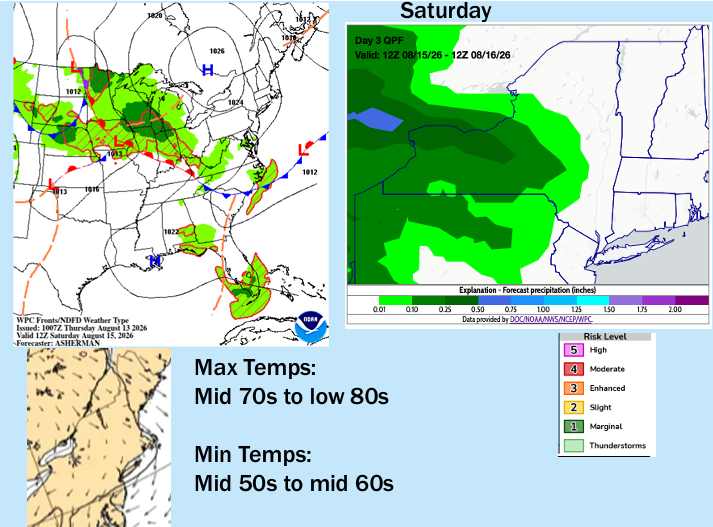
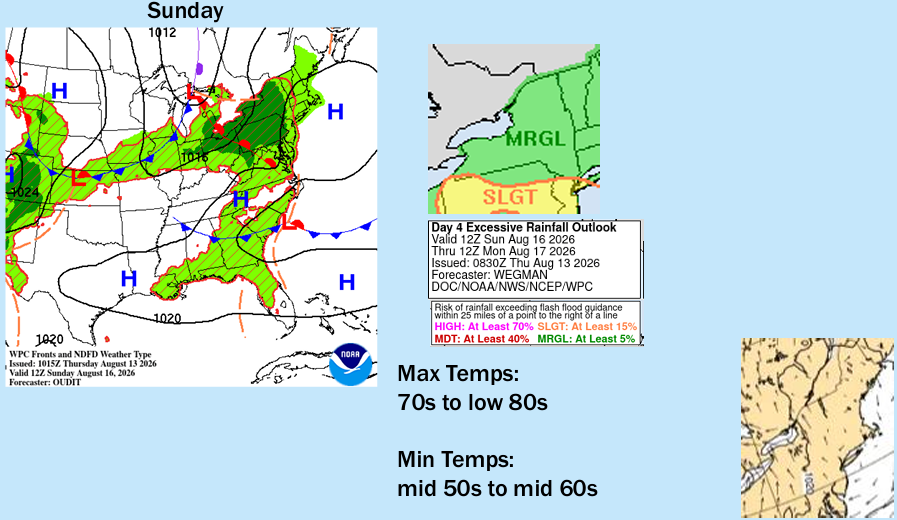
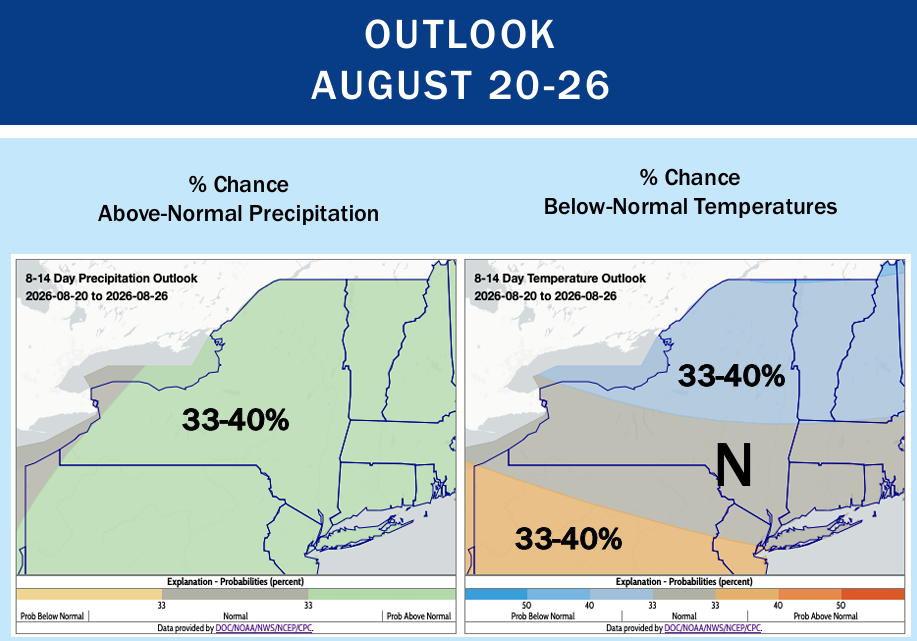
2. Weather Update
Provided by Jessica Spaccio, Climatologist for the Cornell Northeast Regional Climate Center:
More rain on the way.
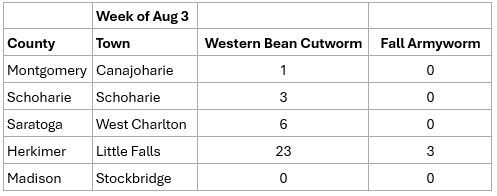
3. Pest Monitoring
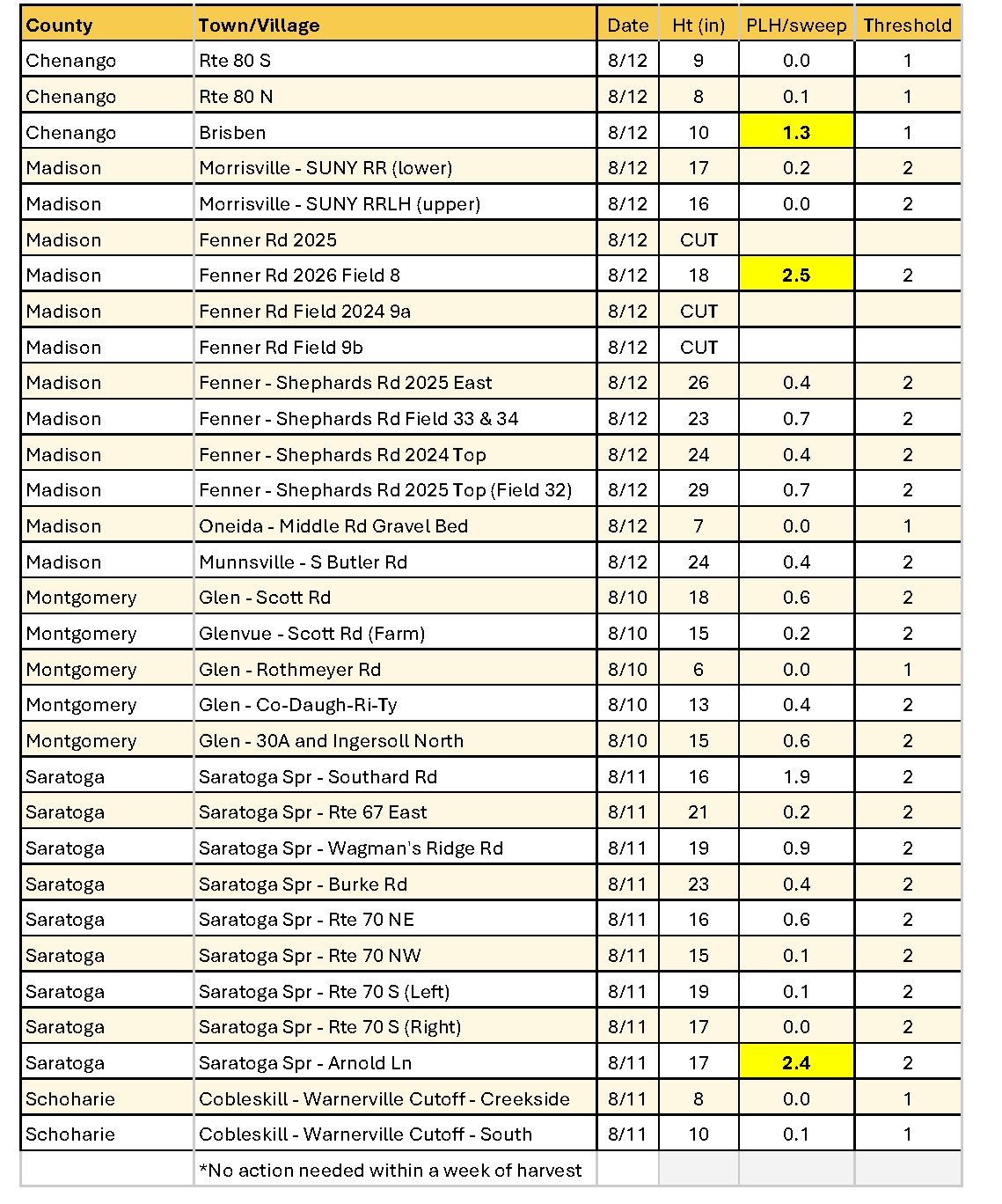
Potato leafhoppers were nearly all under threshold - the only two above threshold look ready for harvest. Remember that if you're within 7-10 days of your expected harvest and your PLH are above threshold, harvesting asap is more economical than spraying!:
4. Growing Degree Days
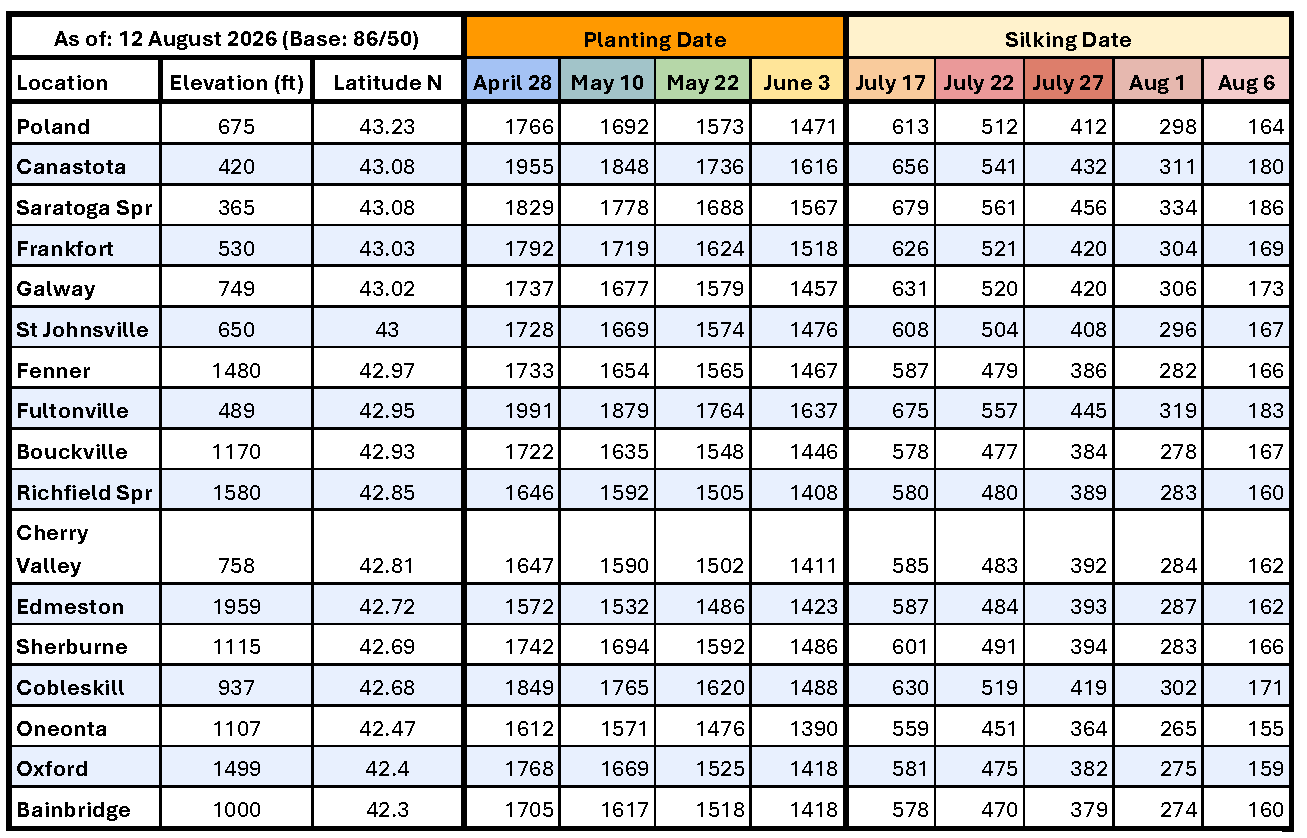
4. Growing Degree Days (See: Climate Smart Farming Growing Degree Day Calculator)
Growing degree days (GDD) are calculated by taking the average daily temperature and subtracting the base temperature for development of a given organism ((High + Low)/2 – base temp = GDD).
For corn, we use base 50/86, as corn development starts at 50 degrees F and ceases above 86F. Check your location and planting date for grain GDD.
For silage, we track GDD from silking. Silking in our region began mid-July and is continuing through the first half of August. Your crop may have tasseled on or more closely to one of these dates. So while our GDD tables can get you in the ballpark, check your own whole-plant DM to make sure you’re ready, and not ahead/behind schedule!
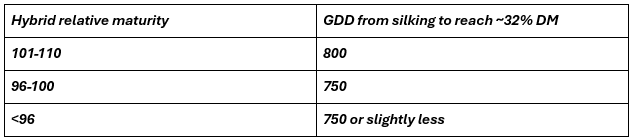
Remember: Silage corn needs 750-800 GDD (depending on hybrid maturity) after silking to reach a whole plant DM of 32%. Under typical late season dry down conditions we can expect the crop to reach 35% DM four to seven days later. We can expect to accumulate 15-25 GDD per day, or even up to 30, so peak maturity can creep up on us quickly. But no matter what the numbers say, always check your crop to see how close you may be to harvest. For more details, see this article.
- 4-H Youth
Master Gardener Volunteer Column
We openly share valuable knowledge.
Sign up for more insights, discoveries and solutions.